Last updated: 5 September 2026
Slay the Spire 2 Ironclad Build Guide Strength, Exhaust & Block
The Ironclad returns from Slay the Spire 1 with his signature self-reliance intact: 80 base HP, a heal of 6 HP after every combat (via his starter relic Burning Blood), and a card pool built around raw power. He is the most forgiving character for learning the game, and one of the strongest in experienced hands. This guide covers all three main archetypes, the key cards within each, and the relics that push a run over the finish line.
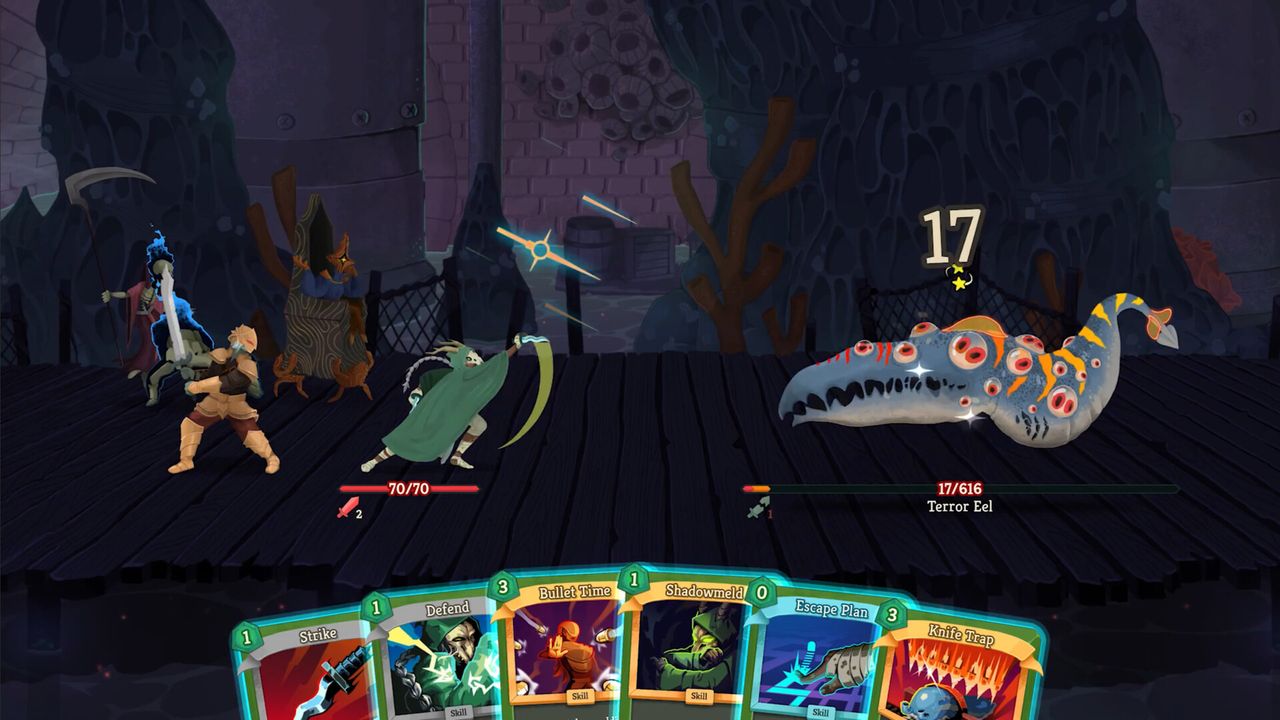
01Ironclad Unique Mechanics
Before building a deck, understand what makes the Ironclad different from the other four characters:
- Burning Blood (Starter Relic) — at the end of each combat, heal 6 HP. This passive heal is why the Ironclad forgives mistakes — you can take damage making aggressive plays and recover before the next fight.
- Exhaust keyword — some Ironclad cards have the Exhaust keyword, which removes them from your deck for the rest of combat after they're played. This sounds like a downside but it's actually a feature: it keeps your deck lean in late-game fights and combos with cards that trigger when any card is Exhausted.
- Self-damage cards — several Ironclad cards (like Bloodletting and Rupture) deal damage to you but provide Energy or Strength in exchange. Paired with the post-combat heal and certain defensive relics, these form a core part of two of his archetypes.
The Ironclad's three archetypes — Strength, Exhaust, and Block — can also be mixed to varying degrees, but picking one as your primary strategy and supplementing with the others gives you the clearest path to consistent wins.
02Archetype 1: Strength Scaling
The Strength build is the most straightforward Ironclad strategy: stack Strength (each point adds 1 damage to every attack you play), then unleash high-damage multi-hit attacks to close fights quickly. It scales hard in the late game but requires finding the right Strength sources early.
Key Strength sources:
- Inflame (Power, 1 Energy) — gain 2 Strength permanently. Cheap, efficient, and the backbone of most Strength builds. Upgrade to gain 3 Strength instead.
- Demon Form (Power, 3 Energy) — at the start of each turn, gain 3 Strength (4 if upgraded). Slow to set up but the highest Strength ceiling in the game once it's running.
- Limit Break (Skill, 1 Energy, Exhaust) — double your current Strength. Combines explosively with any Strength you've already built.
- Dominate (Skill, 1 Energy, Exhaust) — applies 1 Vulnerable (2 upgraded) to an enemy, then grants you Strength equal to that enemy's total Vulnerable stacks. It's a one-time effect per copy, not a repeatable engine — its value scales with how much Vulnerable is already on the target, so it's best played after another source has already stacked Vulnerable.
- Bloodletting (Skill, 0 Energy) — lose 3 HP, gain 2 Energy. Best used when you need to play a Power card on a tight Energy turn.
Key Strength payoffs (attacks that benefit from high Strength):
- Heavy Blade (Attack, 2 Energy) — deal 14 base damage; Strength adds to each hit 3 times (5 times when upgraded). At 8 Strength, an upgraded Heavy Blade hits for 14 + (5 × 8) = 54 damage — enough to one-shot most Act 3 enemies.
- Whirlwind (Attack, X Energy) — deal 5 damage to all enemies X times. Each hit benefits from Strength: at 5 Strength and 3 Energy, Whirlwind hits 3 times for (5 + 5) = 10 damage per hit, dealing 30 damage to each enemy.
- Twin Strike (Attack, 1 Energy) — deal 5 damage twice. Cheap and efficient with Strength.
- Sword Boomerang (Attack, 1 Energy) — deal 3 damage to a random enemy three times. Like Twin Strike, hits multiple times and scales well.
The win condition is straightforward: reach 10+ Strength through Inflame stacks and one or two Limit Break activations, then close fights in two or three Heavy Blade swings. Include at least one Block card (Shrug It Off is excellent — draws a card while providing Block) to survive long enough to set up.
03Archetype 2: Exhaust Synergy
The Exhaust archetype takes advantage of the Ironclad's unusually large pool of Exhaust cards. The strategy centres on cards that trigger when any card is Exhausted and cards that benefit from a small, tightly managed deck.
Core Exhaust synergy cards:
- Dark Embrace (Power, 2 Energy) — whenever a card is Exhausted, draw 1 card. With multiple Exhaust cards in play, this turns Exhausting cards into an engine that keeps your hand full.
- Feel No Pain (Power, 1 Energy) — whenever a card is Exhausted, gain 3 Block. Combined with Dark Embrace, each Exhaust becomes both card draw and Block generation.
- Sentinel (Skill, 1 Energy) — gain 5 Block; if Exhausted, gain 2 Energy. When Sentinels are triggered by another Exhaust effect, they refund Energy.
- Fiend Fire (Attack, 2 Energy, Exhaust) — Exhausts every other card currently in your hand and deals 7 damage for each card Exhausted this way, then Exhausts itself. This empties your hand, so it's a turn-ending finisher, not a card to play mid-turn — walking into it with a big hand (built up earlier via Dark Embrace-fuelled draw) is what makes it hit hard.
- Corruption (Power, 3 Energy) — Skills cost 0 but are Exhausted when played. Once Corruption is in play and you have Dark Embrace and Feel No Pain active, every Skill you play becomes free card draw and Block, turning the rest of the fight into a runaway engine.
The Exhaust build is slower to set up than Strength but generates more Block, making it more durable against the sustained damage of Act 3 and boss fights. It's particularly strong when your starting hand has Corruption early in a fight.
04Archetype 3: Block / Juggernaut
The Block archetype leans into the Ironclad's ability to generate large amounts of Block per turn and convert that Block into damage through Juggernaut and Barricade.
- Barricade (Power, 3 Energy) — Block is no longer removed at the start of your turn. Normally Block resets every turn; with Barricade, your accumulated Block carries over indefinitely.
- Juggernaut (Power, 2 Energy) — whenever you gain Block, deal 6 damage to a random enemy (8 upgraded). With a high-Block turn, Juggernaut can deal 30–48 incidental damage without playing a single Attack.
- Body Slam (Attack, 1 Energy, or 0 upgraded) — deal damage equal to your current Block. With 40+ Block accumulated via Barricade, this becomes a one-shot finisher.
- Entrench (Skill, 2 Energy, or 1 upgraded) — double your current Block. One of the strongest single cards in a Block build — with Barricade and 20 Block, Entrench pushes you to 40 in a single card. Note it's an event-only card (found at the Trash Heap event, available to any character), not something you'll see as a normal combat or shop reward.
Block builds tend to be the most durable of the three archetypes but require finding Barricade, which is a rare power. If you find it early, commit to it — if not, lean toward Strength or Exhaust instead.
05Best Relics for Ironclad
These relics are particularly strong on the Ironclad regardless of archetype:
- Demon Tongue — the first time you lose HP on your turn, heal HP equal to the amount lost. Turns self-damage cards (Bloodletting, Rupture) into survivability tools.
- Vajra — gain 1 Strength at the start of combat. Free permanent Strength without spending a card slot.
- Ruined Helmet / Sling of Courage — additional free Strength at combat start, stacking with Vajra and Inflame.
- Astrolabe — transforms and upgrades 3 cards from your deck on pickup. A critical improvement to any archetype.
- Ice Cream — unused Energy carries into the next turn. Allows enormous Whirlwind turns in the Strength build.
- Bag of Preparation — draw 2 extra cards on the first turn. Improves the likelihood of hitting your key Powers on turn 1.
Avoid relics that require discarding cards unless you've built discard synergy — the Ironclad's base kit doesn't benefit from those mechanics the way the Silent does.
06Ironclad Run Tips
- Fight every Elite in Act 1. Your post-combat heal means you can afford to take damage against an Elite, and the Relic reward is almost always the single biggest power spike of the Act.
- Remove a Strike or Defend at the first shop. It costs 75–100 gold, but removing a diluting basic card is worth it for any archetype.
- Prioritize Demon Form if you see it before Act 3. Even at 3 Energy cost, it's the highest Strength ceiling in the game and can carry a Strength build through the toughest bosses.
- Keep your potion inventory for Elite and boss fights. A Strength Potion (+5 Strength for one combat) combined with Heavy Blade can close an Elite fight in two turns.
- In Exhaust builds, play Corruption last. Corruption makes all Skills free but Exhausted — play your other Powers first so they survive and only trigger Corruption when you're ready to go infinite with Dark Embrace and Feel No Pain.
FAQ
What is the best Ironclad build in Slay the Spire 2?
There is no single best Ironclad build — it depends on which cards and relics appear in your run. The Strength archetype is the most reliable and forgiving; it deals the highest damage ceiling with Heavy Blade and Whirlwind. The Exhaust archetype is more durable and can generate infinite Block with Corruption + Dark Embrace + Feel No Pain. Block/Barricade is the most situational but the most durable if you find Barricade early.
What is the Ironclad's starter relic?
The Ironclad starts every run with Burning Blood — at the end of each combat, heal 6 HP. This passive heal is the reason the Ironclad forgives mistakes and is the best first character for beginners. It turns aggressive plays, like self-damaging cards, from pure downsides into calculated trades.
How does the Exhaust mechanic work in Slay the Spire 2?
When an Exhausted card is played, it is permanently removed from your deck for the rest of the current combat — it won't appear in your draw pile or hand again. Several Ironclad Powers (Dark Embrace, Feel No Pain) trigger whenever any card is Exhausted, converting each Exhaust into card draw, Block, or both. Corruption makes all Skills cost 0 but Exhaust them when played, which can trigger these Powers repeatedly in a single turn.
Is Demon Form good in Slay the Spire 2?
Yes — Demon Form is one of the highest-ceiling Strength cards in the game. It costs 3 Energy on the turn you play it, but from the following turn onward it grants +3 Strength per turn (or +4 upgraded) for free. In a long boss fight, Demon Form can stack 15–25+ Strength on its own, turning any attack into massive damage. The main risk is surviving long enough to set it up.
When should I upgrade cards at campfires instead of healing?
Once your current HP is above roughly 65% of your max HP, upgrading is usually the stronger choice. Priority upgrades on the Ironclad include: Defend (5 → 8 Block), Shrug It Off (for the extra Block), Inflame (2 → 3 Strength), and your main damage payoff card (Heavy Blade, Whirlwind, or Fiend Fire). Healing is more important when entering Act 2 at low HP or when you know an Elite encounter is next.
Sources
Where the facts on this page were checked. If one of them now says something different, we want to know — tell us and we will fix the guide.
- Ironclad Slay the Spire 2 Wiki (wiki.gg)
- Demon Form Slay the Spire 2 Wiki (wiki.gg)
- Whirlwind Slay the Spire 2 Wiki (wiki.gg)
- Fiend Fire Slay the Spire 2 Wiki (wiki.gg)
- Juggernaut Slay the Spire 2 Wiki (wiki.gg)
New & updated guides ship every week. Follow the Atom feed or get notified when new Slay the Spire 2 guides land.