Last updated: 5 September 2026
Fable Spells Guide — Will Magic, Spell Types, and How to Cast Effectively
Magic in Fable has always been one of the series' defining features — a colourful, theatrical, and genuinely powerful set of tools that feel meaningfully different from sword and bow. Playground Games' reboot continues this tradition with the Will system: a full progression path dedicated to magic, with elemental variety, utility spells, and the ability to shape encounters in ways that no melee warrior or ranged fighter can match. This guide covers everything confirmed about how spells work in Fable, which spell types have actually been shown, how to cast effectively in combat, and how to build a Will-focused hero that dominates Albion. Note: this is a pre-launch guide written ahead of the February 23, 2027 release. Details are drawn from Playground Games' own hands-on preview coverage; anything unannounced is clearly flagged as such.
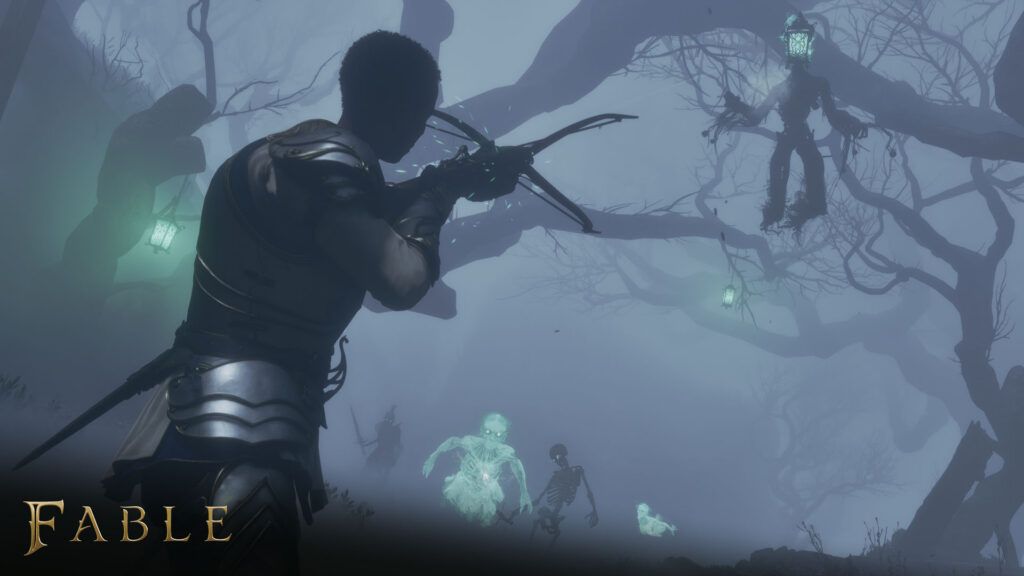
Fable's Will magic is one of three hero paths alongside Strength and Skill. Xbox's own hands-on preview of Playground Games' first public combat demo confirmed seven spells — Fireball, Lightning, Blades, Lift, Rush, Push, and Befowl — cast from four hotkey slots, each on its own individual cooldown rather than a shared Will or mana pool. Befowl turns an enemy into a chicken (an 'undead chicken' if used on an undead foe). No elemental-weakness system, healing spell, Slow Time-style spell, or creature-summoning spell has been confirmed ahead of the February 23, 2027 launch. A varied spell library beats specialising in a single type.
01How the Will System Works
Will is the magic-focused progression path in Fable, sitting alongside Strength (melee) and Skill (ranged) as one of three core development disciplines. Investing Will points unlocks new spells and upgrades the ones you already know.
The Will system has three key mechanics every spellcaster needs to understand:
- Spell casting resource: classic Fable games used a Will energy pool that depleted as you cast and regenerated when you stopped. Xbox's own hands-on preview of Playground Games' gamescom 2026 combat demo confirms the reboot instead uses four hotkey slots — hold a trigger and press a face button — with each equipped spell recovering on its own individual cooldown. There is no shared Will or mana meter in the build shown so far.
- Spell power and timing: in the original series, holding the cast button built charge, and releasing a full-power cast dealt significantly more damage. Hands-on previews of the reboot describe the same trade-off for Fireball specifically: it can be fired quickly to interrupt an enemy, or held to charge a bigger explosion. It hasn't been confirmed whether every spell shares this charge option.
- Progressive unlocking: you do not start with every spell in the game. Will investment points are spent to unlock new spell types and upgrade existing ones. Prioritise the spells that fit your preferred style early, then expand your library as Will investment grows.
The hero-builds guide covers the broad case for investing in Will. This guide goes deeper into how the spell system itself works, spell by spell.
02Elemental Damage Spells
Two elemental damage spells, plus one ranged magic attack, have been directly demonstrated in Playground Games' hands-on combat previews.
Fireball is the most beginner-accessible offensive spell. It's the most consistently shown spell across every hands-on preview of the reboot, and can be fired quickly to interrupt an enemy or held to charge for a larger explosion. It's a reliable damage option and a natural first pick for a Will-focused hero.
Lightning is confirmed to chain between nearby enemies — both Kotaku's and Noisy Pixel's hands-on previews of the gamescom 2026 demo independently describe it hitting grouped targets rather than a single one, echoing the chain-lightning behaviour from the classic series. It's the spell to prioritise when facing clustered enemies.
Blades conjures phantom daggers around the Hero and fires them at distant enemies — good for finishing off stragglers who are too far away for melee or Fireball. Despite the name, it is not a creature-summoning spell.
Beyond these three, Playground Games has not confirmed additional elemental or magic-damage types (no confirmed ice/frost, poison, or acid spells) ahead of the February 23, 2027 launch — treat any other elemental type as unconfirmed until shown.
03Utility and Control Spells
Beyond outright damage, Fable's Will magic includes control and repositioning spells confirmed in the same hands-on previews of Playground Games' gamescom 2026 combat demo.
Lift suspends nearby enemies in the air and can be cast a second time to slam them back down to the ground — a crowd-control tool that also sets enemies up for a follow-up spell or melee finisher.
Rush teleports the Hero behind a target and can move vertically, making it useful both for a surprise melee attack and for reaching enemies positioned above you, such as archers on a ledge.
Push knocks enemies backward with force. Hands-on previews specifically call out combining it with Rush: teleport behind an enemy on a ledge with Rush, then Push them off.
Befowl temporarily turns an enemy into a chicken, rendering them harmless while you deal with other threats. Casting it on an undead enemy creates what Xbox's preview describes as an 'undead chicken.'
These four spells — Lift, Rush, Push, and Befowl — together with Fireball, Lightning, and Blades, make up the seven spells confirmed via the four-slot hotkey system in Playground Games' first public hands-on combat demo. Playground Games has not confirmed a dedicated healing spell, a Slow Time-style ability, or traditional creature-summoning magic (such as reanimating fallen enemies) for the reboot. If any of these return, expect confirmation closer to launch rather than before it.
04Elemental Weaknesses in Albion
Playground Games has not confirmed any elemental-weakness or resistance system for enemies in Fable ahead of launch — none of the published hands-on previews of the combat demo (Xbox Wire, Kotaku, Noisy Pixel, or PlayStation Blog) mention enemy vulnerabilities tied to spell type.
The classic Fable trilogy did use enemy-type vulnerabilities (undead enemies being especially weak to fire, for example), so it's plausible some version of this returns in the reboot — but at this stage that's a heritage-based guess, not a confirmed mechanic. Until Playground Games says otherwise, the safest approach is to carry a mix of spells — Fireball and Lightning for damage, Lift and Push for crowd control, Befowl for a single dangerous target — rather than planning around specific matchups that haven't been shown.
05Casting Mechanics — Style-Weaving and Spell Timing
Playground Games confirmed at the January 2026 Xbox Developer Direct that Fable uses what they call 'style-weaving' combat — the ability to switch seamlessly between melee, ranged, and magic mid-fight. Fable's Game Director and GM, Ralph Fulton, described it this way: 'You should be able to strike with a sword and then hurl a fireball in a smooth movement.' For Will-focused heroes, this shapes how you approach casting:
- Match spell choice to the moment: spells are cast from four hotkey slots, each going on its own cooldown once used — confirmed in Xbox's hands-on preview of the combat demo. Choosing the right spell for the situation matters — a high-damage spell used on a single weak enemy is a waste if a larger group is approaching.
- Time your spells to enemy vulnerability windows: the best moments to land a high-damage spell are when an enemy is staggered, occupied, or recovering from another attack. Identifying these openings and acting decisively is the core skill of Will play.
- Spell sequencing within style-weaving: a common approach is to open with a spell for immediate damage or displacement, close to melee while the spell is on cooldown, then switch back to magic once it's available again. Practising this rhythm lets you keep pressure constant across the full fight.
- Do not neglect melee backup: with each spell limited by its own cooldown, there will be windows where a given spell is unavailable. A spellcaster with zero melee development is completely exposed in those gaps. Keep a backup melee weapon equipped and invest minimally in Strength early — enough to survive between casts.
The key principle: Will magic rewards planning a few steps ahead of the encounter, not reacting. Proactive spell sequencing — using each spell at the moment it will have most impact — is what separates effective spellcasters from those who burn through their options at the wrong moments.
06Will Magic Pacing — Managing Your Spell Availability
Unlike melee (no resource limit) or ranged (limited by ammo), Will magic in Fable is paced by cooldowns. Classic Fable used a shared Will energy pool that depleted as you cast and regenerated when you stopped; Xbox's hands-on preview of the gamescom 2026 combat demo confirms the reboot instead uses four hotkey slots, where each equipped spell recovers on its own individual cooldown rather than a shared pool. Managing which spell is available at any given moment — rather than managing one shared resource bar — is the difference between a powerful spellcaster and one who runs out of options mid-fight.
Practical pacing guidelines:
- Keep your strongest spell available for the hardest phase of a fight. Most Fable encounters escalate — additional enemies arrive, a tougher variant appears, or the fight extends longer than expected. Use situational or lower-impact spells early and hold your most powerful option for when it matters.
- Use melee to bridge gaps between spell uses. With every spell on its own cooldown, there will be windows where your best spell is unavailable. A few seconds of melee gives that Will ability time to recover and costs nothing in terms of position if you have basic melee skills — which is why every Will build benefits from some Strength investment.
- Utility spells can be used freely in emergencies. Lift or Push used at the right moment is worth more than holding it for a theoretical bigger moment that never arrives. Use utility magic when it makes the fight manageable.
- Invest in Will upgrades early to maximise spell effectiveness — stronger spells used on fewer casts is more efficient than many weak casts. Whether Will upgrades increase cooldown speed, damage, area of effect, or unlock entirely new spells should become clearer as more of the game is shown before launch.
Efficient spell use is a learnable habit. By the mid-game, a well-developed Will hero should feel fluid rather than constrained — the goal is building enough spell variety that something effective is always ready.
07Building a Will Hero — Progression Tips
If you intend to play primarily as a spellcaster, here is how to approach Will investment across the game:
- Early game: unlock Fireball (the most consistently demoed damage spell) and invest enough Strength to comfortably handle close encounters. The early areas of Albion are not forgiving to a hero with zero melee capability and limited spell availability. Get one spell fully functional, then add Strength backup.
- Early-to-mid game: unlock Lightning next. It's confirmed to chain between nearby enemies, making it the pick for handling larger enemy packs in Albion's wilderness and bandit camps. Having Fireball and Lightning covers most standard encounter types.
- Mid game: invest in a confirmed utility spell — Lift (suspends and slams grouped enemies) or Befowl (turns a dangerous enemy into a harmless chicken) both qualify. This is where pure Will builds begin to feel genuinely powerful. A Will hero with two damage spells and a utility spell can handle encounters that would challenge a Strength or Skill fighter of the same level.
- Late game: round out your loadout with Blades for ranged stragglers and Rush/Push for mobility and positioning combos. Keep an eye out for any recovery or defensive Will abilities Playground Games reveals before launch — none have been confirmed as of this guide's last verification. A full late-game Will build can carry multiple active spells and switch between them in real time.
The Will path has the longest ramp-up of the three hero disciplines. Strength fighters feel powerful from level one; Will heroes feel exponentially more powerful at level twenty than they did at level five. Commit to the ramp — it pays off.
FAQ
What spells are in Fable?
Xbox's own hands-on preview of Playground Games' first public combat demo (gamescom 2026) confirmed seven spells, cast from four hotkey slots on individual cooldowns: Fireball (quick-cast or charged for a bigger explosion), Lightning (chains between nearby enemies), Blades (ranged phantom-dagger projectiles), Lift (suspends grouped enemies, then slams them down), Rush (teleports you behind a target, including vertically), Push (knockback that combos with Rush to shove enemies off ledges), and Befowl (turns an enemy into a chicken — an undead chicken if used on undead enemies). No elemental-weakness system, healing spell, Slow Time-style spell, or creature-summoning spell has been confirmed. The complete spell list for the full game will only be confirmed at the February 23, 2027 launch.
Is magic (Will) strong in Fable?
Based on what's been shown so far, Will magic looks like one of the higher-ceiling paths in Fable, especially once you have a full loadout of the seven confirmed spells. Early game, Will may feel slower than Strength or Skill because of cooldowns and a limited spell library. As your spell variety grows, Will builds are expected to become some of the most flexible and powerful playstyles in Albion — though final balance won't be clear until launch.
How do I unlock more spells in Fable?
Spells are unlocked by spending Will points in Fable's skill-tree progression system, which sits alongside separate Strength and Skill trees. Exactly how those points are earned (quests, combat, overall leveling, or some combination) has not been fully detailed in pre-release previews at time of writing. Plan your early unlocks around one or two core spells — Fireball and Lightning are the two most consistently demoed — rather than spreading points thinly.
Can I run out of magic in Fable?
Yes, in the sense that each spell needs to recover before you can use it again. Xbox's hands-on preview of the gamescom 2026 combat demo confirmed Fable uses four hotkey slots, with each equipped spell on its own individual cooldown — there is no shared Will or mana pool like classic Fable had. Once you cast a spell it's briefly unavailable, which is why keeping a melee weapon ready to bridge the gap is worthwhile.
What is the best spell in Fable?
There's no single best spell, and Playground Games hasn't confirmed a complete spell list beyond the seven shown in hands-on previews so far: Fireball, Lightning, Blades, Lift, Rush, Push, and Befowl. Fireball is the most straightforward direct-damage option; Lightning is confirmed to chain between grouped enemies, making it the pick against packs; Lift and Befowl are the confirmed crowd-control options. A well-rounded Will hero carries a mix rather than relying on one spell for everything.
Can I use magic and melee at the same time in Fable?
Yes. Playground Games has confirmed that Fable's combat uses 'style-weaving' — seamlessly switching between melee, ranged, and magic in the same fight. Game Director Ralph Fulton described the goal as being able to 'strike with a sword and then hurl a fireball in a smooth movement.' A common hybrid approach is to cast a spell to damage or displace enemies, close to melee range while it's on cooldown, then switch back to magic once it's ready again. The Strength + Will hybrid (warrior-mage) is one of the most popular and effective build types in the series.
Do enemies have elemental weaknesses in Fable?
No elemental-weakness system has been confirmed by Playground Games ahead of the February 23, 2027 launch, and none of the published hands-on previews of the combat demo mention enemy vulnerabilities tied to spell type. The classic trilogy did use this kind of system, so it's a reasonable guess that some version returns, but treat it as an unconfirmed guess rather than a confirmed mechanic until Playground Games or the full game says otherwise.
Sources
Where the facts on this page were checked. If one of them now says something different, we want to know — tell us and we will fix the guide.
- Fable: Find Out How Combat Works After Our First Hands-on Xbox Wire
- Fable: Answering the Big Questions After that Long-Awaited Developer_Direct Deep-Dive Xbox Wire
- Hands-On With Fable's Combat: Lightning Bolts, Fireballs, And Dismemberment Kotaku
- A new look at Fable's style-weaving combat PlayStation Blog
- Fable Showcases Combat With Melee Weapons, Magic, Bows, And Dismemberment Noisy Pixel
New & updated guides ship every week. Follow the Atom feed or get notified when new Fable guides land.