Last updated: 5 September 2026
Fable Best Hero Build — Strength, Skill, and Will Explained
One of the most common questions new Fable players have is: what is the best build? The answer is genuinely: the one that suits how you want to fight. Fable's hero progression is built around three disciplines — Strength, Skill, and Will — and Playground Games has confirmed that heroes are never locked into a single one of them; you can invest in and combine all three throughout the game. No one has played the finished skill trees yet, so a definitive "best build" ranking isn't possible before launch, but this guide breaks down what's been confirmed about each path so far and how to think about your early investment.
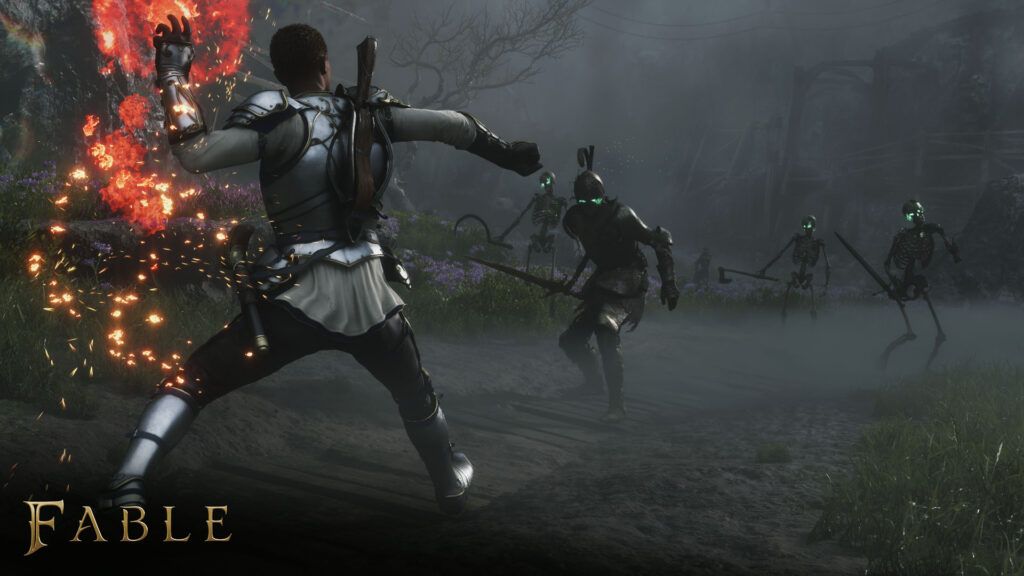
Fable has three core progression paths: Strength (melee warrior), Skill (ranged fighter), and Will (magic user). All three are viable, and you can invest in multiple paths freely. Beginners benefit most from committing early to Strength or a Strength/Will hybrid — reliable damage output and survivability before you learn the enemy patterns.
01The Three Progression Paths Explained
Every ability and upgrade in Fable falls into one of three broad disciplines. Here is what each one covers at a high level:
- Strength governs melee combat. Playground Games has shown two-handed weapons like the Bower Hammer delivering slower, heavier strikes that can hit multiple enemies, plus dodge/parry mechanics and weapon-specific finisher moves. A Strength-focused hero is a warrior who wades into groups of enemies and controls fights at close range.
- Skill governs ranged combat — bows, crossbows, and any ranged weapon. Weapons shown so far include the Deepwood Bow (high accuracy, slower draw) and the Repeater Crossbow (rapid but weaker bolts), with weak-spot targeting confirmed — for example, shooting a leg to stumble an enemy. A Skill-focused hero fights from distance, managing the space between themselves and enemies.
- Will governs magic. Spells shown in Playground Games' first combat demo include Fireball, Lightning (chains to nearby enemies), Blades (phantom daggers), Lift (group levitation with a follow-up slam), Rush (a short teleport for repositioning), Push (a knockback), and Befowl (temporarily turns an enemy into a chicken). Will-focused heroes lean on these for area damage and crowd control.
These paths are not mutually exclusive. Associate Game Director William Kennedy has described the system as "style-weaving": "Style-weaving allows players to seamlessly combine strength, skill and will, weaving together melee attacks, ranged weapons and magic in ways that feel natural and rewarding." In other words, you are not locked into one path — you can invest in and combine all three throughout the game. The only practical constraint is time: early on, you will not have enough progression points to fully develop multiple paths simultaneously. The question is not "which to choose" but "where to invest first."
02Strength Build — The Melee Warrior
Strength is the most beginner-accessible path. Melee combat is immediately responsive — you attack, enemies react, feedback is clear. There is no aiming lag (unlike ranged), and no resource management (unlike spells). If you are new to Fable or action RPGs in general, starting with Strength gives you the most predictable combat experience.
Key advantages of the Strength path:
- Reliable, hard-hitting attacks: Playground Games' first hands-on demo showed heavy two-handed strikes and weapon-specific finisher moves that hit multiple enemies at once — melee damage output that doesn't depend on aim or resource management.
- Possible durability edge: earlier Fable games tied a defense benefit to physical stat investment; the reboot hasn't detailed an equivalent mechanic in previews so far, so treat any durability bonus from Strength as likely but not yet confirmed.
- Crowd control at close range: melee combos push enemies back and interrupt their attacks, letting you dictate the pace of fights in small arenas.
- No resource depletion: unlike Will spells, which consume a magic resource that needs to regenerate, melee attacks have no resource cost. You can always fight.
The main weakness of a pure Strength build is range. Enemies who fight from distance, or encounters in open spaces where closing the gap is difficult, are more punishing for melee-focused heroes. The solution: carry a ranged weapon even if you do not invest heavily in Skill. A basic bow is available to all heroes and is useful for pulling distant enemies into melee range.
03Skill Build — The Ranged Fighter
A Skill-focused build keeps enemies at arm's length and rewards accurate, controlled play. The ranged style suits players who prefer managing engagements from a distance: landing headshots for bonus damage, choosing targets carefully, and retreating to reset when things get close.
Key advantages of the Skill path:
- Safety: fighting from distance means you are hit less often, which is especially useful for players still learning enemy attack patterns.
- Priority targeting: ranged attacks let you pick off dangerous enemies — archers, spellcasters, enemies with heavy armour that is weak from range — before they can close the gap.
- Finishing power: confirmed weak-spot targeting (like leg shots that stumble enemies) means a well-aimed Skill build can disable or punish enemies before they close the distance. How far this scales at high investment hasn't been shown yet.
- Synergy with Will: Skill and Will combine well — a ranged fighter who can cast crowd-control spells to freeze or stagger enemies before picking them off from range is extremely effective.
The main weakness of a pure Skill build is vulnerability once enemies close the gap. Ranged fighters have less developed melee capabilities, and fights in confined spaces where distance management is difficult become much harder. Keep a melee weapon equipped as a backup and invest minimally in Strength to improve your close-range survival.
04Will Build — The Spellcaster
Will looks like the highest-ceiling path shown so far. Demoed spells range from direct damage (Fireball, Lightning) to battlefield control, and Playground Games has shown area spells that can hit several enemies at once. That said, spell casting involves charge-up time, and it isn't yet clear from previews how Will compares to Strength or Skill in the very early game before your spell list grows.
Key advantages of the Will path, based on what's been demoed:
- Area-of-effect damage: Lightning chains to nearby enemies and Fireball can be charged into a room-clearing explosion, making Will a strong option against groups.
- Crowd control: Lift lifts a group of enemies into the air for a follow-up slam, and Push knocks enemies back (useful near ledges) — both let you control space rather than just deal damage.
- Utility beyond damage: Befowl temporarily turns an enemy into a chicken (a demoed way to neutralize a threat without killing it), and Rush is a short teleport that can also be used to reposition or reach higher ground.
The weakness of a pure Will build early on: before you have a substantial spell library and high Will investment, casting feels clunky compared to the immediacy of melee or the safety of ranged. Pure Will is the hardest build to learn for beginners. The best early approach: pair Will investment with some Strength (for close-range backup) while your spell library grows.
05Hybrid Builds — Blending All Three
The most interesting builds in Fable are hybrids. Because the game's combat is designed to let you switch fluidly between melee, ranged, and magic in real time, a hero who has invested meaningfully in two or three paths can handle any situation without specialised counterplay.
Recommended hybrid approaches:
- Strength + Will (Warrior-Mage): the classic Fable hybrid. You close to melee, trade blows, and unleash Will spells as finishing moves or when you need to deal with multiple enemies at once. This build handles both the intimacy of close combat and the crowd-control power of magic. Very strong and relatively beginner-friendly since you have melee as a reliable fallback while your spells develop.
- Skill + Will (Spellbow): fight from distance with ranged weapons, using control spells like Lift or Push to disrupt enemies before picking them off. Keeps you at range for most fights and uses magic as crowd control. Requires learning to manage both your aim and your spell casting.
- Strength + Skill (Physical Fighter): a build that uses melee as the primary option and ranged as a gap-closer or target-picker. Reliable, resource-free combat across any range. Less dramatic than a Will hybrid but very consistent.
There is no wrong hybrid. The key is to make sure your early investment gives you a reliable fallback — one path developed enough to handle basic encounters without depending on the other. Then branch out once you are comfortable.
06Beginner Recommendation — Where to Start
If you are new to Fable and are not sure where to begin, here is the practical recommendation:
- New to action RPGs: start Strength-focused. Melee is the most forgiving combat mode while you learn enemy patterns and timing. Invest enough to handle the first major area comfortably, then start branching into Will for variety.
- Comfortable with action RPGs: Strength + Will from the start. This pairing gives you a melee fallback while you build up your spell list, and lets you experience the area-effect magic (Lightning, Fireball, Lift) that's been the centerpiece of Playground Games' combat demos.
- Prefer ranged play: Skill + some Strength for backup. Pure Skill is viable but punishing in tight spaces early on. Adding a little Strength takes the edge off.
- Want a challenge: pure Will. The most rewarding once developed, but the steepest early-game learning curve.
Remember: Fable does not punish you for changing approach mid-game. If you start as a melee fighter and want to experiment with magic, nothing stops you from investing in Will as you progress. The system rewards exploration, not rigid specialisation.
FAQ
What is the best build in Fable?
There is no confirmed single best build — Playground Games has designed Strength, Skill, and Will to be freely combined rather than ranked against each other, and no one has played the finished game yet to test long-term balance. For raw beginner-friendliness, Strength is the most accessible since melee doesn't require managing aim or spell resources. A Strength + Will hybrid pairs reliable melee damage with area-effect magic and is a reasonable starting point if you want to try both.
Can you respec your hero build in Fable?
This has not been confirmed either way in previews of the 2027 reboot. The original Fable trilogy did not include a traditional respec system — once progression points were spent, they were permanent. Until Playground Games or Xbox confirms a respec/reset option, plan your early build deliberately rather than assuming you can reset freely.
Does Strength/Skill/Will affect your appearance?
No — and this is a deliberate change from the original trilogy. In the classic Fable games, your moral alignment (and, in some entries, your stats) physically morphed your hero, right down to devil horns for evil play. Playground Games has confirmed this is gone: Game Director Ralph Fulton told IGN the character-morphing feature "is not in ours," explaining that the reboot's morality system has no single objective good or evil to base an appearance scale on, and that keeping your hero's look consistent lets you build a different reputation in each town without your past preceding you. Your Strength, Skill, and Will investment affects how you fight, not how your hero looks.
undefined
Based on what Playground Games has shown so far, yes — spells like Fireball, Lightning, and Lift are built around clearing groups and controlling fights, not just single-target damage. Casting does involve charge-up time, which can feel slower than melee early on before you've unlocked more spells. Full late-game balance hasn't been shown in previews, so treat "how strong Will ends up" as an open question until launch.
Can you use all three styles in one build?
Yes — this is confirmed. Playground Games built combat around what it calls "style-weaving," chaining melee, ranged, and Will spells together without menus or animation breaks, and has said heroes are not locked into a single path. The main practical limitation is time: spreading progression points across all three early on will develop each path more slowly than focusing on one or two.
Sources
Where the facts on this page were checked. If one of them now says something different, we want to know — tell us and we will fix the guide.
- Fable: Find Out How Combat Works After Our First Hands-on Xbox Wire
- A new look at Fable's style-weaving combat PlayStation Blog
- New Fable Gameplay Shows off Heroes Guild Quest, Skill Trees and More Lords of Gaming
- Fable Doesn't Have Character Morphing Because "There's No Objective Good and Evil," Says Director GamingBolt
New & updated guides ship every week. Follow the Atom feed or get notified when new Fable guides land.