Last updated: 5 September 2026
Fable Morality System Explained — Reputation Replaces Good vs Evil
Morality was one of the original Fable trilogy's most beloved features, but the 2027 reboot from Playground Games rebuilds it from the ground up rather than simply carrying it forward. Game director Ralph Fulton has confirmed there is no objective good-and-evil scale in the new game, and the classic trick of your hero's appearance morphing toward a glowing halo or literal horns is gone. In its place is a reputation system: witnessed actions build up how each settlement — and each individual NPC in it — perceives you, with no two people necessarily agreeing on whether what you did was good or bad. This guide explains how that system actually works, based on what Playground Games has confirmed so far.
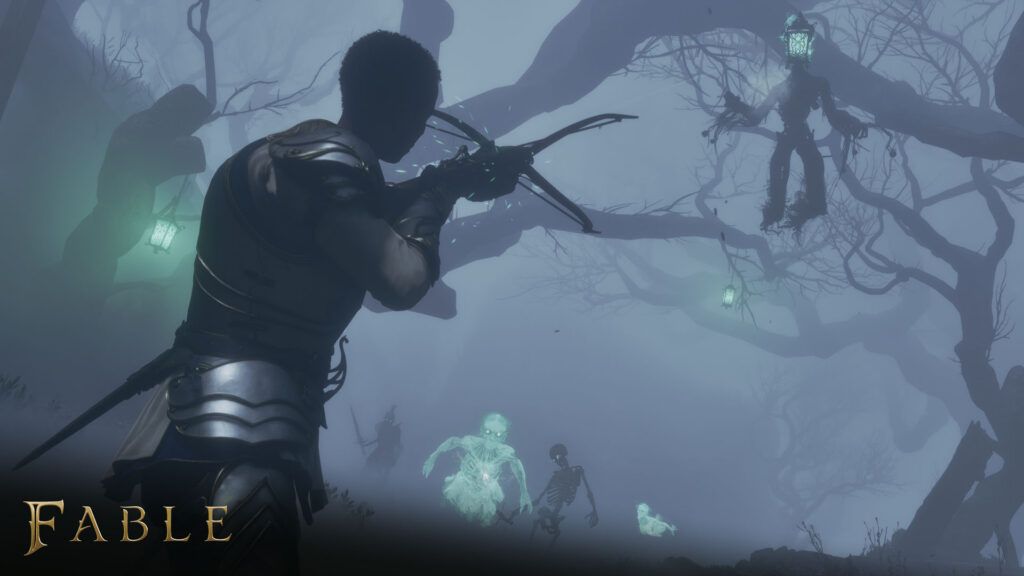
The Fable reboot (Playground Games, releasing February 23, 2027) does not use the classic global good/evil alignment bar from earlier games, and your hero's appearance no longer morphs into a glowing hero or a horned villain. Instead, every witnessed action builds a local, settlement-specific reputation made of adjectives (like "Killer," "Merciful," or "Shrewd") that different NPCs interpret differently based on their own values. There is no single correct path — the system is built to let you be, say, a charming philanthropist in one town and a feared killer in the next.
01There's No Good/Evil Alignment Bar Anymore
If you're expecting the classic Fable morality meter — a single bar that slides between "good" and "evil" as you make choices — the reboot doesn't have one. Game director Ralph Fulton has explained the design philosophy directly: "Our version of morality isn't a sliding scale – we've chosen to anchor this around the actions you do," specifically actions that are witnessed by at least one other person.
Rather than a single global score, every action you take that an NPC sees feeds into a local reputation for you in that specific settlement. Do something enough times, or in front of enough people, and it becomes part of what that town's residents know you for.
The crucial difference from the old system: nothing is objectively good or evil. As Fulton put it, there is no objective good and no objective evil in the new game's design — a given action can earn you very different reactions depending on who witnessed it and what they personally value.
02Your Appearance No Longer Changes With Morality
One of the most-asked questions about the reboot is whether your hero still visually transforms based on good or evil deeds — glowing and angelic on the good end, horned and shadowed on the evil end, as in the original trilogy. The confirmed answer is no, that feature has been removed.
Fulton explained the reasoning directly: "There is no objective good and evil. And the original games were predicated on there being an objective good and an objective evil, and you were somewhere along that scale, and that's what determined how your appearance changed." Since the new game rejects that objective good/evil premise, a single appearance-morphing meter no longer makes sense.
There's also a practical design reason. Because reputation is local to each settlement, the game wants you to be able to walk into a place you've never visited with a clean slate: "you walk in without any reputation." A permanently changed appearance would undercut that — as Fulton put it, "you couldn't do that if you walked in with horns and a trident. Your reputation would precede you."
So don't expect a halo or horns in this game. Instead, how the world reacts to you is carried entirely by the reputation system described below, not by how your hero looks.
03How the Reputation System Actually Works
Instead of fixed named "traits," Fable's reputation system is built around a large pool of descriptive adjectives — reportedly thousands of them — that attach to your hero based on witnessed behavior. Confirmed examples reported from hands-on previews and interviews include:
- Killer — earned by killing an NPC (for example, a guard) where you're seen doing it.
- Merciful — earned by sparing someone instead of killing them.
- Rich — earned simply by being seen wearing expensive clothing.
- Reckless — earned from disorderly public behavior, like firing an arrow into a tavern wall.
- Landlord, Shrewd, Charming, Heartless — additional reported examples tied to property, business dealings, and social behavior.
- General descriptive words like charismatic, friendly, hard-working, and violent can also appear in your word cloud.
These reputations are tracked per settlement, not globally. Playground Games has said that if you commit an act in one city, it doesn't automatically follow you elsewhere — "in Albion, news does not travel far" — so you can build an entirely different reputation, and a fresh start, in the next town you visit.
Contradictory reputations can coexist on the same character by design. Journalists who previewed the game confirmed you can end up known as, for example, a "charismatic thief" in one place — the system doesn't force you toward a single consistent "good" or "evil" identity unless you choose to play that way.
04Consequences of a Bad Reputation
A negative local reputation — being known as a "Killer" or "Heartless" in a given settlement, for instance — visibly changes how NPCs in that settlement treat you: whether they're willing to talk to you, how romance and marriage prospects react to you, and what prices merchants charge you.
Confirmed so far: you can pay a Town Crier gold to reset or overwrite your reputation in a settlement if you want a clean slate there. Playground Games and outlets covering the reveal have both noted this effectively lets you buy your way out of a bad local reputation.
One important caveat for returning players: earlier Fable games had a specific bounty/wanted system, where crimes generated a fine that guards would chase you over, and simply leaving and re-entering an area could let the timer run out. Playground Games has not detailed an equivalent formal bounty, wanted-level, or guard-fugitive system for the reboot in the material available so far — what's confirmed is the local reputation mechanic above, not a separate crime/bounty layer. Treat any more specific claims about jail time, wanted levels, or guards actively hunting you across visits as unconfirmed until Playground Games details them further or the game ships.
05Playing Nice, Playing Mean, or Playing Both — There's No Wrong Path
Because reputation is local and multifaceted rather than a single global score, there isn't a "best" alignment to chase the way there arguably was in older Fable games with their good/evil-gated content.
Playing consistently kind in a settlement should build a reputation like "Merciful" or "Generous" there, likely smoothing over social interactions, romance, and prices, based on what's been shown so far.
Playing consistently ruthless will earn you a fearsome local reputation like "Killer" or "Heartless" — Playground Games has framed this as a fully supported way to play, not a punished one, though specifics of what evil-leaning reputations unlock haven't been fully detailed pre-release.
You can also simply act however feels right moment to moment and end up with a mixed, contradictory word cloud — reportedly by design, since the system is built to reflect that different people read the same actions differently, not to steer you toward a single "correct" identity.
06Morality, Reputation, and the Wider World
What's been confirmed so far is that your settlement-level reputation shapes how individual NPCs treat you, including everyday social interactions, romance and marriage prospects, and the prices merchants offer you.
Whether specific quests are formally gated behind particular reputations — the way certain quests in earlier Fable games were locked to good or evil alignment — has not been clearly detailed by Playground Games ahead of release. Treat any claim that a specific quest or storyline requires a specific reputation as speculation until it's confirmed at launch.
The practical takeaway for now: play the settlements how you want to be seen in them, keep in mind that each town judges you independently, and expect the Town Crier's reputation reset to be your safety valve if a local reputation gets in the way of something you want to do there.
FAQ
Can you change your morality in Fable?
There's no single "morality" stat to change — instead, your reputation in each settlement shifts based on what you're seen doing there. Acting differently going forward will gradually change how that settlement's word cloud describes you, and Playground Games has confirmed you can also pay a Town Crier gold to reset your reputation in a settlement outright.
Does Fable still have the good vs evil appearance change (halo/horns)?
No. Game director Ralph Fulton has confirmed this classic Fable feature was removed for the reboot, specifically because the new game rejects the idea of an objective good/evil scale that a single appearance meter would represent. Your hero's look does not change based on your reputation.
Can you be neutral or mix good and evil in Fable?
Yes, and it's reportedly a core part of the design. Because reputation is tracked per settlement and per adjective rather than as one global score, you can end up with contradictory reputations — previews have described being able to become, for example, a "charismatic thief" — rather than being forced onto a single good-or-evil identity.
Does the morality/reputation system affect combat in Fable?
This hasn't been confirmed. Combat in the reboot is built around Strength, Skill, and Will (melee, ranged, and magic), but no official source has described reputation or morality unlocking different combat abilities or spell variants. Treat any claim that "evil" reputations grant darker spells as unconfirmed rumor unless Playground Games states otherwise.
What happens if you commit crimes in Fable?
Being witnessed committing violent or criminal acts — like killing an NPC — earns you a negative reputation label such as "Killer" specifically in that settlement, which can affect how NPCs there treat you, romance and marriage prospects, and merchant prices. You can pay a Town Crier to reset that reputation. Playground Games has not detailed a separate formal bounty, wanted-level, or guard-pursuit system beyond this reputation mechanic ahead of release, so treat more specific claims about that as unconfirmed.
Sources
Where the facts on this page were checked. If one of them now says something different, we want to know — tell us and we will fix the guide.
- Fable Doesn't Have Character Morphing Because There's No Objective Good and Evil, Says Director GamingBolt
- Fable's Faithful Evolution: Morality Without the Changing Appearance PCGamesN
- Fable: Answering the Big Questions After that Long-Awaited Developer_Direct Deep-Dive Xbox Wire
- Fable (2027 video game) Wikipedia
- How Fable's Reputation System Works in 2027's Game ComicBook.com
- Letting You Be A Complete Psychopath Reveals The Scale Of Fable's Ambition Kotaku
- Fable's Morality System, Combat and Whether it is Fantasy or a Fairy Tale Detailed by Game Director GamingBolt
- Fable Drops the Original Games' Good and Evil Binary for a Subjective and Multifaceted Reputation System GamesRadar+
New & updated guides ship every week. Follow the Atom feed or get notified when new Fable guides land.