Last updated: 5 September 2026
Fable Beginner Guide — Everything to Know Before You Play
Fable is a third-person open-world action RPG set in Albion — a richly imagined world inspired by British folklore and the English countryside. Developed by Playground Games and published by Xbox Game Studios, it is a reboot of the beloved Fable series launching on PC, Xbox Series X/S, and PlayStation 5 on February 23, 2027. At its heart, Fable is a game about consequence: every deed you perform is witnessed and remembered, building a reputation that is local to each town rather than one global score — walk into a settlement you've never visited and nobody there knows anything about you yet. NPCs remember how you behave, and you can build an entire life in Albion — from humble beginnings to landlord, guild hero, or feared villain. This guide covers everything a new player needs to understand before stepping into Albion.
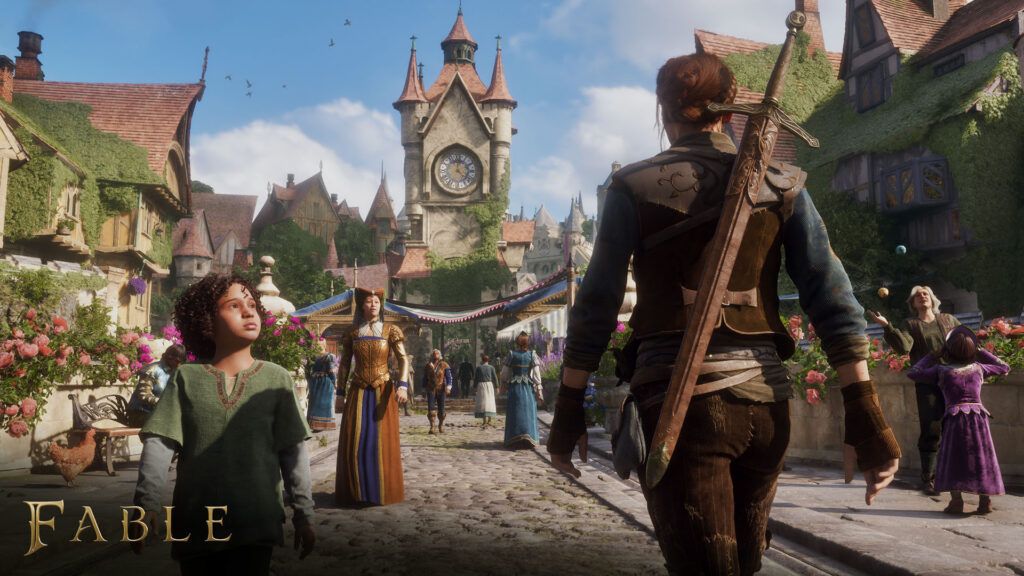
Fable is a third-person open-world RPG set in the fantasy Britain of Albion. Every action is witnessed and shapes your reputation town by town — there is no single global good/evil score, and no right way to play. Focus on learning how the local reputation system works early, and do not rush the story before exploring the world.
01The Core Loop — What Fable Is Really About
Unlike most RPGs that funnel you toward a single narrative path, Fable is built around freedom of expression. You have a main questline to follow, but the game rewards players who wander, experiment, and engage with Albion's world on their own terms. The three pillars of Fable's experience are:
- Combat progression: developing your hero's abilities across melee (Strength), ranged (Skill), and magic (Will) — or blending all three into a hybrid style.
- Morality and reputation: a living system that tracks how each town sees you through witnessed actions and the traits they associate with you — not a single global hero/villain meter — shaping how NPCs and quests react to you.
- Social simulation: buying property, running businesses, forming relationships, getting married, having children, and building a life in Albion alongside (or despite) saving it.
You do not need to specialise exclusively in any one pillar. A warrior landlord who runs three taverns and is beloved by the town of Bowerstone is just as valid a character as a solitary Will-wielding scholar who terrifies every NPC they encounter.
02Understanding Albion — The World
Albion is Fable's fictional world — a lush, open landscape inspired by the British Isles, dotted with towns, forests, ruins, and dungeons. You start out in Briar Hill, a small childhood village, before venturing toward Bowerstone — confirmed as Albion's largest city — and returning landmarks such as Fairfax Castle, the Old Clock Tower, and the Heroes' Guild. Fans have also spotted what looks like Bloodstone, the lawless port town from earlier Fable games, in trailer footage, but Playground Games has not officially confirmed it — treat that one as an unconfirmed rumor for now. Each area has its own atmosphere, culture, and cast of individually voiced NPCs.
One of the most striking features of Albion: Playground Games has said every building in the game can be entered — you can rob it, or buy it and live there — and the world's more than 1,000 NPCs are fully voiced by a cast of roughly 100 human actors, with no AI-generated voices involved. This means the world feels genuinely populated rather than decorative — characters react to your local reputation and your specific actions in ways that make the world feel alive.
Do not rush through Albion. Many players who race the main quest miss the side quests, hidden locations, and the organic moments that make Fable memorable. The world is designed to be explored at your own pace.
03Hero Progression — Strength, Skill, and Will
Your hero develops across three broad disciplines:
- Strength — governs melee combat. Investing here increases physical damage, unlocks powerful close-range abilities, and makes your hero more imposing in close quarters. Warriors who favour swords, axes, and hammers develop along the Strength path.
- Skill — governs ranged combat. Investing here improves accuracy and damage with bows, crossbows, and ranged weapons. Skill-focused heroes are effective at keeping distance and picking off targets before engaging.
- Will — governs magic. Investing here unlocks and empowers spells — fire, lightning, force, and more — and makes your hero more visually otherworldly as Will ability grows.
Crucially, you are never locked into one path. You can freely invest across all three disciplines, creating a melee warrior who also casts spells, or a ranged fighter with a back-up sword. The three styles also flow together in real-time combat — what Playground Games calls "style-weaving" — letting you start with a ranged shot, close to melee, then finish with a spell without pausing the action or digging through a menu. Beginners can safely choose whichever approach feels natural; you can always expand later.
04Reputation — How Albion Sees You
Fable's morality system works differently from earlier games in the series. There is no single good/evil meter, and — unlike the original trilogy — your hero's physical appearance no longer changes based on your morality. Playground Games deliberately removed the classic halo/horns transformation. Founder Ralph Fulton has explained the reasoning: a visibly obvious moral score would undercut the new reputation system, since walking into an unfamiliar town "with horns and a trident" would mean your reputation precedes you before you've actually done anything there.
Instead, reputation is local and built from witnessed actions. If people see what you do, word spreads and you build a reputation for that specific behaviour in that specific settlement — Playground Games has described examples like being known locally as a "Chicken Chaser," or building a reputation for generosity, bigamy, or theft. Walk into a settlement you've never visited before and nobody there knows anything about you yet — you start with a clean slate.
Not every NPC values the same traits, and different people in the same town can judge the same reputation differently. Reputation affects how NPCs react to you, romance and marriage prospects, and shop prices. The key advice for beginners: your reputation is a byproduct of how you actually play in each place, not a single stat to min-max — think about the character you want to be town by town, not about optimizing one global score.
05Combat Basics — Starting Out
Fable's combat is designed to be accessible while rewarding style and creativity. Based on Playground Games' first public hands-on demo, the basics include:
- Melee weapons have real weight: a faster weapon trades power for speed, while a slower, two-handed weapon like the Bower Hammer can flatten weaker enemies in a single hit and cleave through several enemies at once with a charged swing.
- Parries matter: landing a well-timed parry staggers an enemy and opens them up for a follow-up counter-attack — a high-risk, high-reward option once you get the timing down.
- Ranged weapons reward aiming for weak points: the demo showed both a precision bow (the Deepwood Bow) and a rapid-fire crossbow (the Repeater Crossbow) — shooting an unarmored enemy in the leg, for example, can make them stumble.
- Magic runs on a small set of spell slots: abilities shown so far include a Fireball (a quick interrupt or a charged room-clearer), chaining Lightning bolts, and summoned phantom Blades for picking off distant enemies.
For beginners, the most useful thing to know is that Playground Games built combat with no menus or loadout screens to fuss with mid-fight — your abilities are meant to be immediately accessible on the controller, so you can move between melee, ranged, and magic without breaking the flow of a fight.
06The Reputation and Trait System
Fable's reputation system goes deeper than a simple good/evil bar, and it resets by location. Every notable action you take that other people witness builds toward a trait specific to that settlement — Playground Games' own examples include reputations like "Chicken Chaser," or being known locally for generosity, bigamy, or theft.
These traits then affect how individual NPCs respond to you — different people care about different things, so the same reputation can win you fans in one crowd and enemies in another. This creates a nuanced social ecosystem: being universally beloved is very difficult, but building a strong reputation among specific groups of people is very achievable.
One thing to flag as unconfirmed: it's reasonable to expect that violence against townspeople will damage your local reputation, but Playground Games has not detailed a specific crime/bounty mechanic (like a wanted level) ahead of launch, so treat any specifics you read about that as speculation for now, not a confirmed system.
07Early Priorities — What to Do First
When you begin Fable, resist the temptation to follow the main quest marker exclusively. Here are the highest-value early priorities:
- Explore the starting area thoroughly. Hidden items, side content, and one-time encounters are scattered across every zone, and backtracking later is possible but inefficient. Note: series staples like silver keys have not been confirmed for this reboot, so don't assume every mechanic from the older games carries over.
- Learn how the reputation system works early. Because reputation is local and built from witnessed actions rather than one global score, think about how you want each town to see you instead of chasing a single "good" or "evil" alignment — this game doesn't have one.
- Talk to every NPC you meet. With over a thousand individually voiced characters, conversations reveal side quests, lore, property purchase opportunities, and relationship hooks that are easy to miss if you focus only on quest markers.
- Start saving money early. Property costs gold, and buying your first home or business early gives you passive income and storage. Do not spend all your gold on equipment in the first few hours.
- Pick one combat style to develop first. Even though you can blend all three paths, trying to invest equally in Strength, Skill, and Will from the very start spreads your progression thin. Pick the style that suits how you want to play early, then branch out once you are comfortable.
FAQ
Do I need to have played previous Fable games?
No. Fable (2027) is a complete reboot set in the same world of Albion but with an entirely new story, a new protagonist, and new supporting characters. You will get more out of certain references to the world's lore if you have played the original trilogy, but no prior knowledge is required or expected. This is a fresh start designed to welcome new players.
Is Fable open world?
Yes. Fable takes place in Albion, a fully open world inspired by the British Isles. You can explore towns, forests, dungeons, and ruins at your own pace, and quests can generally be tackled in any order you choose. The world reacts dynamically to the local reputation you build in each place, so the experience changes substantially depending on how you play.
Is Fable on Xbox Game Pass?
Yes. As a first-party Xbox title published by Xbox Game Studios, Fable is included in Xbox Game Pass and PC Game Pass from day one (February 23, 2027). Subscribers can play it at no additional cost. Premium and Collector's Edition owners get five days of early access starting February 18, 2027.
How long does Fable take to complete?
Playground Games' associate game director Will Kennedy said at Gamescom 2026 that the main story takes roughly 15–20 hours, with a similar amount of side content and open-world exploration on top of that — so seeing most of what's there works out to somewhere around 30–40 hours. The life-sim systems (property, relationships, running a business) don't have a hard endpoint; fellow associate director Craig Littler said you can "literally play it forever" if that's how you want to spend your time.
Can you be evil in Fable?
Yes. Fable lets you play as a villain — intimidate NPCs, commit crimes, and take on morally questionable quests, and different settlements will judge you accordingly. One change from earlier Fable games: your character's appearance no longer physically morphs to show your alignment (no more halos or horns). Playground Games removed that mechanic specifically so a damaging reputation doesn't visibly "precede" you into places you haven't been yet — being a villain is still fully supported, it just shows up in how the world treats you rather than in how your character looks.
What platforms is Fable available on?
Fable releases on PC (Steam and the Xbox/Microsoft Store), Xbox Series X/S, and PlayStation 5 on February 23, 2027, with Premium/Collector's Edition owners getting five days of early access from February 18, 2027. PlayStation 5 support was first confirmed at the January 2026 Xbox Developer Direct and reaffirmed at Xbox's June 2026 Games Showcase, where the current release date was announced. On PC, published system requirements scale up to 4K at a 60fps target on higher-end hardware, with DLSS, FSR, and XeSS upscaling expected to be supported.
Sources
Where the facts on this page were checked. If one of them now says something different, we want to know — tell us and we will fix the guide.
- Fable: Answering the Big Questions After that Long-Awaited Developer_Direct Deep-Dive Xbox Wire
- Fable: Find Out How Combat Works After Our First Hands-on Xbox Wire
- Fable has been delayed to 2027 Video Games Chronicle
- Fable launches on February 23, 2027 for Xbox Series, PS5, and PC RPG Site
- Fable gets a new trailer and release date at Xbox Games Showcase; still coming to PS5 AltChar
- Fable Fans Are Already Piecing Together The Game's Map TheGamer
- Fable PC requirements show it can run on an RTX 2060, but you'll need an RTX 5080 for 4K at 60 fps TechSpot
- Fable Main Story Will Take About 20 Hours to Complete 80.lv
- Fable's Open World Is So Vast That Every Building Can Be Entered, Robbed, Lived In, or Bought Tech4Gamers
- Fable Won't Be Stooping To AI And Is Making Sure Every Unique NPC Is Voiced By A Human TheGamer
- Fable's faithful take on the originals is exactly what I wanted, but one missing feature will sting for longtime fans PCGamesN
- Fable will feature over 150,000 lines of dialogue, Playground Games confirms TechRadar
New & updated guides ship every week. Follow the Atom feed or get notified when new Fable guides land.