Last updated: 5 September 2026
Subnautica 2 Best Early Resources — Where to Find What You Need
Running out of a specific resource halfway through crafting is one of the most frustrating early-game experiences in Subnautica 2. The ocean is full of materials, but knowing which ones matter first — and roughly where each one turns up — turns frantic searching into deliberate farming. This guide covers the key resources you'll need in the first few hours, how the game's node-and-deposit system works, and how the Scanner Station can automate finding them once you have one built. Subnautica 2 is still in Early Access, so exact node placements can shift between patches — treat locations here as reliable starting points, not guaranteed spawns.
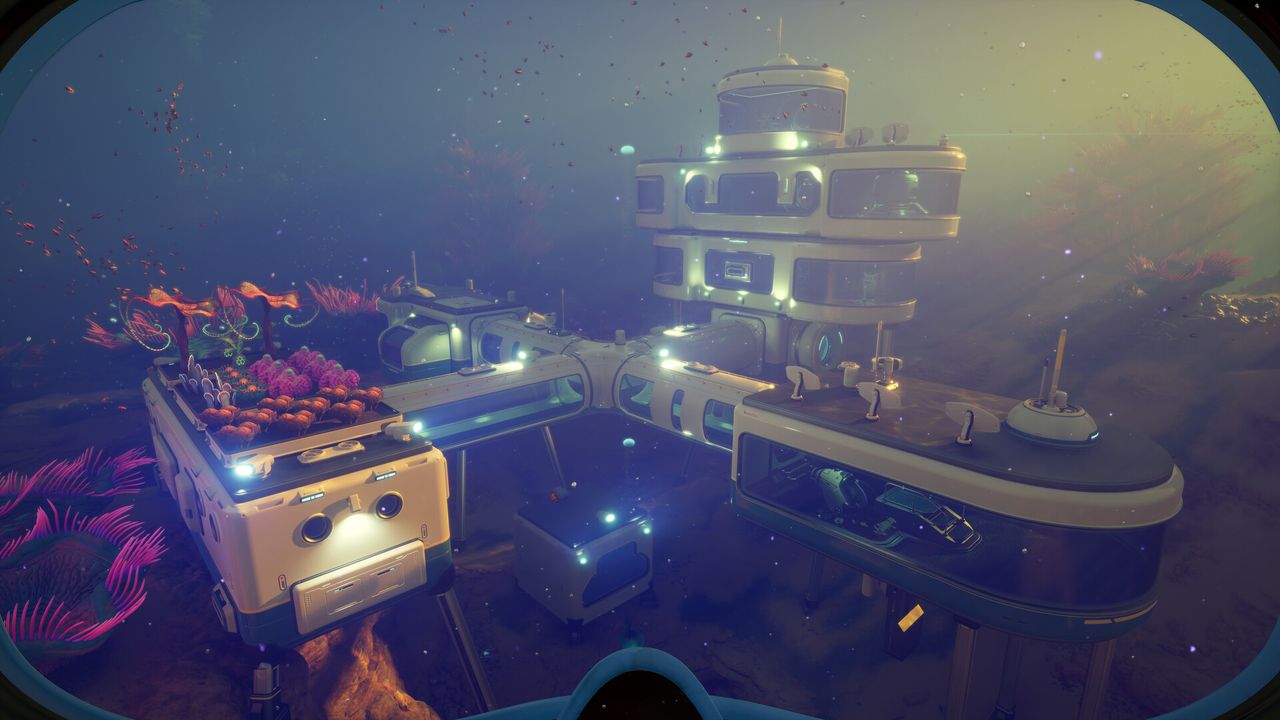
Titanium and Copper are the two materials you'll use constantly in your first hours. Both come from ordinary Resource Nodes — breakable by hand or with any tool — that spawn in every early biome, plus loose Metal Salvage debris you feed into a Fabricator. Quartz, Silver and Gold are rarer and concentrated in specific biomes further from the Lifepod. Scan resource nodes with the Scanner tool to confirm what they contain before you spend time breaking them.
01Titanium — Your Most-Used Material
Titanium is the most common raw material in the game and goes into a huge share of early crafting recipes. You will never have enough Titanium in the first two hours, so always be collecting it.
Where to find it:
- Resource Nodes — ordinary rock and mineral clusters scattered across every biome. Break them with your bare hands or any tool; each yields 3 Titanium.
- Resource Deposits — larger, tougher formations that require the Sonic Resonator to break; each yields 5 Titanium. You won't have a Sonic Resonator in your first hour, so these are more of a mid-game top-up.
- Metal Salvage — loose wreckage debris found around the Shallows and scattered near Wrecks. Picking it up doesn't give you Titanium directly — carry it to a Fabricator and process it there, where 1 Metal Salvage converts into 4 Titanium.
- Loose individual Titanium pieces also turn up occasionally and give 1 Titanium each when picked up by hand.
What you'll need it for: Titanium underpins a large share of early Habitat Builder modules and tool recipes. Prioritise Metal Salvage and ordinary Resource Nodes in your first minutes — neither requires a special tool.
02Copper — Wiring and Batteries
Copper is the second resource you'll be chasing constantly. It's the base ingredient for Copper Wire, which in turn feeds into the Wiring Kit used by most powered tools and base modules.
Where to find it:
- Copper follows the same Resource Node / Resource Deposit split as Titanium: ordinary nodes (hand or any tool) yield 3 Copper, while tougher deposits that require the Sonic Resonator yield 5.
- Copper tends to cluster on cave walls, ceilings, and the underside of overhangs rather than the open seafloor — look up and into crevices, not just down.
- Confirmed spawn biomes include the Shallows (your starting biome) as well as Dolerite Spires, Plateaus, Graveyard, Necrolei Hills, and several biomes further out.
Patch 1.1 ('Adaptive Measures') fixed a bug where two Copper nodes near the Old Habitat overlapped and only one could be harvested — both are now individually collectable.
What you'll need it for: Copper Wire (2 Copper), which feeds into the Wiring Kit (Copper Wire + 1 Silver) — required for most powered tools, the Scanner Station, and the System Chip line. It's also half of the Basic Battery recipe (2 Copper + 1 Acidic Raion Pouch). Carry a healthy stack of Copper before building your first base.
03Quartz — Electronics and Base Components
Quartz feeds into several mid-tier electronics recipes, including the System Chip used by scanning and vehicle equipment. It's less immediately common than Titanium or Copper, but concentrated in a few reliable spots.
Where to find it:
- Quartz follows the same node/deposit split — ordinary Resource Nodes yield 3, Sonic Resonator-only Resource Deposits yield 5.
- It's described as highly abundant in and around the Coral Domes in the Shallows, and can otherwise be found in almost every biome.
- Patch 1.1 fixed a placement bug on a broken Coral Dome in the Shallows that had made one Quartz Crystal node unharvestable — it's fully accessible now.
What you'll need it for: the System Chip (1 Wiring Kit + 2 Quartz), which unlocks several important tools and upgrade modules. Grab Quartz whenever you pass a Coral Dome — you'll need it for mid-game electronics sooner than you'd expect.
04Silver and Gold — Mid-Tier Electronics
Silver and Gold sit a tier above Titanium, Copper, and Quartz — you need them for the Wiring Kit chain and other electronics, but they don't spawn as densely near the Lifepod.
Silver:
- Ordinary Resource Nodes yield 2–3 Silver; Sonic Resonator-only Resource Deposits yield 5.
- Confirmed spawn biomes include Plateaus, Necrolei Hills, Graveyard, Dolerite Spires, and the aptly-named Silver Mines.
- Patch 1.1 added extra Silver placements in the Coral Gardens area, plus a proximity hint dialogue that triggers when you're near a Silver-rich spot there.
Gold:
- Also split between ordinary nodes and Sonic Resonator deposits, though official sources don't list exact per-node yields for Gold the way they do for the other ores.
- Confirmed spawn biomes include Graveyard, Graveyard Caves, Root Canyon, and Thermal Vent Clusters — including deposits near the Karakorum Power Plant and Karakorum Metal Farms further from the Lifepod.
What you'll need them for: Silver is a direct ingredient in the Wiring Kit (Copper Wire + 1 Silver). Gold's main early use is in later electronics and vehicle-tier recipes rather than your first-hour crafting — don't go out of your way for it until you've got the basics covered.
05Fiber and Acidic Raion Pouch — Key Non-Ore Materials
Two non-mineral materials are easy to overlook but block basic crafting if you run out.
Fiber: crafted at the Fabricator from 2× Fibrous Pulp, and used in Fiber Mesh (2 Fiber + 1 Strong Acid), fins, first aid kits, and several habitat items like beds and storage containers. Exactly which plants yield Fibrous Pulp has shifted between Early Access patches — if the game's own crafting screen shows you a different source than expected, trust the in-game tooltip over any guide, including this one.
Acidic Raion Pouch: harvested with the Survival Multitool from Acid Raion plants — purple, brain-like growths found in caves in the Shallows. Each plant regrows its pouches (and a separate medical gel sac) over time, so a known patch is worth revisiting. Pouches are the second ingredient in the Basic Battery (2 Copper + 1 Acidic Raion Pouch) — without Batteries you can't craft any powered tool — and in bulk they're also a solid Bioreactor fuel source once you have one built.
- Tip: Acid Raion plants are easy to miss on a first dive — they don't look like typical harvestable flora, so scan anything unfamiliar rather than swimming past it.
06Using the Scanner Station to Find Resources
Once you've built a Scanner Station (a mid-early base module, not the handheld Scanner tool), resource hunting gets a lot more efficient. It locates resources, wrecks, and anomalies within a fixed 300-metre spherical radius and displays them as a holographic map inside the station, using 10 energy per second while active.
- Crafting it requires 1 System Chip, 3 Titanium, and 1 Wiring Kit — realistically a mid-early rather than first-hour goal, since the System Chip itself needs Silver, Copper, and Quartz.
- Its base scan radius is fixed at 300 metres. The upgrades it takes are filter upgrades (Anomaly, Biohacking Chamber, Cicada Debris, Bloom Infestation) that unlock additional categories of things it can detect, rather than upgrades that extend its range.
- You can select which resource type it actively highlights, and a detected signal disappears once you've harvested that node. Multiple Scanner Stations can run at once if you want coverage across several biomes.
Before you have a Scanner Station, the most reliable manual approach is still to sweep a biome systematically — the Shallows first, since it's the most Copper- and Titanium-dense area near the Lifepod — rather than diving at random.
FAQ
Where do I find Titanium in Subnautica 2?
Titanium comes from ordinary Resource Nodes found in every biome (break by hand or with any tool, 3 Titanium each), from tougher Resource Deposits that need a Sonic Resonator (5 Titanium each), and from Metal Salvage debris around the Shallows and Wrecks — which needs to be processed at a Fabricator, where 1 Metal Salvage becomes 4 Titanium. Prioritise Metal Salvage and ordinary nodes early, since neither needs a special tool.
Where do I find Copper in Subnautica 2?
Copper uses the same Resource Node (3 Copper) and Resource Deposit (5 Copper, needs Sonic Resonator) system as Titanium, and often clusters on cave walls, ceilings, and overhangs rather than open seafloor. It's confirmed in the Shallows plus several further-out biomes including Dolerite Spires, Plateaus, Graveyard, and Necrolei Hills. You'll need it constantly for Copper Wire, Wiring Kits, and Basic Batteries.
Where is Quartz in Subnautica 2?
Quartz is highly abundant in and around the Coral Domes in the Shallows, and otherwise turns up in nearly every biome as both ordinary Resource Nodes (3 Quartz) and Sonic Resonator-only Resource Deposits (5 Quartz). It's the key ingredient, alongside a Wiring Kit, for the System Chip used in several important recipes.
How do I get Silver in Subnautica 2?
Silver comes from Resource Nodes (2–3 Silver) and Resource Deposits (5 Silver, Sonic Resonator required) in biomes including Plateaus, Necrolei Hills, Graveyard, Dolerite Spires, and Silver Mines. Patch 1.1 also added extra Silver spawns in the Coral Gardens area with a proximity hint. Silver is a direct ingredient in the Wiring Kit, so you'll need a steady supply once you start building powered tools.
What is the most important material to collect first in Subnautica 2?
Titanium and Copper, in roughly equal priority. Titanium underpins most early Habitat Builder and tool recipes, while Copper feeds into Copper Wire, Wiring Kits, and Basic Batteries — the components that power almost every tool. Both are available as ordinary Resource Nodes you can break by hand from your very first dive, so there's no reason to wait to start farming them.
How does the Scanner Station help with resource farming?
The Scanner Station is a base module (distinct from the handheld Scanner tool) that reveals resources, wrecks, and anomalies within a fixed 300-metre radius on a holographic map. It requires a System Chip, Titanium, and a Wiring Kit to build, so it's a mid-early goal rather than a first-hour one. Its upgrade modules add new detection categories (like anomalies or Cicada debris) rather than extending its range.
Sources
Where the facts on this page were checked. If one of them now says something different, we want to know — tell us and we will fix the guide.
- Subnautica 2 Wiki — Titanium wiki.subnautica.com
- Subnautica 2 Wiki — Copper wiki.subnautica.com
- Subnautica 2 Wiki — Quartz wiki.subnautica.com
- Subnautica 2 Wiki — Silver wiki.subnautica.com
- Subnautica 2 Wiki — Gold wiki.subnautica.com
- Subnautica 2 Wiki — Metal Salvage wiki.subnautica.com
- Subnautica 2 Wiki — Scanner Station wiki.subnautica.com
- Subnautica 2 Wiki — Basic Battery wiki.subnautica.com
- Subnautica 2 Wiki — Wiring Kit wiki.subnautica.com
- Subnautica 2 Wiki — Fiber Mesh wiki.subnautica.com
- Subnautica 2 Wiki — Fiber wiki.subnautica.com
- Subnautica 2 Early Access 1.1 Adaptive Measures Update Unknown Worlds
- Subnautica 2 Early Access Roadmap Unknown Worlds
New & updated guides ship every week. Follow the Atom feed or get notified when new Subnautica 2 guides land.