Last updated: 31 August 2026
Subnautica 2 Beginner's Guide — Survive Your First Hours
Subnautica 2 drops you on an alien ocean planet with a damaged escape pod, a single tank of oxygen, and very little else. The opening hour is the game at its most dangerous — not because of creatures, but because new players often swim down too far, run out of oxygen, or spend too long floating on the surface wondering what to do next. This guide walks you through exactly what to do in the right order so that your first dive leads to a base, not a respawn screen.
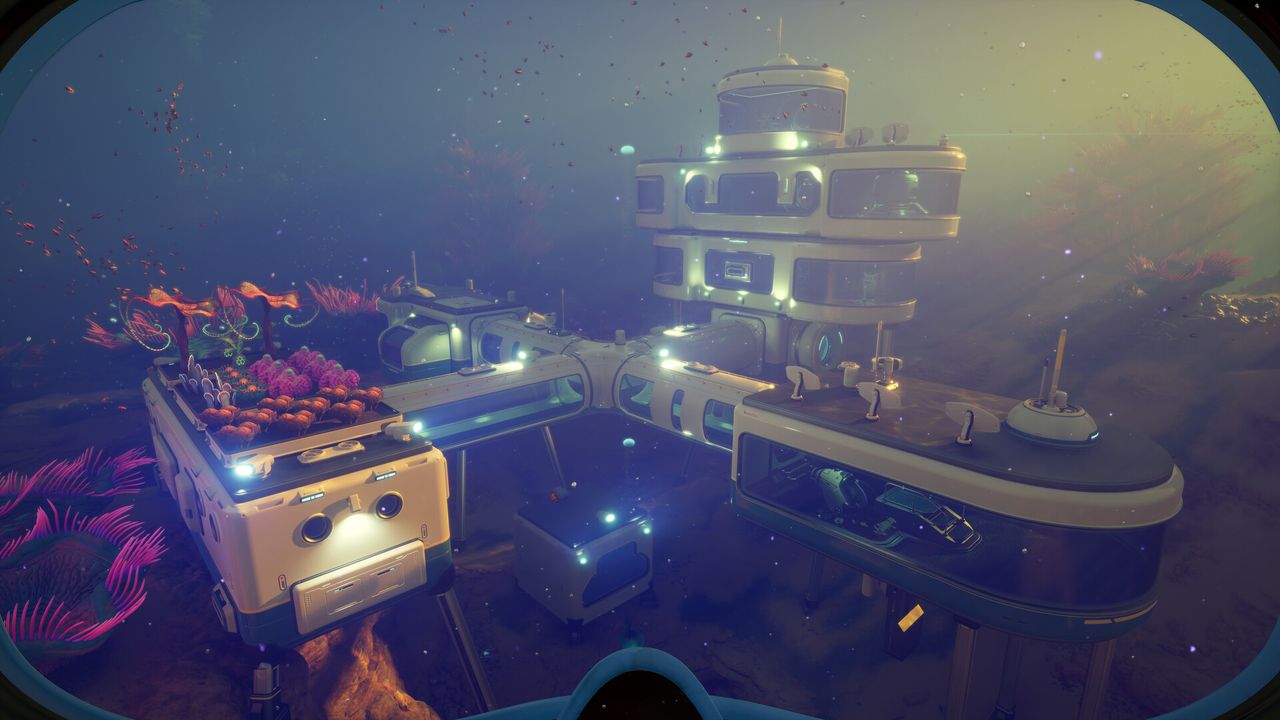
The moment you hit the water, your two priorities are oxygen and materials. Scan everything, stay shallow until your oxygen tank is upgraded, craft a Knife and Scanner first, and build a small base near your landing site within the first hour of play.
01The First Five Minutes — What to Do Immediately
Before you hit the water, the character customization screen lets you pick your pioneer's look — update 1.2 ('Buddy System', August 2026) added two new options, Jegna and Grace, plus two new color schemes. This choice is purely cosmetic and has no effect on stats or survival, so pick whichever look you like and move on.
When you surface from your escape pod, resist the urge to dive straight down. First, look around the pod for floating debris and any resources that have washed up nearby. These early materials — typically Titanium fragments and Copper Ore — cost you no oxygen to collect and give you a head start on crafting.
Inside the escape pod you'll find a basic Fabricator. Your first craft should be a Scanner, which uses a small amount of Titanium and a Battery. Once you have the Scanner, every creature, plant, and piece of technology you scan adds data to your PDA and — critically — reveals crafting recipes you'd otherwise never find. Scan everything you can reach in the first biome before moving on.
- Scan debris from the crash before it sinks too deep.
- Collect surface resources (Creepvine, floating minerals) without spending oxygen.
- Check your PDA for any immediate survival warnings or mission markers — these point you toward your first objectives.
- Do not go below 50 metres until you have at least one oxygen tank upgrade crafted.
02Oxygen: Your Real Enemy
Your default oxygen supply gives you roughly 45 seconds underwater before the warning sounds. That sounds like enough until you're deep in a cave and realise the exit is 30 metres above you. Oxygen management is the core survival skill in Subnautica 2, and getting comfortable with it early separates confident explorers from repeated respawns.
The fastest way to extend your dive time is to craft a High Capacity O₂ Tank as soon as you find the recipe (from scanning a specific debris piece near your starting area). This nearly doubles your underwater time. Until then, follow these habits:
- Always keep an eye on the oxygen bar in the top-left of your HUD — the icon pulses faster as it empties.
- When the audio warning triggers, stop what you are doing and swim up immediately. Do not grab one more resource first.
- Learn where your air pockets are: kelp forests and shallow caves often have small air pockets at the top you can breathe from.
- The Seaglide (early craftable, uses a Lubricant and a Battery) dramatically speeds up your movement — crafting it should be a top-five priority.
Once you have the High Capacity Tank and a Seaglide, the ocean becomes far less punishing. These two items effectively double how far and how confidently you can explore.
03Early Crafting Priority List
The Fabricator in your escape pod can produce survival tools and equipment, but it requires finding the right materials and scanning the recipe first. Here is the order that makes your first session go smoothest:
- 1. Scanner — unlocks recipes. Craft this first, before anything else.
- 2. Knife — lets you harvest Creepvine for Fiber Mesh and Silicone Rubber, both needed for almost everything else.
- 3. Seaglide — transforms your underwater mobility. Requires a Lubricant (from Creepvine Seeds) and a Battery (Copper + Acid Mushrooms).
- 4. High Capacity O₂ Tank — find the recipe by scanning debris, craft once you have Glass and Titanium.
- 5. Fins — cheap (Silicone Rubber × 2) and noticeably increase swim speed without using battery power.
- 6. Habitat Builder — lets you construct your first base. Requires a Computer Chip and a Battery.
Do not spend early materials on food and water beyond the bare minimum — the ocean provides plenty of edible fish that you can catch by hand in the shallow biome near your pod. Save Titanium and Copper for tools.
04Food and Water — The Basics
Hunger and thirst drain slowly enough in the early game that they should not be your first concern, but they will become urgent once you're spending long periods exploring. The simplest early strategy: catch and cook Bladderfish for fresh water, and cook Peeper fish for food.
To cook fish, you need a Bioreactor or a simple Outdoor Cooking Station (or the one inside your escape pod if present). Raw fish can be eaten for partial nutrition but won't restore water. You can also craft a Filtered Water Dispenser later in the game, but early on, catching Bladderfish by hand near the surface is the fastest method.
A few early food tips:
- Bladderfish are the round, pale fish swimming near the surface — each one gives you a safe fresh-water drink when cooked.
- Peepers (the large-eyed orange fish) are abundant in the Safe Shallows and provide the most food value of any early fish.
- Don't eat alien plants you haven't scanned — some cause negative status effects.
- Once you build a base, plant an Alien Containment tank and breed fish for a reliable food supply.
05Where to Build Your First Base
You don't need a base in the first 20 minutes, but you will want one before you go exploring beyond the starting biome. Your first base can be simple — one or two modules — and it will serve as a safe oxygen source, storage, and crafting hub.
Best early base location: The shallow reef zone 200–300 metres from your escape pod, at a depth of 10–20 metres. This gives you quick surface access (for oxygen emergencies), proximity to early resources, and enough light to see without a flashlight.
Your minimal first base should have:
- One Tube or Room module — this is your breathable interior.
- A Fabricator inside — so you're not running back to the pod to craft.
- A Solar Panel on top — free power during daylight; add a second panel or a Power Cell Charger for night operations.
- Two Storage Lockers inside — one for resources, one for food and tools.
Hull integrity is the other key concern: more modules and windows lower it, and if it drops below 0 the base floods. Early on, keep your base small. Add a Reinforce Hull piece or an External Buttress if you see the hull integrity number drop below 5.
06Common Beginner Mistakes to Avoid
These are the mistakes that send new players back to their last save:
- Diving too deep too soon. The Safe Shallows (0–50 m) and nearby kelp forests have everything you need for the first hour. Deeper biomes have stronger creatures and harsher conditions.
- Ignoring the PDA messages. Story messages and survival alerts give you waypoints and recipe hints — check the PDA log regularly.
- Not scanning enough. Every piece of flora, fauna, and wreckage you scan can unlock recipes. Scanning compulsively is the single best habit to build.
- Running out of oxygen mid-loot. If you're collecting resources, surface before the warning, not after.
- Building a base too far from your pod. Your pod is a respawn anchor and early crafting point. Stay close until you're confident in navigation.
- Ignoring hull integrity. A base that floods loses all your stored resources — always keep hull integrity positive.
- Panic-reprinting when downed in co-op. Since update 1.2, a nearby teammate can revive you before you reprint — you'll keep your equipment and regain a little oxygen. Give your buddy a few seconds to reach you before you choose to respawn at your Biobed.
FAQ
What should I do first in Subnautica 2?
Start by scanning all the crash debris near your escape pod to unlock recipes, then collect surface resources without spending oxygen. Craft a Scanner first, then a Knife and Seaglide as quickly as possible. These three items will carry you through the first hour of play safely.
How do I extend my oxygen in Subnautica 2?
Scan the wreckage near your starting area to find the High Capacity O₂ Tank blueprint, then craft one as soon as you have Glass (from Quartz) and Titanium. In the meantime, stay in shallow water (under 50 metres), always surface before the audio warning sounds, and craft Fins early to reach the surface faster.
How do I get food and water in Subnautica 2?
Catch Bladderfish by hand near the surface and cook them for fresh water. Cook Peeper fish for food — both are abundant in the starting biome. You can catch fish by swimming into them slowly. Avoid eating unscanned alien plants as some have negative effects.
Where is the best place to build a first base in Subnautica 2?
Build in the shallow reef zone 200–300 metres from your escape pod at 10–20 metres depth. This keeps you close to the surface for quick oxygen, puts you near early resources, and is far enough that it won't block your view of the pod. Keep it to 2–3 modules initially to maintain positive hull integrity.
Is Subnautica 2 hard for new players?
The first hour is the toughest. Most early deaths are oxygen-related rather than creature-related — the starting biome is relatively safe. Once you have a Seaglide, a High Capacity O₂ Tank, and a small base, the difficulty plateau is much gentler. The game rewards slow, methodical exploration over rushing to go deep.
Do I need to play Subnautica 1 first?
No. Subnautica 2 is a standalone game set on a new planet with a new story. You do not need any knowledge of the first game to understand or enjoy it. Fans of the original will recognise many mechanics, but they are all reintroduced naturally through gameplay.
Sources
Where the facts on this page were checked. If one of them now says something different, we want to know — tell us and we will fix the guide.
- Subnautica 2 Buddy System Update Unknown Worlds Entertainment
- Subnautica 2's Big Co-Op Buddy System Update Is Live Kotaku
New & updated guides ship every week. Follow the Atom feed or get notified when new Subnautica 2 guides land.