Last updated: 5 September 2026
Phantom Blade Zero Difficulty Settings — Which Should You Choose?
Phantom Blade Zero is not out yet — it's scheduled for October 29, 2026 on PS5 and PC — so everything here is drawn from S-GAME's official State of Play deep dive and outlet previews rather than a finished retail build, and some specifics (exact unlock requirements, stat numbers) could still shift before launch. What is consistently confirmed across S-GAME's own materials and multiple outlets is that the game has four named difficulty options — Wayfarer, Pathbreaker, Hellwalker, and 66 Days — and that the higher tiers change enemy AI behaviour, not just health and damage sliders. This guide explains what each setting is built to do and which one fits your playstyle, and flags the couple of details that are still worth double-checking once the game is out.
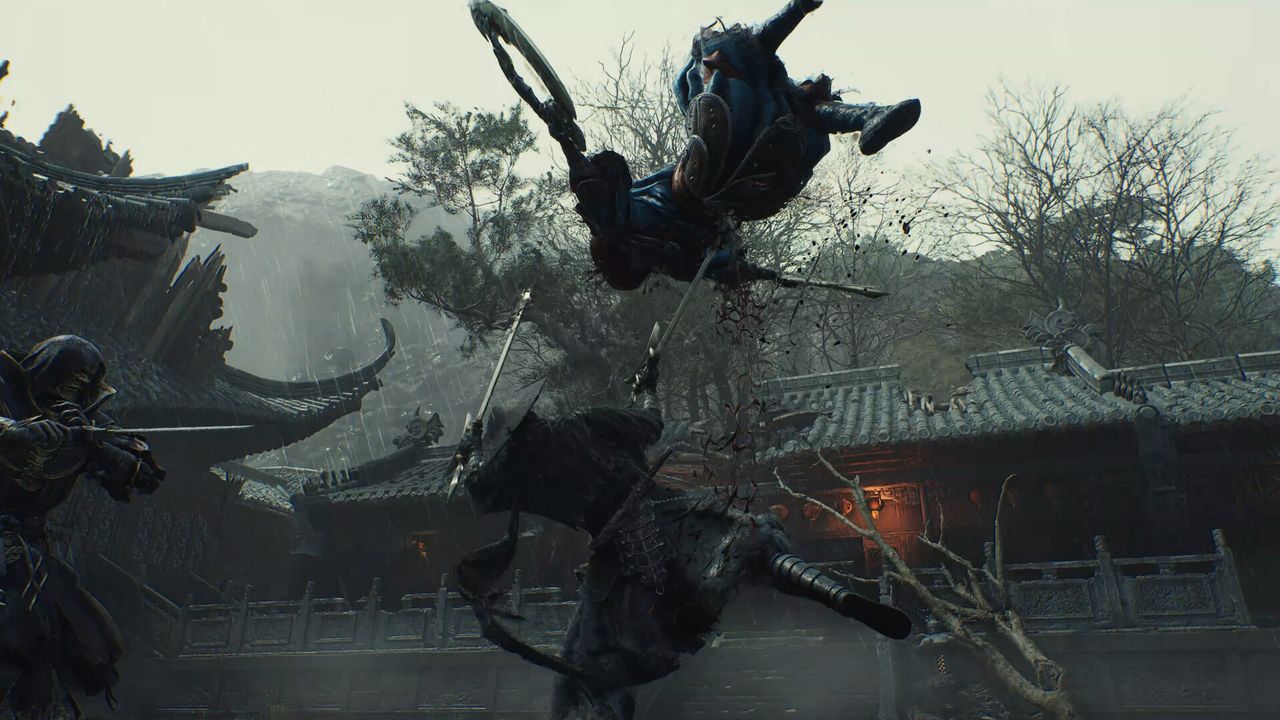
Phantom Blade Zero ships with four confirmed difficulty options: Wayfarer (story-focused, most accessible), Pathbreaker (the intended baseline experience), Hellwalker (adaptive enemy AI that reacts to your patterns in real time), and 66 Days — an optional permadeath mode that turns Soul's story countdown into 66 actual lives. Start on Wayfarer if you're new to action games, or Pathbreaker if you want the full intended challenge. The day-for-day permadeath mechanic is specific to 66 Days mode — it is not how the timer works on the other three settings.
01The Four Difficulty Options
S-GAME's August 2026 State of Play deep dive and its official PlayStation Blog recap confirmed four named difficulty settings: Wayfarer, Pathbreaker, Hellwalker, and 66 Days. This is a different (and more specific) set of names than early previews sometimes shorthanded as 'easy/normal/hard' — if you've seen a guide or thread calling them 'Standard' or 'Hardcore,' those are informal placeholders, not the actual in-game names.
The headline design idea, repeated across S-GAME's previews, is that the higher tiers change how enemies behave rather than simply inflating their stats. Enemy AI is described as becoming more adaptive and pattern-aware at the top end, particularly on Hellwalker, rather than just hitting harder.
- Four confirmed tiers: Wayfarer, Pathbreaker, Hellwalker, 66 Days.
- Higher tiers emphasise smarter, more adaptive enemy AI over pure stat inflation — most explicitly on Hellwalker.
- The core parry/Ghoststep input system is the same across all four settings; what changes is how much room enemies give you to use it.
- Treat exact unlock rules and stat numbers as subject to change until the game is actually out on October 29, 2026 — verify against patch notes or an official wiki at launch.
02Wayfarer — Built for the Story
Wayfarer is S-GAME's own description of the entry-level tier: intuitive, cinematic, and aimed at players who mainly want to experience Soul's story and the game's wuxia set pieces without fighting the combat system for every step. If the parry/Ghoststep learning curve or Sha-Chi management sounds like more friction than you want, this is the intended starting point.
- Recommended for: players new to action games, or anyone prioritising story and exploration over combat difficulty.
- Enemy aggression and reaction speed are lowered relative to the other tiers, giving you longer windows to react.
- This is the tier S-GAME itself frames as 'for those who simply like to enjoy the story.'
03Pathbreaker — The Intended Baseline
Pathbreaker sits between Wayfarer and Hellwalker and is the difficulty most preview coverage describes as the standard, baseline way to experience the combat system as designed — challenging but fair, without the adaptive AI pushback of Hellwalker.
If you have some experience with parry-focused action games and want the 'real' version of the combat loop without courting the harder AI reads of Hellwalker, this is the tier to pick.
- Recommended for: players comfortable with parry/dodge timing who want the game's default combat experience.
- Positioned as the middle option — meaningfully more demanding than Wayfarer, without Hellwalker's adaptive AI.
- You can move up to Hellwalker later without losing progress.
04Hellwalker — Adaptive, Pattern-Reading AI
Hellwalker is where S-GAME's 'AI that adapts to you' pitch is most concrete. Preview coverage of boss fights on this tier describes enemies that don't just repeat a fixed pattern: they react in real time to your distance, to attacks you miss, and to moves you repeat too often, closing down strategies that worked reliably on lower difficulties.
Some previews describe Hellwalker as becoming available once you've finished the story on Pathbreaker, positioning it as a harder mode for a second pass rather than a day-one option — treat this as likely but unconfirmed until launch, since S-GAME hasn't spelled out the exact unlock rule in its own materials.
- Recommended for: players who found Pathbreaker comfortable and want enemies that punish repeated strategies specifically.
- Enemies adapt to your distance, missed attacks, and repeated patterns rather than following a fixed script.
- May require finishing the story on Pathbreaker first — verify this at launch, as pre-release coverage isn't unanimous on the exact unlock condition.
0566 Days — The Permadeath Mode
66 Days is a separate, opt-in mode rather than a straightforward 'fourth difficulty step.' It reuses the game's central premise — Soul has 66 days left to live — as an actual gameplay rule: you start the mode with 66 lives, enemies are as tough as Hellwalker, and every death removes one day/life from the counter. Reach zero and the run ends permanently.
Coverage of the mode is explicit that this is meant to be more forgiving than a traditional one-life permadeath run, since 66 chances is a large buffer compared to games where a single death ends everything. It's still built as the toughest way to play, combining Hellwalker's enemy strength with a hard cap on how many mistakes the whole campaign can absorb.
Importantly, this day-for-day death penalty is specific to 66 Days mode. Nothing in official or preview coverage indicates that dying costs you a day of Soul's 66-day countdown while playing on Wayfarer, Pathbreaker, or Hellwalker — on those three settings the 66-day premise is the story's framing device, not a mechanic that's actively ticking down as you play.
- 66 Days gives you 66 lives; each death costs one, and hitting zero ends the run for good.
- Enemy strength in 66 Days matches Hellwalker — the added challenge is the life cap, not tougher enemies on top of that.
- The death-costs-a-day mechanic belongs to this mode specifically — it is not confirmed to apply on Wayfarer, Pathbreaker, or Hellwalker.
- Best approached after you already know the game's boss patterns, since it's built on Hellwalker's difficulty floor.
06Boss Checkpoints
One design decision that preview coverage of the August 2026 State of Play consistently mentions: multi-phase boss fights include a checkpoint between phases. If you clear a boss's first phase and die in the second, you're reported to restart at the second phase rather than replaying the whole fight from scratch. Coverage doesn't specify whether this differs by difficulty tier, so treat it as a general design intent rather than something guaranteed identical on every setting until you can confirm it in the released game.
- Multi-phase bosses are described as having a checkpoint between phases, softening full restarts on a phase-2 death.
- Not confirmed whether this behaves identically across all four difficulty options — check in-game once the game is out.
- The intent, per S-GAME's framing, is to keep the challenge about executing each phase well rather than about replay grind.
07Which Difficulty Should You Pick?
Here is the quick decision guide based on what's confirmed so far:
- New to action games or mainly here for the story: Wayfarer. It's S-GAME's own description of the intended entry point.
- Comfortable with parry-based combat and want the default experience: Pathbreaker. This is the baseline the game is balanced around.
- Already cleared the story and want enemies that read your habits: Hellwalker.
- Want the ultimate challenge and are willing to risk losing a run permanently: 66 Days, once you've unlocked it.
- Not sure: Start on Wayfarer or Pathbreaker. Nothing in current coverage suggests any of the four options lock you out of story content or endings — but confirm that against the final game rather than taking it as guaranteed pre-launch.
FAQ
What are the difficulty settings in Phantom Blade Zero?
Four confirmed options: Wayfarer (story-focused, most accessible), Pathbreaker (the intended baseline), Hellwalker (adaptive AI that reads your patterns), and 66 Days (an unlockable permadeath mode with 66 lives). These names come from S-GAME's own State of Play coverage, not generic 'easy/normal/hard' labels.
What does Hellwalker change compared to Pathbreaker in Phantom Blade Zero?
Hellwalker's headline change is enemy AI behaviour: preview coverage describes bosses reacting in real time to your distance, missed attacks, and repeated strategies rather than following a fixed pattern, closing off approaches that worked reliably on Pathbreaker. Some coverage suggests it unlocks after finishing the story on Pathbreaker, though S-GAME hasn't confirmed the exact unlock rule itself.
How does 66 Days mode work in Phantom Blade Zero?
66 Days is an opt-in permadeath mode that gives you 66 lives, matches Hellwalker's enemy strength, and removes one life/day every time you die. Once the counter hits zero, that run ends permanently. It's a separate mode built on top of the game's premise, not something that happens automatically while playing Wayfarer, Pathbreaker, or Hellwalker.
Does dying cost you a day in Phantom Blade Zero's 66-day story?
Only in the dedicated 66 Days mode. On the other three difficulty settings, Soul's 66-day countdown is the story's framing device rather than a mechanic that's confirmed to actively lose you days when you die — nothing in official or preview coverage says otherwise for Wayfarer, Pathbreaker, or Hellwalker.
Can I change difficulty in Phantom Blade Zero, and does it affect endings?
Coverage so far doesn't flag difficulty as gating story content or endings — those are tied to side quest completion and story choices instead. Exact rules on switching between Wayfarer, Pathbreaker, and Hellwalker mid-run haven't been detailed in preview coverage, so confirm the specifics once the game releases on October 29, 2026.
Sources
Where the facts on this page were checked. If one of them now says something different, we want to know — tell us and we will fix the guide.
- Phantom Blade Zero Wikipedia
- Phantom Blade Zero State of Play dives deep into combat and the Wulin world PlayStation Blog
- Phantom Blade Zero Is Making Action RPGs' Laziest Difficulty Trick Look Outdated Game Rant
- Phantom Blade Zero's Difficulty Options Include a Unique Spin on Permadeath Mode GamingBolt
- Phantom Blade Zero Reveals 30+ Weapons, 66-Day Permadeath Mode, Kungfupunk World, And New Gameplay Noisy Pixel
- Phantom Blade Zero on Steam Steam
New & updated guides ship every week. Follow the Atom feed or get notified when new Phantom Blade Zero guides land.