Last updated: 5 September 2026
Phantom Blade Zero Parry & Ghoststep — Mastering the Defence System
Phantom Blade Zero's defence system has a single rule at its core: every dangerous attack tells you what to do before it lands. Brutal Moves flash blue and want a parry. Killer Moves flash red and demand a dodge. React with the right button and the game rewards you with Ghoststep — a repositioning counter that puts Soul at the enemy's back with full initiative. React with the wrong button and you either waste Sha-Chi on a failed block or take a hit you could have turned into your best moment of the fight. This guide teaches you to see the difference, react correctly, and make Ghoststep a consistent part of your combat rhythm.
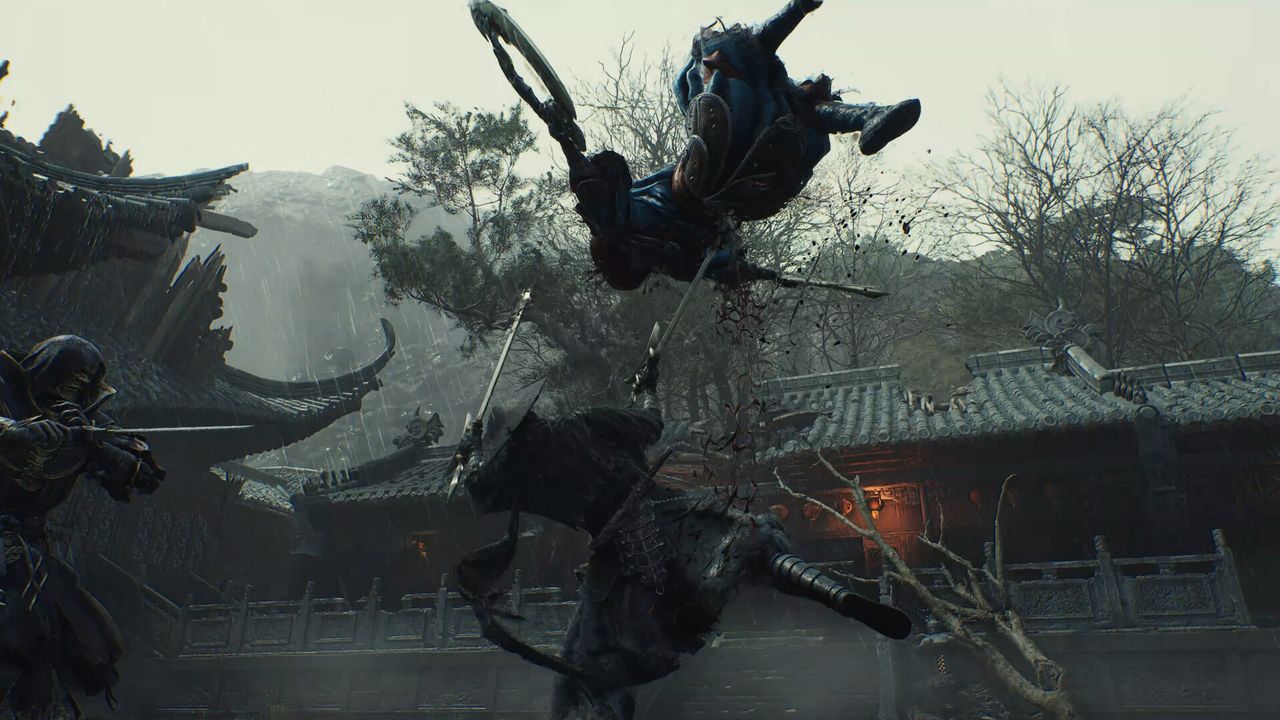
Blue flash = Brutal Move: parry it (L1 on PS5 in preview builds) rather than just blocking — a real parry costs no Sha-Chi and drains the enemy's instead. Red flash = Killer Move: it's unblockable, so dodge — blocking does nothing. Both a well-timed parry and a well-timed dodge trigger Ghoststep, which teleports Soul behind the enemy and opens a free backstab combo. Watch the flash colour first, react second. Note: the game hasn't launched (release 2026-10-29), so exact button mappings and costs are based on pre-release demo builds and may still change.
01Two Attack Types, Two Responses
Every significant enemy attack in Phantom Blade Zero belongs to one of two categories: Brutal Moves and Killer Moves. These are not just labels — each category requires a completely different defensive input, and using the wrong response is always worse than not reacting at all.
The game makes this readable through a clear visual signal that fires in the moment before impact. Your job in combat is to read that signal and let it drive the response automatically. This is easier than it sounds once you stop thinking about it as a reaction to the signal and start thinking about it as a read on the signal's colour.
- Brutal Move — heavy attack you can block or parry. Parrying (L1 on PS5 in preview builds) is the efficient response.
- Killer Move — unblockable attack. Responds only to a dodge, which triggers Ghoststep if timed well.
- The visual signal fires before the hit lands — you have a window to respond.
- Wrong response = wasted Sha-Chi or unavoidable damage. There is no 'partial credit'.
02The Colour System — Blue vs Red
Phantom Blade Zero identifies each incoming dangerous attack with a colour flash tied to the required response. Blue flash = Brutal Move = parry. Red flash = Killer Move = dodge. This is the most important visual habit to build — everything downstream of it depends on reading this correctly.
In the early game, slow down your expectations. You do not need to be reacting to every attack — you need to be watching for these flashes and reacting specifically to them. Standard attacks between the telegraphed moves can be handled with basic blocking or by staying outside their range. The blue and red flashes are the moments that matter.
The flashes occur close to the point of impact, which means your reaction window is tight but not frame-perfect — it is designed for human response times, not for button-mashing before the flash appears.
On PS5, hands-on previews and controller-layout footage consistently place parry on L1. The dodge button has differed between preview builds shown at different events, so treat it as 'your dodge input' rather than memorising a fixed button — check the control scheme in-game. PC keyboard bindings have not been detailed in preview coverage as of this writing (the game hasn't launched); expect them to be rebindable.
- Blue flash → Brutal Move → parry with your parry input (L1 on PS5 in preview builds).
- Red flash → Killer Move → dodge with your dodge input to trigger a Ghoststep.
- The flash fires before the hit lands — read the colour first, then react.
- Do not try to pre-input the response before the flash appears — the timing window is after the signal.
03Parrying Brutal Moves
A Brutal Move (blue flash) can be answered two ways, and they are not equally good. Simply holding your block input through it absorbs the hit but burns a large chunk of your Sha-Chi in the process — reported by hands-on previews to scale with how strong the attack is, so a boss's Brutal Move costs noticeably more than a regular enemy's.
Timing the same input as an actual parry — pressing it right as the hit connects, rather than holding it through the whole window — is the version to aim for: previews describe a well-timed parry as costing you no Sha-Chi at all while draining a hefty amount from the attacker instead, and it triggers Ghoststep directly. In the early game, landing any defensive response to a Brutal Move is the goal; tightening that response into an actual parry, rather than a passive block, is the upgrade to work toward once the colour reading is automatic.
If your Sha-Chi gauge is too low to absorb a blocked hit, the Brutal Move breaks through and deals full damage. This is why Sha-Chi management directly affects your defensive capability — an empty gauge can't block anything, which is one more reason to lean on parrying over blocking whenever you can.
- Holding block through a blue flash absorbs the hit but costs a large chunk of your own Sha-Chi.
- Timing it as a real parry instead costs no Sha-Chi, drains the enemy's, and triggers Ghoststep immediately.
- Empty Sha-Chi gauge = failed block. Brutal Moves break through and deal full damage.
- Any defensive response is the goal early on. Work on landing true parries, not just blocks, once the colour read is reliable.
04Dodging Killer Moves
When you see a red flash, use your dodge input. Attempting to block a Killer Move does not reduce the damage — you must dodge through it. The block input does nothing against red-flash attacks except potentially waste Sha-Chi on an input that does not work.
A well-timed dodge through a Killer Move triggers Ghoststep, repositioning Soul behind the enemy instantly and creating the same backstab counter opportunity as a well-timed parry. The controls feel different but the reward is identical — both routes lead to Ghoststep.
The window for dodging a Killer Move is comparable to the parry window on Brutal Moves. Early in the game, erring on the side of dodging earlier than necessary is safer than dodging late and clipping the hit.
- Use your dodge input on red flash. Blocking a Killer Move deals no damage reduction — dodge is required.
- A well-timed dodge triggers Ghoststep and puts Soul behind the enemy.
- Dodge slightly early rather than late if unsure — a clean miss is better than a late dodge through the hitbox.
- Killer Moves that Soul fails to dodge deal full, often significant damage.
05Ghoststep — What Happens and Why It Matters
Ghoststep is the name for what happens after either a well-timed parry or a well-timed dodge: Soul is teleported instantly behind the enemy, closing distance and positioning him at the attacker's back. This is the signature counter-attack window in Phantom Blade Zero — the moment when a dangerous incoming attack flips into your best offensive opportunity.
From behind the enemy, you have a brief window to land a backstab combo at higher-than-normal damage. The window is not indefinite — the enemy will turn and resume aggression shortly — so be ready with your input rather than pausing to decide what to do. Since Power Surge (your weapon's ultimate) draws directly on your Sha-Chi pool, and Ghoststep just refunded some of that pool to you, the moment right after a Ghoststep is often a good one to activate it for maximum damage output.
Beyond the damage opportunity, Ghoststep also rewards you with Sha-Chi: successfully triggering it through either route replenishes part of your gauge, which is important given that blocking these same attacks (instead of parrying or dodging) can otherwise drain resources.
- Ghoststep repositions Soul behind the enemy — your best backstab window.
- Triggers from either a well-timed parry (Brutal Move) or a well-timed dodge (Killer Move).
- The backstab window is brief — have your next attack input ready before the teleport completes.
- Ghoststep refills part of your Sha-Chi gauge, on top of the parry itself costing you nothing.
06Building the Habit — Practice Approach
The colour-flash system seems complex before it clicks, but it becomes automatic with deliberate repetition in the early game. The fastest path is to slow down intentionally in your first few fights: do not rush into attack strings — instead, hold your position, watch for flashes, and focus only on responding correctly to each signal. Damage output can come later. Reading the signal correctly first is the only thing that matters for building the habit.
A useful intermediate goal: can you consistently respond to every Brutal Move in a given standard enemy encounter, even if some of those responses are still blocks rather than true parries? Once yes, add Killer Move dodges. Once both are reliable, tighten your Brutal Move timing from a block into an actual parry. The full loop — read flash, clean parry or clean dodge, Ghoststep counter, backstab combo — is the combat rhythm the game is designed around, and it feels very satisfying once it runs automatically.
- In early encounters, prioritise reading the flash over dealing damage.
- Work on one type at a time: reliable responses first, then tightening Brutal Move blocks into true parries.
- If you are struggling with timing, you are probably responding too early. Wait for the flash, then react.
- Once the loop clicks — read, respond, Ghoststep counter — most enemies become manageable.
FAQ
What is Ghoststep in Phantom Blade Zero?
Ghoststep is Soul's signature counter-move: a brief teleport that instantly repositions him behind an enemy after a successful defensive reaction. It triggers when you land a well-timed parry on a Brutal Move (blue flash) or a well-timed dodge through a Killer Move (red flash). From behind the enemy, you have a window to land a backstab combo at boosted damage, and the move refills some of your Sha-Chi gauge as a reward.
How do I parry in Phantom Blade Zero?
When an enemy telegraphs a Brutal Move with a blue flash, use your parry input (L1 on PS5 in preview builds) right as the hit connects rather than holding it through the window. Holding block through the hit still absorbs it but costs a large chunk of Sha-Chi; timing it as a true parry instead costs no Sha-Chi and immediately triggers Ghoststep. The game hasn't launched yet, so treat exact costs as preview-build behaviour that could still be tuned.
What is the difference between Brutal Moves and Killer Moves in Phantom Blade Zero?
Brutal Moves (blue flash) are heavy attacks you can block or parry — blocking absorbs the hit but costs a lot of Sha-Chi, while a well-timed parry costs none and can trigger Ghoststep. Killer Moves (red flash) are unblockable attacks that must be dodged — blocking them does nothing. Both types can lead to Ghoststep on a successful defensive response.
What happens if I try to block a Killer Move in Phantom Blade Zero?
Blocking a Killer Move (red flash) does not reduce damage. Killer Moves ignore blocks entirely, so holding your block/parry input against a red-flash attack typically wastes Sha-Chi and still results in a full hit. The correct response is always to dodge.
Is parrying required in Phantom Blade Zero or can I just dodge everything?
You can dodge both attack types, but only Brutal Moves (blue flash) can also be parried — Killer Moves are unblockable and dodge-only. The reason to parry rather than just block Brutal Moves is efficiency: a well-timed parry costs no Sha-Chi at all, where blocking the same hit costs a large chunk of it, and your Sha-Chi gauge powers both your offence and defence. Relying on passive blocking keeps you safe but leaves you starved for resources. Learning to parry Brutal Moves is worth the early investment.
Sources
Where the facts on this page were checked. If one of them now says something different, we want to know — tell us and we will fix the guide.
- Phantom Blade 0 Wiki Fextralife
- Phantom Blade Zero Wikipedia
- Phantom Blade Zero State of Play Reveals the Combat System, 55+ Weapons, and a Massive World Beebom
- Phantom Blade Zero Preview - Stunning Visuals and Fluid Combat CGMagazine
- Phantom Blade Zero: Release Date, Gameplay, Story & Combat Explained GameRant
- "Phantom Blade Zero is Not a Soulslike" – Hands On Impressions GameRant
- First Look At Phantom Blade Zero Controller Layout & Off-screen Gameplay TwistedVoxel
New & updated guides ship every week. Follow the Atom feed or get notified when new Phantom Blade Zero guides land.