Last updated: 5 September 2026
Naraka: Bladepoint Wanchu Map Regions, Tides & How to Play It
Wanchu is Naraka: Bladepoint's newest battleground, added with the July 2, 2026 update as the centrepiece of the game's 5th Anniversary celebration (Anniversary·Myriad, running July 2–29). It's the first amphibious map in the game's history — water isn't just scenery here, it's a combat layer you fight in, hide in, and drown in if you're not careful. Here's what's actually on the map and how to not get caught out by its tide mechanics.
01What Makes Wanchu Different
Every previous Naraka: Bladepoint map treats water as terrain you cross or avoid. Wanchu makes it a core mechanic: you can glide across the surface, dive underwater mid-fight, and keep fighting through the transition between the two. Official patch notes describe a Tide System where the water level itself shifts during a match, changing which paths, caves, and loot are accessible depending on when you visit an area.
The map rose from the sea as the game's first amphibious map to mark five years since Naraka: Bladepoint's original launch — the anniversary framing matters here because the map ships alongside a limited-time event (see below), not just as a routine season update.
02The Five Named Regions
Official patch notes name five distinct areas on Wanchu, each with its own visual identity and implied loot/fight character:
- Twin Luminaries City — a lost civilization that worshipped twin deities; statues of the twin monarchs still stand in the royal city ruins. Expect this to play like the map's dense, structure-heavy urban zone.
- Valley of the Colossus — resting place of ancestral elders from a previous calamity, marked by massive broken stone statues and ancient beast bones half-buried in wild grass. Open ground with line-of-sight-blocking landmarks — an August 13, 2026 update lowered the height of the central area to improve traversal, so expect less cover there than earlier in the map's life.
- Immortal-Seekers' Ruins — an abandoned alchemy expedition site; patch notes describe 'an alchemy furnace has gone cold', suggesting an indoor/workshop-style POI.
- Wave Fort — an ancient settlement built against the mountains and right beside the water, likely one of the map's main coastal fight zones.
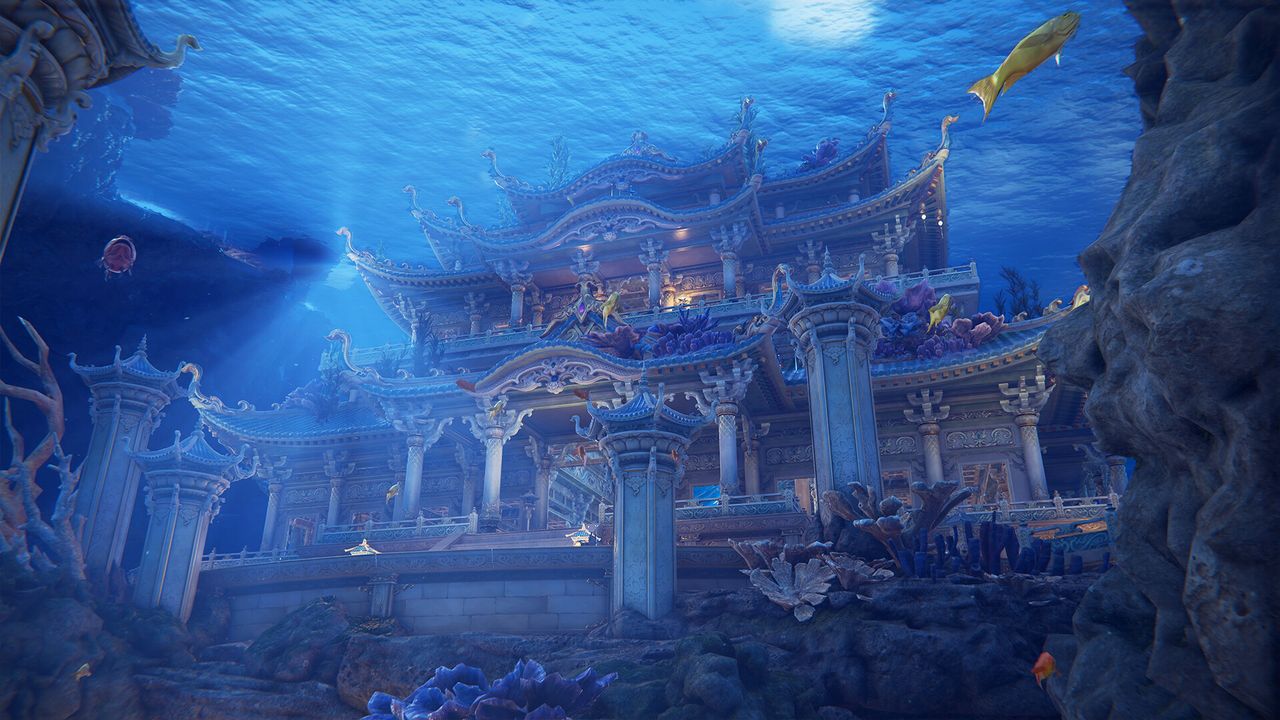
- Dark Pearl Abyss — the map's deep-water zone, where 'shadowy blue palaces emerge and fade' beneath the surface. This is where the underwater-specific mechanics below matter most.
The same August 13, 2026 update also reworked Seaward Bastion, a coastal point of interest, and added a new waterway connecting it directly to Dark Pearl Abyss — worth checking if you're rotating along the map's water-adjacent POIs.
03The Tide System, Explained
Wanchu's water level isn't static — it shifts on a cycle during a match, and that shift gates off content:
- Low tide exposes Spirit Clams that aren't accessible when the water is high — worth a detour if you're already near the shoreline when the tide drops.
- High tide spawns Tide Fish in the newly-flooded areas.
- Tidehidden Cave has a breakable stone gate that only opens up as the tide shifts — treat it as a timed vault rather than something you can force open on demand.
- Because the tide changes what's reachable, it's worth rotating past the same coastal POI twice in a long match rather than assuming you've already seen everything it has to offer.
- Starry Night — a weather condition added on August 13, 2026 that significantly increases Coralline Fish spawns and raises how much of the newer armor you can craft at the Foundry while it's active.
04Fighting Underwater: Oxygen and Combat Tools
Wanchu adds a full underwater combat layer, and the game gives you several tools to manage it rather than turning it into a hard timer you're always racing:
- Submerged combat: you can fight while transitioning between the water's surface and underwater areas — engagements don't have to pause the moment someone dives.
- Aquatic Armor: while this is active, being underwater no longer consumes your oxygen at all, effectively removing the drowning clock.
- Soul-Breath Coral: standing near this restores oxygen continuously — use it as a safe pocket to reset before pushing back into a fight.
- Water-Warding Fish: you can interact with these to be swallowed, which restores oxygen — an unusual but explicitly documented mechanic worth knowing rather than dismissing as a visual gimmick.
- Without Aquatic Armor or a nearby oxygen source, treat underwater fights as a resource you're spending — dive in with a plan to surface, not to camp indefinitely.
05Heroes and Hardware Notes
Official patch notes confirm combat adjustments for Yoto Hime and Valda Cui specifically to adapt them to Wanchu's water areas — expect their kits to behave slightly differently in and around water than on dry-land maps, so don't assume a build that works on other maps transfers 1:1.
If you're on an older GPU or integrated graphics below the game's minimum spec, official notes flag known water-display bugs on this map that the developers are actively working to fix — worth knowing if the water looks visually broken on your setup, since that's a documented issue rather than something wrong with your install.
06Anniversary·Myriad: The Event Wrapped Around the Map
Wanchu launched alongside Anniversary·Myriad, a limited-time event running July 2–29, 2026. Completing event achievements grants treasure gifts and cosmetic rewards, and a paid event pack (around $4.63) includes the Ziping Yin Legendary Outfit ('Ancient Isles · Evernight Bloom'). If you want the anniversary-exclusive cosmetics, don't wait until late July — check the in-game event tab for the achievement list as soon as you land on Wanchu.
FAQ
When did the Wanchu map come out in Naraka: Bladepoint?
Wanchu launched with the July 2, 2026 update, following scheduled server maintenance from July 1, 2026 23:00 UTC to July 2, 2026 04:00 UTC. It shipped as the centrepiece of the game's 5th Anniversary event, Anniversary·Myriad, which runs July 2–29, 2026.
What is special about the Wanchu map?
It's Naraka: Bladepoint's first amphibious map. Water is a full combat layer rather than just terrain — you can fight while moving between the surface and underwater, and a Tide System shifts the water level during a match, revealing or hiding paths, loot (Spirit Clams, Tide Fish), and the Tidehidden Cave depending on the current tide.
How does oxygen work underwater on Wanchu?
You have several ways to manage it: Aquatic Armor removes oxygen consumption underwater entirely while active, Soul-Breath Coral restores oxygen continuously if you stand near it, and Water-Warding Fish can be interacted with to be swallowed and restore oxygen. Without one of these, treat underwater time as a limited resource rather than something you can do indefinitely.
What are the named regions on the Wanchu map?
Five official regions: Twin Luminaries City, Valley of the Colossus, Immortal-Seekers' Ruins, Wave Fort, and Dark Pearl Abyss (the map's deep-water zone).
Did any heroes get changed for the Wanchu map?
Yes — official patch notes confirm Yoto Hime and Valda Cui both received combat adjustments specifically for water-area adaptation on this map.
Sources
Where the facts on this page were checked. If one of them now says something different, we want to know — tell us and we will fix the guide.
- NARAKA: BLADEPOINT Update – July 2nd, 2026 (Wanchu map launch, Tide System, regions) 24 Entertainment / NetEase Games
- NARAKA: BLADEPOINT Update – August 13th, 2026 (Valley of the Colossus, Seaward Bastion, Starry Night) 24 Entertainment / NetEase Games
New & updated guides ship every week. Follow the Atom feed or get notified when new Naraka: Bladepoint guides land.