Last updated: 19 September 2026
Crimson Desert Tips for Beginners What the Game Doesn't Tell You
Crimson Desert drops you into the war-torn continent of Pywel with almost no hand-holding — no tutorial pop-ups explain where your first pickaxe comes from, why a red circle just appeared on your minimap, or why your inventory filled up after twenty minutes. This guide covers the things new players consistently get wrong in the opening hours, then walks through the combo-based combat, the three resources that replace a traditional stat sheet, and how to survive your first boss fights.
01Start Here: Things Crimson Desert Never Explains
A handful of systems trip up almost everyone in the first few hours because the game simply doesn't flag them. Sort these out early and the rest of Pywel goes much more smoothly.
- Your life tools come from faction quests, not shops. The pickaxe, logging axe, and fishing rod aren't just handed to you — they unlock through early Hernand faction quests (commissions). Rhett's Request unlocks mining and the pickaxe, Annabella's Request unlocks fishing, and Turnali's Request rewards a logging axe. Prioritise these over ignoring the quest board, since without them you can't gather the ore and timber that gear upgrades depend on.
- You start with 50 inventory slots — and it fills up fast once you're gathering ore, timber, and quest items. Bags expand that cap: a Small Bag adds a handful of slots, Medium and Large Bags add more, and both merchant purchases and faction/main quest rewards hand them out. Grab bag upgrades on sight rather than waiting until your inventory is already full and you're forced to drop loot mid-exploration.
- Equip a mask before committing any crime. Stealing from shops, pickpocketing, or poaching livestock without a mask on gets you spotted and flagged for a bounty almost immediately. With a mask equipped, witnesses can't identify you, so a botched theft costs you a reputation hit at worst instead of an escalating bounty. If you do get a bounty, a church confessional will sell you a Writ of Absolution to clear it for a Silver fine (capped at 100 Silver) — you don't have to fight it off.
- Palmar Pills are worth buying before you think you need them. They auto-revive you once at 30% HP when you'd otherwise die. They're cheap early on and a single use can save a boss attempt that would otherwise send you all the way back to the last checkpoint.
02Understanding Stamina, Spirit & Health
Crimson Desert replaces the traditional mana pool with three separate resources that each govern a different dimension of play. Mismanaging any one of them in a difficult fight is usually fatal.
- Stamina (Blue branch) — fuels sprinting, climbing, gliding, and the heavy attack button. It also drains during extended dodging strings. Keep at least Stamina level 10 before taking on elite enemies; below that, your dodge chain runs out mid-combo and leaves you exposed.
- Spirit (Green branch) — powers special skills and the parry-focus ability. Spirit regenerates naturally when you defeat enemies, so aggressive play actually sustains it. Around five levels of Spirit gives comfortable uptime on your core special moves.
- Health (Red branch) — your raw HP pool. Reach at least Health level 9 before you push into harder regions of Pywel; several early-area bosses can one-shot characters below that threshold regardless of armor.
A sensible early approach is to alternate Stamina and Health upgrades up to around level 10 each, then funnel Abyss Artifacts into Spirit once combat feels sluggish rather than mechanical. You can respec skill branches (see our skill tree guide), so don't be afraid to experiment.
03The Combo System: Weapons, Kicks & Bare Hands
Combat in Crimson Desert is not about button-mashing — it is about chaining attacks from different categories to build stagger on enemies, then exploiting the stagger window for punishing heavy hits. Each attack category has its own stagger weight.
Weapon skills form the backbone of most combos. Kliff's core weapon inputs include Forward Slash (a strong stepping slash), Stab (applies Bleed), Turning Slash (spinning overhead for crowd control), and Spinning Slash (a short leap strike). Equipping a secondary weapon like a spear extends your reach for multi-target chains; switching to a two-handed greatsword lets you launch enemies airborne or ground-pound them. Kliff needs the Quick Swap skill (Armed Combat level 5) to change weapons in the flow of a combo without a directional menu pause — Oongka and Damiane have it by default. Patch 1.16.00 (August 1, 2026) smoothed combo-skill transitions after Stab for one-handed sword, two-handed sword, and dagger users, so these chains flow more reliably than they did at launch.
Bare-hand and kick skills deal higher stagger damage than weapon attacks and are your primary tools for breaking an enemy's guard. The core unarmed move is the basic Unarmed Combat strike (Triangle), and upgrading it to level 2 unlocks the Scissor Takedown — a crouching leg-wrap that immobilises targets. Pump Kick (Hold Triangle) is a powerful two-footed strike you learn from the NPC Matthias during the For Honor quest; it chains into the Dropkick at Pump Kick level 1. Force Palm (R3 after observing a hologram during the Abyss without Balance quest) is the green-branch answer for supernatural stagger, gathering energy into a concussive palm strike — one of several skills that unlock automatically through the game's "Watch and Learn" observation system rather than costing an Abyss Artifact.
The core combo loop to learn early: open with two or three weapon attacks to build pressure, weave in an unarmed strike or kick to break guard and stagger, then close with a weapon finisher during the stagger window. Weapon damage in that punish window significantly outperforms all other phases of the fight.
04Parrying and the Grapple Arsenal
Parrying is the single highest-skill mechanic in Crimson Desert, and learning it early makes every other system easier. Block or guard in the instant before an enemy's normal attack lands, and a green visual burst confirms a clean parry: the enemy staggers, your Stamina and Spirit both instantly refresh, and you enter a counter-attack window that deals significantly more damage than a standard hit. The Counter skill itself requires either Keen Senses at level 3 or training at the Hernand Guard arena.
The Green branch's Focus skill takes parrying further by entering a brief bullet-time meditation that widens the parry window significantly. It is worth unlocking as soon as you can tolerate the Spirit cost.
Grappling is a separate and frequently underused system. The inputs are simple but the payoff is high:
- Throw (Triangle + Circle, unlocked by default) — tosses the enemy across the arena; useful for repositioning or ledge-dropping targets.
- Clothesline (X + Square while sprinting, 1 Abyss Artifact) — a sprinting hook that slams the target into the ground.
- Lariat (X + Square upgraded, Grappling Lv 2) — ground slam with area-of-effect damage, excellent against groups near bosses.
- Back Hang (context input on large enemy, Grappling Lv 4) — latch onto a large target to strike from a safe position or quickly escape.
Against bosses, grapples are frequently the fastest route to a stagger — faster than weapon strings alone. Prioritise unlocking Grappling level 2 (Lariat) in the first several hours.
05Exploring the Open World of Pywel
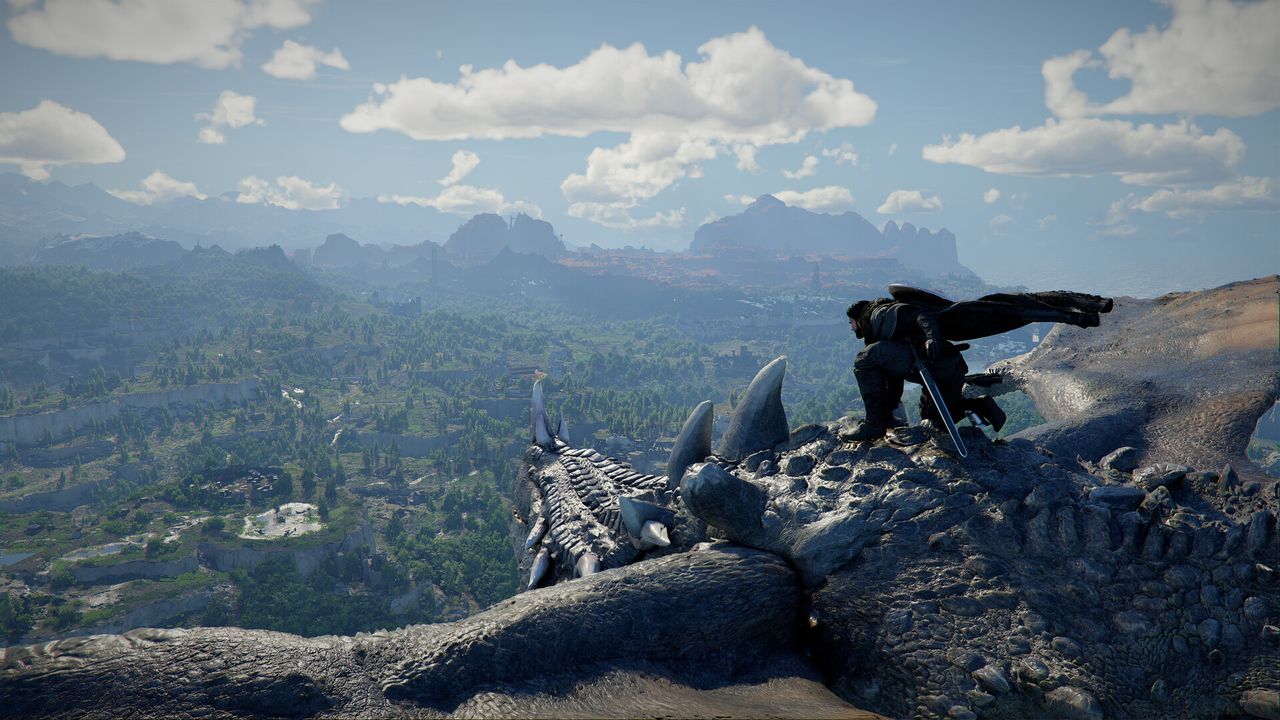
Pywel is fully open from the first minute of play. There are no invisible walls, level gates, or locked zones — you can sprint to a mountain range, scale it, and explore the far side long before the story sends you there. That freedom is the point, but it also means new players can wander into brutally difficult territory without warning.
The map is divided into distinct regions, including Hernand, Demeniss, Delesyia, and Pailune. A large portion of each area begins fogged behind mystery markers that reveal themselves as you discover viewpoints and complete local objectives. Abyss Nexus points act as fast travel nodes; unlock them aggressively since returning to towns to refill food supplies and upgrade gear is a regular part of the loop.
- Prioritise Hernand first — it is the starting region, scales to early characters, houses the Guard arena where you can learn Counter skills, and is where the faction quests that grant your life tools begin.
- Vertical exploration is rewarded. Many Sealed Abyss Artifacts (141 in total across Pywel) are hidden on cliff faces, underwater, or inside ruins you have to physically climb into.
- The Eight Hidden Bells are optional objectives scattered across the continent as part of the Toll of Pywel questline; ringing them primarily unfogs the map and awards Abyss Artifacts as a side reward.
- Use gliding from the Red branch to cross terrain quickly, but keep an eye on your Stamina bar — it drains continuously while airborne, and food/drink items are the main way to keep a long glide sustained.
- Stay masked (see above) if you're tempted to pickpocket or poach along the way — an unmasked crime witnessed by an NPC escalates to a bounty far faster than most players expect.
06Approaching Early Bosses
Boss fights in Crimson Desert are not fought on your terms — they are attrition tests that reward patience and preparation over aggression. Bosses in Chapter 5 and beyond can one-shot under-levelled characters, and the game provides no warning before you enter a boss arena.
Before any major boss fight:
- Have at least 100 pieces of plain Grilled Meat in your inventory rather than the Hearty version — it's cheap to cook in bulk, and per raw ingredient it restores far more total HP than cooking the same ingredients into fewer, fancier Hearty portions. There are no health potions; food is the only real healing method in the game.
- Carry Palmar Pills for a one-time auto-revive at 30% HP — they are a safety net, not a strategy, but they save long boss runs from a single stagger death.
- Check that your gear has been refined at the Turnali blacksmith using Iron, Copper, Timber, and Hide. Even one or two refinement levels noticeably reduce the number of hits a boss needs to kill you.
- Apply Reinforcement buffs immediately before the fight rather than hours earlier — they deplete over time once you're in combat, so timing them to the approach gets you the most value out of them.
In the fight itself, the rhythm is: let the boss commit to an attack animation, parry or dodge, then execute your weapon-into-grapple combo during the recovery window. Never sprint endlessly trying to dodge — that empties your Stamina bar and leaves you unable to dodge the follow-up hit that actually kills you.
07Skill & Equipment Progression
Crimson Desert does not use traditional XP levels. Progression runs through two parallel systems: skill trees fed by Abyss Artifacts, and gear enhanced through crafting materials. See our full skill tree guide for the complete breakdown — the short version for new players:
- Nature's Echo (Kliff exclusive) — spawns an illusion strike that adds a large amount of extra damage on top of moves like Forward Slash, Spinning Slash, and Stab (guides describe it as roughly doubling the move's damage at higher skill levels). One of the highest single-skill damage gains available early.
- Quick Swap (Armed Combat Lv 5) — enables fluid weapon switching mid-combo without breaking flow. Essential once you own a secondary weapon.
- Blinding Flash Finisher (Blue branch, single Artifact) — works on all weapon types and provides a universal combo finisher that scales across the whole game.
- Keen Senses (Green branch) — enhances dodge and parry timing, and is the prerequisite for unlocking the Counter skill at level 3.
- Lariat (Grappling Lv 2) — priority grapple upgrade for stagger against bosses and grouped enemies.
Gear progression works in three layers: Refinement permanently raises Attack, Defense, and Critical Hit using raw materials; Socketing lets you slot Abyss Cores that add permanent stat buffs and unique abilities; and Reinforcement applies temporary combat boosts via consumables. Refine your starting equipment at a Hernand blacksmith before leaving the first region — the ore and timber for it come from the life tools you picked up through faction quests, not from a shop.
FAQ
What are the best tips for beginners in Crimson Desert?
Get your life tools (pickaxe, logging axe, fishing rod) through early Hernand faction quests rather than expecting them handed to you, buy Palmar Pills before a boss fight rather than after you need one, keep an eye on your 50-slot starting inventory and grab bag upgrades early, and always equip a mask before stealing or poaching so a botched crime costs reputation instead of a bounty.
What should I do first in Crimson Desert?
Work through the early Hernand faction quests — Rhett's Request unlocks mining and the pickaxe, Annabella's Request unlocks fishing, and Turnali's Request rewards a logging axe — since these life tools are required to gather the ore and timber that gear refinement depends on. Alongside that, alternate Abyss Artifact investment between Stamina and Health up to around level 10 each before pushing into harder content.
How do masks and bounties work in Crimson Desert?
Committing a crime — theft, pickpocketing, poaching — while unmasked and witnessed gets you flagged and a bounty placed on your head. Equipping a mask before committing the crime keeps witnesses from identifying you, so a botched attempt costs only a regional reputation hit instead. If you do end up with a bounty, a church confessional will clear it for a Silver fine (capped at 100 Silver) via a Writ of Absolution.
Is Crimson Desert better with a controller or mouse and keyboard?
A controller is strongly recommended. Crimson Desert's combat relies on complex analog-stick directional inputs and multi-button combos that are very difficult to replicate accurately on mouse and keyboard. Both PlayStation and Xbox controllers work on PC, though a DualSense needs a wired USB connection — it isn't fully plug-and-play over Bluetooth.
What are the three combat resources in Crimson Desert?
Crimson Desert gives you Stamina, Spirit, and Health. Stamina fuels sprinting, climbing, gliding, and heavy attacks. Spirit powers special skills and regenerates by defeating enemies. Health is your survival stat — aim for at least level 9 in Health early on to avoid one-shot kills from bosses.
How do grapples work in Crimson Desert?
Grappling is unlocked via Abyss Artifacts and lets you toss, slam, or latch onto enemies. The basic Throw (Triangle + Circle) hurls an enemy across the arena. Upgrading Grappling to level 2 unlocks the Lariat, which slams targets into the ground with area-of-effect damage. At level 4, Back Hang lets you latch onto large targets to attack or reposition.
What is the best way to heal in Crimson Desert?
There are no potions in Crimson Desert — food is your only real healing method. Plain Grilled Meat cooked in bulk gives more total HP per raw ingredient than the fancier Hearty version, so stock at least 100 pieces before attempting a major boss. Palmar Pills also provide a one-time auto-revive at 30% HP, making them a useful safety net.
Sources
Where the facts on this page were checked. If one of them now says something different, we want to know — tell us and we will fix the guide.
- Rhett's Request Fextralife
- Turnali's Request Fextralife
- Crimson Desert: How to Fish (Annabella's Request) PC Gamer
- How to Get More Inventory Slots Fextralife
- How To Pay Off A Bounty Or Fine TheGamer
- Wanted System Explained Game8
- Palmar Pill Recipe & Location Game8
- Crimson Desert Skills Fextralife
- Crimson Desert Stab page Fextralife
- How to Unlock Quick Swap Game8
- For Honor quest page Fextralife
- Force Palm page Fextralife
- Grappling page Fextralife
- Crimson Desert's Keen Senses Skill All Things How
- All Regions of Pywel The Crimson Desert Wiki
- All Fast Travel Locations (Abyss Nexus) PowerPyx
- All 141 Sealed Abyss Artifact Locations GameSpot
- All Bell Locations (Toll of Pywel) PowerPyx
- The Infinite Healing Trick WCCFtech
- Refinement Guide KeenGamer
- Nature's Echo page Fextralife
- Blinding Flash Finisher page Fextralife
- Crimson Desert Patch Notes Version 1.16.00 Pearl Abyss
New & updated guides ship every week. Follow the Atom feed or get notified when new Crimson Desert guides land.