Last updated: 5 September 2026
Path of Exile 2 Return of the Ancients — Runes of Aldur, Atlas Rework & New Gems
Return of the Ancients is Path of Exile 2's Patch 0.5.0 expansion, released on May 29, 2026 — Grinding Gear Games has described it as the largest single update to the game since Early Access began and the final major content milestone before the 1.0 release. It introduced the Runes of Aldur league mechanic, rebuilt the Atlas Passive Tree from scratch, added 30 new Kalguuran Skill and Support Gems, and shipped a full endgame overhaul with 30 new Atlas areas and five narrative storylines. This guide breaks down every major system and tells you how to get the most out of the league.
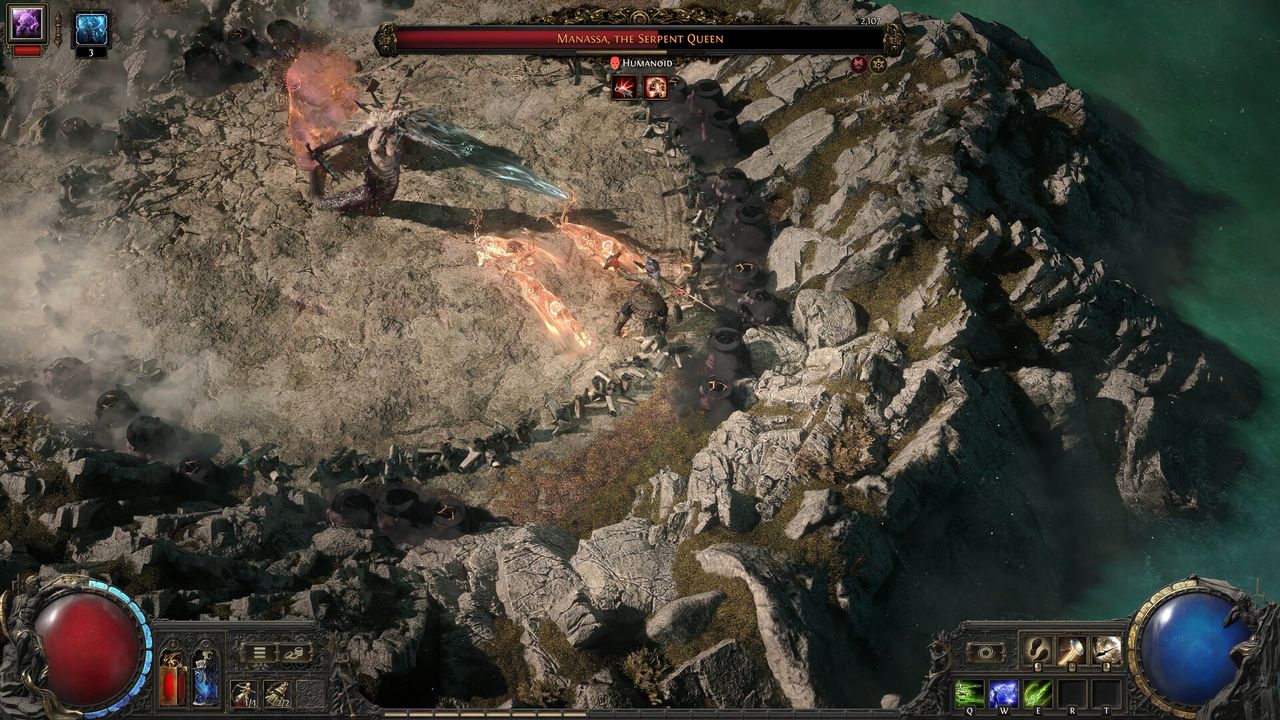
01What Is Return of the Ancients?
Return of the Ancients is the name of Path of Exile 2's Patch 0.5.0 content expansion, which arrived on May 29, 2026 across PC, PlayStation 5, and Xbox Series consoles. Grinding Gear Games has been explicit that 0.5.0 is the last scheduled major update before Path of Exile 2 moves out of Early Access to its 1.0 release, making it a significant milestone in the game's development arc.
The expansion packages several large systems at once:
- Runes of Aldur — the new league mechanic, built around Ezomyte Remnants and runic crafting.
- Atlas Passive Tree overhaul — a rebuilt tree with over 300 nodes and three new Atlas Masters.
- Two new Ascendancy classes — Martial Artist for the Monk and Spirit Walker for the Huntress (covered in detail in our new ascendancies guide).
- 30 new Kalguuran Skill and Support Gems (23 Skill, 7 Support) — a new gem category tied to the Runic Ward resource.
- Over 30 new endgame Atlas areas and five endgame storylines, each with its own questline and Pinnacle Boss access.
- More than 40 new Unique items spread across weapons, armour, and accessories.
- A streamlined campaign with faster pacing for experienced players starting fresh in the league.
Even if you are not playing in the fresh Runes of Aldur league, every one of these systems is part of the current game state in Path of Exile 2. The league itself is still running: Grinding Gear Games has confirmed Runes of Aldur continues alongside the newer Forbidden Rites event league (added in patch 0.5.5, released September 4, 2026), and both are scheduled to run until Path of Exile 2's 1.0 launch on December 11, 2026. Some Runes of Aldur content — the Expedition encounter, along with the Farrow and Dannig NPCs — has since been folded into the core game and Standard league as well.
02Runes of Aldur: The League Mechanic Explained
The core of Runes of Aldur plays out around Ezomyte Remnants — ancient stone markers found throughout every area of the game, both in the campaign and across endgame maps. Each Remnant is partially covered in runic symbols and carries a set of engraved rune slots, ranging from 2 slots on the most common Remnants up to 10 slots on the rarest versions.
The basic loop looks like this:
- Locate the Remnant in an area. It is guarded by monsters.
- Defeat the guarding monsters to open the Remnant's interface.
- Select a runic recipe by filling the available slots. Your selection determines what crafted item or currency reward the Remnant will produce.
- Confirm your inscription. This resurrects the surrounding monsters — now empowered with properties drawn from the specific runes you chose. A Fire Rune, for example, grants enemies bonus fire damage. A Moon Rune causes them to conjure Moon Beam attacks.
- Defeat all the empowered enemy waves. Each additional rune slot you filled adds another wave, so a fully-loaded 10-slot Remnant is a substantially tougher fight than a 2-slot version.
- Claim your reward once all waves are cleared.
The risk-reward dynamic here is the league's central tension: every extra rune you inscribe increases the power of the enemies you must survive, but it also improves the quality and quantity of what you get for clearing them. Running a Remnant at maximum slots is the high-risk, high-reward play.
The Runebook acts as your permanent record of discoveries. Every distinct runic combination you use for the first time is saved into your Runebook, meaning you never have to rediscover a recipe you have already found. In subsequent areas you can reuse any saved combination directly rather than building it from scratch again.
Verisium is the new metallic currency that empowered Runes of Aldur monsters have a chance to drop. You spend Verisium at the Runeforging station (see the next section) rather than through the standard currency system — it does not trade on the player market in the same way as Chaos Orbs or Exalted Orbs, but it is the gating resource for the league's crafting system.
03Runeforging and Runic Ward
Runeforging is the crafting side of Runes of Aldur. You spend Verisium at the Runeforging station to apply runic effects to your gear, with the most significant outcome being the addition of Runic Ward to an item.
Runic Ward is not a shield that soaks damage before your Life — it works the other way around. Your Life pool is drawn down by damage exactly as normal; only once your Life reaches its floor does Runic Ward kick in, letting you keep fighting while the Ward itself absorbs further hits instead of you dying. It regenerates on its own over time (faster with 'Runic Ward Regeneration' modifiers), so a fully-recovered Ward pool is a genuine second chance during a fight rather than a passive buffer stacked on top of Life. If your Ward runs out while your Life is still at its floor, you die — so it's a near-death safety net, not a first line of defence.
Runeforging's gear outcomes are tied to the armour piece's item level rather than being a free choice of four options: pieces below item level 55 gain Runic Ward with no downside, while higher-level pieces trade away some of their existing Armour, Evasion, or Energy Shield to make room for it. Separately, Runeforging can also be used on Unique items — either to reforge their existing modifiers into new ones, or (for several Kalguuran Unique weapons specifically) to push their damage rolls significantly higher.
The interaction between Runic Ward and the new Kalguuran Skill Gems (described in the next section) is deliberate: the new gems are designed to reward characters who maintain a healthy Ward pool, which in turn pushes players toward the Runeforging system.
04Kalguuran Skill and Support Gems
Return of the Ancients introduced 30 new gems specifically tied to the Runes of Aldur system: 23 new Kalguuran Skill Gems and 7 new Kalguuran Support Gems, per Grinding Gear Games' official patch notes.
What makes Kalguuran Gems distinct from the existing gem library is a pair of shared properties:
- They consume Runic Ward instead of Mana. Using a Kalguuran Skill draws from your Ward pool rather than your Mana pool. On a character with a large Runic Ward stack from Runeforged gear, this makes the gems effectively free to use as long as Ward is available — but it means letting Ward deplete removes your ability to use those skills until it refills.
- They carry no attribute requirements. Standard PoE2 Skill Gems require specific Strength, Dexterity, or Intelligence thresholds. Kalguuran Gems have none, making them accessible to any class and any build regardless of how stats are distributed. This opens combinations that the attribute-gated gem system would otherwise block.
The practical effect is that Kalguuran Gems reward Ward-heavy builds — particularly the two new Ascendancies introduced in the same patch. The Martial Artist (Monk) and Spirit Walker (Huntress) were tuned around Ward sustain and slot naturally into builds that pair Runeforged armour with a Kalguuran-heavy skill setup. That said, any character with Runeforged gear can incorporate Kalguuran Gems as off-skills or supplementary damage layers without committing to a pure Ward build.
For the full breakdown of how Path of Exile 2's gem system works — Uncut Gems, support sockets, Spirit, and meta gems — see our skill gem and support guide.
05Atlas Passive Tree Overhaul
The Atlas Passive Tree was rebuilt from scratch in Patch 0.5.0. The previous version was relatively compact and narrow in specialisation options; the new tree expands to over 300 nodes and introduces mechanics that make it far more flexible and fully completable over the course of a league.
How you earn points changed: in the old system, points came from completing maps across the Atlas. In 0.5.0, the primary source of Atlas Passive Points is completing Fortress maps — a new category of high-stakes map area. Each Fortress map cleared awards one or more Atlas Passive Points, and by the time you have cleared all available Fortresses in a league, you earn enough points to fully allocate the entire tree. Full completion of the Atlas tree is now a realistic goal for an active player, not a theoretical endgame ceiling.
Multi-choice nodes are the other major structural change. Many nodes in the new tree present two or more options, and you can switch between the available choices at any time without spending additional points. This lets you adapt your Atlas specialisation to different content targets mid-league — something that previously required a full respec or spending a separate currency.
Ancient Modifiers can appear on Fortress maps alongside their normal affix pools. Any Fortress map modifier that normally adds a secondary content type to the map (Breach, Delirium, Expedition, etc.) also adds that content implicitly — meaning heavily-modified Fortress maps can stack multiple content types simultaneously, which is a significantly denser farming opportunity than a standard map.
The most visible addition to the Atlas endgame is the introduction of three Atlas Masters: Jado, Hilda, and Doryani. Each master brings a distinct playstyle focus:
- Jado runs a Spycraft specialisation — missions centered on intelligence-gathering, ambush encounters, and precision engagements that reward players who engage with the game's more tactical combat systems.
- Hilda offers Hunting questlines — tracking high-value targets across the Atlas in missions that escalate over time, culminating in unique boss hunts specific to Hilda's storyline.
- Doryani operates a Science track — encounters tied to arcane experimentation and crafting-adjacent mechanics, rewarding players who lean into gear optimisation over raw combat.
Each master offers 12 missions in their track, of which you can have up to 4 active simultaneously. Completing missions progresses the master's narrative and unlocks specialisation options — including access to unique artifact rewards and master-specific passive bonuses that do not appear anywhere else on the main Atlas tree.
For Atlas Passive Tree farming strategies tuned to currency generation, see our currency farming guide.
06New Endgame Content: Map Areas and Storylines
Beyond the league mechanic and tree rework, Return of the Ancients added significant raw content to the endgame Atlas:
- 30 new Atlas map areas across varied biomes — Maraketh desert regions, lava-floored dungeons, and several environments not present before 0.5.0. These appear throughout the Atlas progression path rather than being gated to a single endgame tier.
- Five new endgame storylines, each tied to a major league mechanic in the Atlas. Each storyline has its own quest hub, its own progression through multiple stages, and leads to a dedicated Pinnacle Boss encounter at the end. Earlier patches left some league mechanics without meaningful narrative framing — 0.5.0 retroactively gives them questlines and a reason to engage beyond raw farming.
- Deterministic Pinnacle Boss access alongside the existing fragment-and-splinter system. Some Pinnacle encounters now have a secondary access route through the storyline questline, meaning players who complete the associated endgame story can challenge the Pinnacle boss without burning through accumulated fragments. Both access methods are available, giving players options depending on how they prefer to engage.
- More than 40 new Unique items distributed across the new content — weapons, armour pieces, and accessories, with several tied specifically to the new Kalguuran Gem and Runic Ward systems.
The campaign also received targeted streamlining for experienced players: Act 3 pacing improvements, automatic trigger conditions for objectives that previously required extra steps, and shorter or reworked areas that reduce repetitive travel on characters being levelled in the league environment. None of these changes affect the fundamental campaign story — they compress downtime between story beats rather than cutting content.
07Getting Started in Runes of Aldur
Whether you are starting a fresh character in the current league or returning on an existing one, these habits will make the transition into 0.5.0 content smoother:
Engage Remnants early, even at 2 slots. The temptation for new players is to skip Remnants until they feel powerful enough. That is backwards — smaller Remnants (2-4 slots) are straightforward encounters even at campaign difficulty and start you down the Runebook discovery path. Discovering rune combinations early means you have more recipe options available once you hit the endgame, where larger Remnants appear and the rewards scale up sharply.
Prioritise Runeforging your chest piece first. Runic Ward scales with the item level of the armour you Runeforge, and your chest piece typically has the highest item level of any piece you wear. Getting Runic Ward on your chest early gives the largest single Ward pool increase, and that pool directly enables the new Kalguuran Skill Gems if you plan to use them.
On the Atlas tree, lock in one or two mechanics before spending heavily on masters. The Atlas Passive Tree's over-300-node count can feel overwhelming. The same strategic discipline that applied before 0.5.0 still applies: pick a primary farming mechanic (Breach, Ritual, Delirium), spec into it to a strong baseline, and then layer master missions on top for variety and the unique master rewards. Spreading points across every option in the first few weeks produces a character that is mediocre at everything.
Try one Atlas Master questline to completion before the others. Jado, Hilda, and Doryani each open a full narrative arc with escalating missions and boss hunts — and the rewards at the end of a completed questline are substantially better than the incremental rewards along the way. Splitting attention across all three early is less efficient than fully clearing one.
Kalguuran Gems are strongest in Ward-sustaining builds, but viable everywhere as off-skills. You do not need to rebuild your entire character around Runic Ward to benefit from the new gems. Slotting one or two Kalguuran Support Gems onto a conventional skill can improve synergy without requiring the upfront investment of Runeforging a full set of armour. Experiment on a small scale before committing to a Ward-heavy restructure.
FAQ
What is the Return of the Ancients league in Path of Exile 2?
Return of the Ancients is the name of Path of Exile 2's Patch 0.5.0 expansion, released May 29, 2026. It introduced the Runes of Aldur league mechanic (Ezomyte Remnants with runic crafting), rebuilt the Atlas Passive Tree from scratch with over 300 nodes, added two new Ascendancy classes (Martial Artist and Spirit Walker), and brought 30 new Kalguuran Skill and Support Gems tied to the Runic Ward system. GGG has described it as the final major content update before Path of Exile 2's 1.0 release.
How does the Runes of Aldur mechanic work?
Each area in the game contains an Ezomyte Remnant with 2-10 rune slots. You defeat the guarding monsters to open the Remnant, then inscribe a runic recipe by filling the available slots — your choice of runes determines what crafted item or currency reward is produced. Confirming the inscription resurrects nearby monsters and empowers them with traits based on the runes you chose. Each additional rune slot used adds another enemy wave to clear. Defeat all waves to claim the reward. Monsters drop Verisium (the league currency for Runeforging). Every distinct rune combination you discover saves permanently to your Runebook for reuse.
What is Runic Ward and how do I get it?
Runic Ward is a last-stand defensive pool, not a shield you burn through first. Your Life pool depletes normally from damage; only once Life bottoms out does Runic Ward take over, absorbing further hits so you survive instead of dying, and it regenerates on its own between fights. You add Runic Ward to gear through Runeforging: spend Verisium (dropped by Runes of Aldur monsters) at the Runeforging station — armour below item level 55 gains Ward for free, while higher-level pieces trade away some existing defences for it. Runic Ward also interacts with the new Kalguuran Skill Gems, which consume Ward instead of Mana when used.
What changed in the Path of Exile 2 Atlas Passive Tree in patch 0.5.0?
The tree was rebuilt from scratch in 0.5.0 and expanded to over 300 nodes. The primary way to earn Atlas Passive Points changed from completing standard maps to clearing Fortress maps — a new high-stakes map category that awards one or more points per clear. The tree is now fully completable by clearing all Fortress maps in a league. Multi-choice nodes were also added, letting you switch between options at any time without spending extra points. Three Atlas Masters (Jado, Hilda, and Doryani) were also introduced, each with a 12-mission questline offering unique rewards.
What are Kalguuran gems in PoE2 and how are they different from regular gems?
Kalguuran Gems are the new Skill and Support gem category introduced in Return of the Ancients — 23 new Skill Gems and 7 new Support Gems per GGG's official patch notes. Two properties set them apart from the standard gem library: they consume Runic Ward instead of Mana when used (making them effectively free on Ward-heavy builds as long as Ward remains), and they carry no attribute requirements — meaning any class can equip them regardless of Strength, Dexterity, or Intelligence totals. They were designed to pair with Ward-sustaining builds like the Martial Artist and Spirit Walker Ascendancies, but any character with Runeforged gear can slot them.
Who are the Atlas Masters in Return of the Ancients?
Jado, Hilda, and Doryani are the three new Atlas Masters added in 0.5.0. Each has a distinct focus — Jado runs a Spycraft track with ambush and intelligence missions, Hilda offers a Hunting questline that escalates into unique boss hunts, and Doryani operates a Science track tied to arcane crafting encounters. Each master has 12 missions with up to 4 active at a time. Completing missions progresses their narrative storyline and unlocks specialisation options and unique artifact rewards unavailable elsewhere on the Atlas tree.
Sources
Where the facts on this page were checked. If one of them now says something different, we want to know — tell us and we will fix the guide.
- Early Access Patch Notes — Content Update 0.5.0 (Return of the Ancients) Path of Exile (Grinding Gear Games)
- 0.5.5 Forbidden Rites Patch Notes Maxroll.gg
- Runes of Aldur Overview Maxroll.gg
- Runes of Aldur League Guide Fextralife (Path of Exile 2 Wiki)
New & updated guides ship every week. Follow the Atom feed or get notified when new Path of Exile 2 guides land.