Last updated: 5 September 2026
Lords of the Fallen II Beginner's Guide — What to Know Before Axiom Opens
Lords of the Fallen II is the Hexworks-developed, CI Games-published sequel to 2023's Lords of the Fallen, revealed at Gamescom Opening Night Live in August 2025. As of September 2026 it still hasn't launched — CI Games pushed the release from a planned late-2026 window to Q1 2027 to avoid competing with Grand Theft Auto VI during the holidays. Because the game isn't out yet, this guide sticks to what Hexworks has actually shown and said in its 'Lifting the Veil' dev diaries and Summer Game Fest 2026 trailer, and is explicit about which specifics are inherited assumptions from the first game rather than confirmed sequel facts.
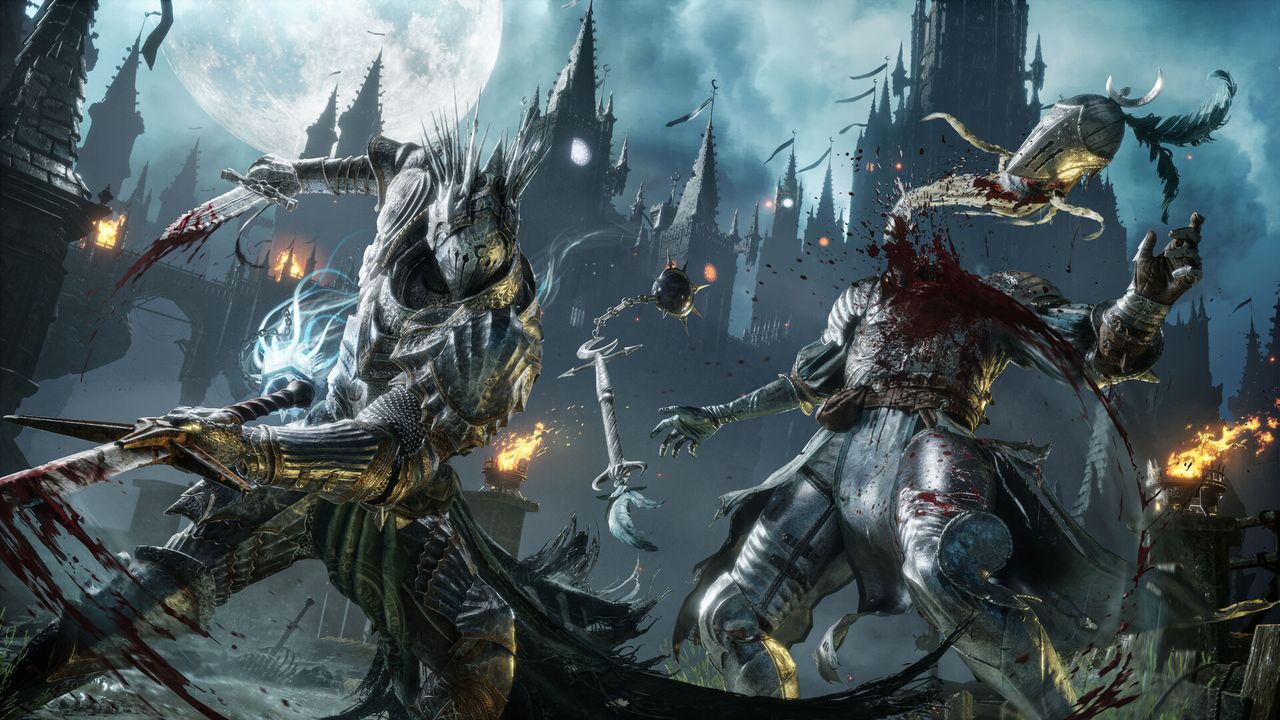
Lords of the Fallen II has not launched — CI Games delayed it from late 2026 to Q1 2027. What's actually confirmed: two realms (Axiom and the reworked Umbral) rendered simultaneously with no loading screens, a reworked 'Dread' threat system that reacts to your behaviour rather than a simple timer, and full two-player co-op with shared campaign progress. Specific stats, item names, and checkpoint mechanics carried over from the 2023 original (Vestiges, Vigor, Sanguinarix, Wither) have not been individually re-confirmed for the sequel, so treat those names as likely-but-unverified until release.
01The Two Realms — Axiom and Umbral, What's Actually Confirmed
Lords of the Fallen II keeps the series' signature dual-world structure: Axiom is the living world, and Umbral is a mirrored realm of the dead (Hexworks has since described it as the realm of the undead) layered on top of it. Both realms are confirmed to render simultaneously with no loading screen between them, continuing the approach from the 2023 original.
What's changing, according to Hexworks' own dev diaries: the transition between realms is no longer a slow, deliberate full swap. CI Games has said players will 'rip into Umbral and rip out of it' — a faster, more violent crossing — and that the veil between the two worlds is thinner than before, with Umbral described as actively 'bleeding into' Axiom rather than sitting fully separate. The exact button-by-button interface (whether a lamp-raise 'soulsight' preview mode returns exactly as it worked in the first game) has not been demonstrated in detail pre-release.
- Axiom: confirmed as the main living-world playfield — exploration, combat, and progression happen here.
- Umbral: confirmed as an evolved, more aggressive and more horror-driven version of the mirrored realm; Hexworks has said it wants players to feel unsafe rather than treat it as a side room to loot.
- Realm crossing: confirmed to be seamless (no loading), and reworked to be quicker and more violent than the original's transition — full mechanical details are not yet public.
- Death mechanics: the 2023 original sent you into Umbral on death in Axiom, forcing you to reclaim lost experience from your corpse before dying again. Hexworks has confirmed the core Axiom/Umbral loop returns and expands, but has not confirmed whether this exact death-and-recovery flow is unchanged in the sequel.
The one system Hexworks has detailed clearly is the reworked threat mechanic inside Umbral, generally referred to across previews as the Dread system: rather than a simple countdown timer that escalates danger the longer you linger, it now reacts dynamically to what you actually do in the realm, so pushing your luck rather than watching a clock is what raises the stakes. Enemies can also 'morph' into more dangerous Umbral variants as part of this system — a confirmed feature, though exact triggers and thresholds haven't been published.
02Checkpoints, Currency, and Healing — What Carries Over From the Original
The 2023 Lords of the Fallen used a checkpoint system called Vestiges (activate them to rest, fast-travel, and respawn), an experience currency called Vigor, and a limited-charge healing item called the Sanguinarix flask. None of these specific names have been individually re-confirmed by CI Games for the sequel as of the most recent dev diary (Ep. 10, June 2026) — Hexworks talks about 'build flexibility' and returning systems in general terms, not by re-stating the old terminology on camera.
Given the sequel is explicitly positioned as an evolution rather than a reinvention of the first game's loop, it is reasonable to expect a checkpoint-and-respawn structure, a souls-like currency, and a rechargeable healing item to return in some form — but until CI Games confirms the exact names and rules, treat any guide (including this one) that states them as settled fact with caution.
- Whatever the checkpoint system is called, the genre-standard habit still applies: activate every one you find rather than skipping ahead on confidence.
- Plan fast-travel and backtracking routes around your checkpoints rather than wandering blind, once you know how the sequel's version works.
- Expect resting at a checkpoint to respawn nearby enemies, as it does across the Soulslike genre and did in the first game — this hasn't been contradicted in any preview material, but also hasn't been explicitly re-confirmed for the sequel.
03The First Hour — General Habits, Not Confirmed Specifics
No walkthrough of Lords of the Fallen II's actual opening area exists yet — Hexworks has shown combat, biomes, and a few boss encounters in dev-diary footage, but not a full early-game sequence in a way that lets anyone map 'the first hour' accurately. Treat the following as general Soulslike habits worth having ready, not a confirmed layout of the sequel's tutorial zone:
- Activate checkpoints on sight. Whatever they end up being called, skipping one you've already found is rarely worth it.
- Read item descriptions. The 2023 original used item text to hint at lore and mechanics, and Hexworks hasn't signalled a change in approach.
- Explore the living-world path before committing to the underworld. This was true of Axiom versus Umbral in the original, and the sequel's 'get in, get scared, get out' framing of Umbral (Hexworks' own phrase) suggests it will still reward caution before immersion.
- Fight one enemy at a time where you can. Multi-enemy aggro was the single biggest cause of early deaths in the 2023 game, and nothing in the sequel's previewed combat suggests that calculus changes.
- Don't assume a specific stay-in-Umbral time limit. Some early coverage of the first game described Umbral safety windows in seconds; the sequel's reworked, behaviour-driven Dread system means there is no fixed number to memorise — CI Games has been explicit that it isn't a simple timer anymore.
What to avoid regardless of which game you're playing: sprinting into unscouted rooms, attacking before checking for a second enemy, and treating Umbral as a place to relax.
04Stats and Builds — What's Confirmed and What Isn't
Hexworks has talked about 'wide-ranging build flexibility' — numerous weapon classes (a katana and scythes have been confirmed via the Battle for Thorngar trailer and earlier dev diaries), combat styles, armour, and character customisation options. It has not published a specific attribute list for the sequel.
The 2023 original used six attributes: Vitality, Endurance, Strength, Agility, Radiance, and Inferno. It is likely the sequel keeps a similar attribute-driven RPG layer given how central it is to the series, but CI Games has not re-confirmed these exact names or point costs for Lords of the Fallen II, so specific level-up advice can't be given responsibly yet.
- Survivability first, in general: across the Soulslike genre, and in the 2023 original specifically, investing early points into max-HP and stamina-pool stats reduces punishment for timing mistakes — a safe assumption to carry into the sequel once its attribute system is confirmed.
- Match your weapon's scaling stat: the original game showed scaling letters per weapon; expect something similar, but don't assume identical labelling.
- One correction worth flagging clearly: Wither, in the 2023 original, is not an attribute you invest points into — it's a mechanic where certain hits (including blocked attacks) turn a portion of your health grey; you recover it by landing hits back, or lose it permanently if you take further damage. Any guide describing 'Wither' as a levelling stat is describing something that doesn't exist even in the first game, let alone a confirmed sequel system.
05Healing and Resource Management — General Principles
Whatever the sequel's healing item ends up being called, the genre-standard advice holds: it will almost certainly be a limited-charge resource that refills at checkpoints, so treat it as precious rather than an on-cooldown heal.
- Avoid healing at or near full HP — it wastes a charge you may need later.
- Wait for a safe window after an enemy's attack sequence ends rather than healing mid-combo.
- If the sequel keeps a Wither-style mechanic (health that greys out and must be recovered by dealing damage rather than healing), learn to recognise it quickly rather than reflexively spending a heal charge on it — that's how it worked in the original game, though the sequel's exact implementation hasn't been detailed pre-release.
- Consumable throwables and buffs are typically a finite resource across the genre — save them for emergencies and boss fights rather than routine trash encounters.
06Common Beginner Mistakes — Genre Lessons Worth Carrying In
These aren't sequel-specific confirmations, but lessons from the 2023 original and the Soulslike genre broadly that are unlikely to stop mattering:
- Skipping checkpoints. Every skipped one is a longer, more dangerous run back after your next death.
- Overstaying in the underworld realm. The sequel's reworked, behaviour-driven Dread system replaces a simple timer, but the underlying lesson — don't linger without a reason — still applies, and arguably matters more now that escalation depends on what you do, not just how long you wait.
- Panic-rolling. Stamina is finite in every game in this series; spamming dodges leaves you unable to punish openings.
- Spreading upgrade materials too thin. Committing to one weapon and upgrading it consistently outperforms partially upgrading several, in the original game and across the genre.
- Assuming this guide (or any pre-release guide) has the sequel's exact numbers right. Until Lords of the Fallen II actually ships in Q1 2027, treat specific thresholds, item names, and mechanics you read online — including some of the general habits above — as best-available guesses, not patch notes.
FAQ
Has Lords of the Fallen II been released yet?
No. It was announced in August 2025 and was originally targeted for late 2026, but CI Games delayed it to Q1 2027 (announced June 2026) to avoid launching alongside Grand Theft Auto VI. As of September 2026, no exact release date has been confirmed.
What should I do first in Lords of the Fallen II?
Since the game hasn't launched, no one can map an exact opening sequence yet. The safest preparation is genre-standard habits carried over from the 2023 original: activate every checkpoint you find, read item descriptions for hints, clear enemies one at a time, and don't assume a fixed safe time limit for the underworld realm — Hexworks has said its reworked Dread system reacts to your actions rather than a clock.
What is Umbral in Lords of the Fallen II and how is it different from the first game?
Umbral is the mirrored realm of the dead (or, per Hexworks, 'the undead') that exists alongside the living world, Axiom, rendered simultaneously with no loading screen. Compared to the 2023 original, CI Games has confirmed the transition between realms is faster and more violent ('rip into and rip out of' Umbral), the veil between worlds is thinner, and the threat system inside Umbral now escalates based on player behaviour rather than a simple timer. Moment-to-moment interface details haven't been shown in full.
Is the Vestiges/Vigor/Sanguinarix system confirmed for Lords of the Fallen II?
Not by name. Those were the checkpoint, currency, and healing-item names in the 2023 original. CI Games hasn't restated this exact terminology for the sequel in its dev diaries as of mid-2026, though a similar checkpoint-currency-healing structure is a reasonable expectation given the sequel builds on the original's loop rather than replacing it outright.
How many players can play Lords of the Fallen II in co-op?
Two. CI Games has confirmed full two-player co-op with shared campaign progression carried by both players — a significant feature the studio has highlighted repeatedly in its dev diaries.
Do I need to have played the first Lords of the Fallen to understand LOTF II?
No. Lords of the Fallen II is set 100 years after the first game and follows on from its Umbral ending, but CI Games has described it as an independent continuation intended to work as an entry point on its own.
Sources
Where the facts on this page were checked. If one of them now says something different, we want to know — tell us and we will fix the guide.
- Lords of the Fallen II Wikipedia
- Lords of the Fallen 2 Announced | Soulslike RPG Coming 2026 CI Games / Lords of the Fallen (official)
- Road to Reveal: How Lords of the Fallen II was announced to the world CI Games / Lords of the Fallen (official)
- Lords of the Fallen 2 Release Fextralife
- Lords of the Fallen II delayed to 2027, to avoid the GTA 6 crunch TheSixthAxis
- Lords of the Fallen 2 Set 100 Years After First Game: All Details Revealed ComicBook.com
- Lords of the Fallen II Previews Expanded Role of Umbral, With Greater Player Control, and New Features MMORPG.com
- Lords of the Fallen II wants Umbral to haunt you harder Gaming Trend
- Lords of the Fallen 2 Introduces Improved Umbral System, Promising Bolder and Bloodier Realms Game8
- CI Games lifts the veil on Lords of the Fallen II's katanas, co-op gameplay and more Gaming Age
- All Classes in Lords of the Fallen Guide Fextralife
New & updated guides ship every week. Follow the Atom feed or get notified when new Lords of the Fallen II guides land.