Last updated: 5 September 2026
Forza Horizon 6 Barn Finds All 15 Cars and Locations
Every Forza Horizon game hides rare cars in crumbling structures — and FH6 scatters 15 legendary vehicles across Japan, from a rotary-screaming Mazda 787B to a Lincoln Continental that has no business being in Kyoto. None appear on the map by default: you unlock barn search zones by raising your Discover Japan Stamp tier, drive into the highlighted area to trigger a discovery cutscene, then wait out restoration before the car is yours to drive. This guide covers all 15 cars with their Stamp tier and region, how to locate barns inside search zones, and which ones are genuinely worth driving.
01What Are Barn Finds?
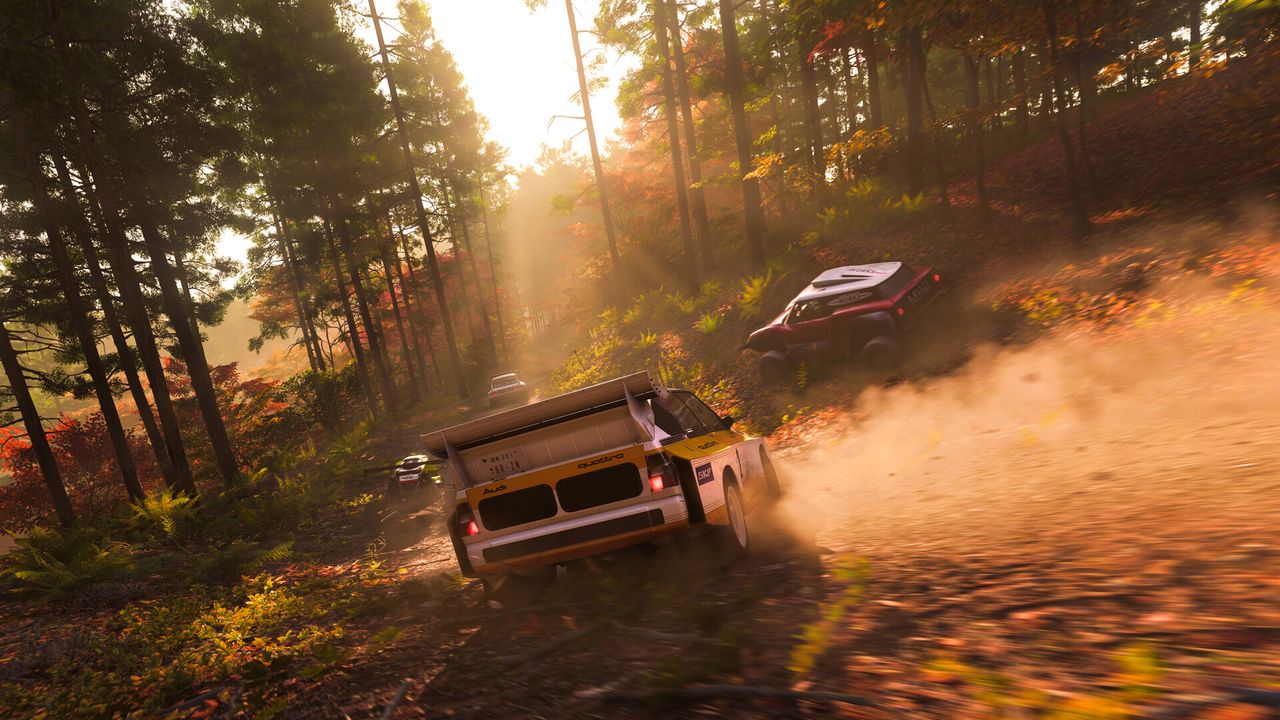
Barn finds are hidden vehicles tucked away in dilapidated structures across FH6's Japan map. They are completely free — no credits, no auction bidding — and the collection spans five decades of automotive history: 1960s Japanese classics, 1980s Group B rally weapons, 1990s GT racing machines, and a pair of endgame legends.
Three things make them worth prioritising early:
- Zero cost. Once you discover a barn, the car is yours with no credit outlay (other than an optional instant-restore fee).
- Restoration runs in real time. The timer ticks down whether or not you are playing, so starting restoration early means cars arrive sooner — including the best ones at higher Stamp tiers.
- Several barn finds are meta picks. The Mazda 787B, Peugeot 205 Turbo 16, Mitsubishi Montero Evolution, and Nissan R390 GT1 rank among the best cars in their respective classes for competitive racing.
Barn finds do not appear on the Festival map from the start. They unlock progressively as you advance through the Discover Japan Stamp campaign — one of the game's parallel progression tracks alongside the main Festival Wristband system.
02The Discover Japan Stamp System
The Discover Japan campaign (orange J icon on the map, separate from the green H Festival track) uses seven colour-coded Stamp tiers, earned in this order: Yellow, Green, Blue, Pink, Orange, Purple, and Gold. Reaching Gold also earns the "Master Explorer" completionist title. Each new Stamp reveals a fresh batch of barn search zones on the map.
Stamps are earned by completing regional activities across Japan's map:
- Touge and Street Races — a first-place win is worth 350 Discover Japan points per event, making these the single most efficient Stamp earner.
- Regional Mascots — 200 hidden mascot collectibles (nine food-themed types, one per region) scattered across the map. Smashing one earns 25 Discover Japan points plus 5,000 credits, so clearing the full set contributes meaningfully to your Stamp total.
- Story Events (regional chapters) each award a lump Stamp point bonus on first completion.
- Drift Zones and Speed Traps in unexplored regions grant a small first-completion bonus.
Any mix of regional activities contributes — there is no single required activity type. Check your progress at any time via Campaign Menu → Collection Journal → Discover Japan. When you earn a new Stamp, a notification appears on-screen and the new barn icons appear inside glowing search circles on the world map.
Discover Japan Stamps and Festival Wristbands are separate, parallel progression tracks. You can push Discover Japan activities and unlock barns without advancing your Wristband tier.
03Barn Find Unlock Progression
The diagram below shows how the 15 barn finds are distributed across the seven Stamp tiers. Note that Pink (tier 4) is the largest single unlock: four barn search zones appear on the map at once.
04All 15 Barn Find Cars
Each car is listed with its Stamp tier, model year, and the Japan region where the search zone appears. FH6's Japan map divides into named zones: Ohtani, Ito, Nangan, Minamino, Takashiro, Hokubu, and Shimanoyama, plus the Tokyo City boundary area.
- Yellow Stamp — Honda NSX-R GT 2005 — Ohtani. JGTC-spec race NSX with a naturally-aspirated V6. One of the best A/S1 road racers in the entire barn find collection — and the first one you unlock.
- Green Stamp — Ford Sierra Cosworth RS500 1987 — Ito. Homologation special built for touring car racing; turbocharged 2.0-litre four-cylinder. A strong B/A-class road and Touge build.
- Green Stamp — Toyota 2000GT 1969 — Ito. Japan's first proper GT sports car, and one of the rarest Toyotas ever made. D-class collector piece — historically significant rather than a competition pick.
- Blue Stamp — Nissan Skyline 2000GT-R 1971 — Nangan. The original Hakosuka ("box Skyline"), inline-six DOHC. Lightweight and responsive in B-class — an excellent Touge car that rewards precise inputs.
- Blue Stamp — Nissan PAO 1989 — Minamino. A retro-styled compact city car from Nissan's Pike Cars series (often mistaken for a kei car, but slightly too long to qualify). D-class novelty; genuinely fun on narrow mountain routes at low speeds.
- Pink Stamp — Nissan #23 Pennzoil NISMO Skyline GT-R 1998 — Takashiro. GT500-class race variant of the R33 GT-R. Competitive S1/S2 racer for Road and Street events.
- Pink Stamp — Lincoln Continental 1962 — Hokubu. A 7.0-litre American land yacht with suicide doors. Comically oversized for Japan's mountain roads — a cult favourite for Cross Country.
- Pink Stamp — Peugeot 205 Turbo 16 1984 — Shimanoyama. Mid-engined Group B rally weapon with a 1.8-litre turbocharged engine. One of the best Dirt-class cars in FH6 when properly tuned.
- Pink Stamp — Porsche 911 Turbo 3.3 1982 — Ohtani. The iconic whale-tail air-cooled 911. Rear-engine weight bias demands careful throttle application; very rewarding at A/S1 class.
- Orange Stamp — Lamborghini Diablo SV 1997 — Ito. Mid-1990s V12 supercar. A popular S1/S2 build; tuned suspension tames the handling for Japan's road circuit layouts.
- Orange Stamp — Mitsubishi Montero Evolution 1997 — Shimanoyama. Dakar-bred off-road warrior. Among the best A/S1 Cross Country and Dirt Rally builds in the entire roster.
- Purple Stamp — Mitsubishi Lancer Evolution Time Attack 2005 — Shimanoyama. Track-prepared AWD Evo with rally-derived suspension and a high grip ceiling. Excellent S1/S2 road racer.
- Purple Stamp — Nissan R390 GT1 1998 — Ohtani. Purpose-built Le Mans race car with a twin-turbocharged V8. One of the fastest Race-division cars at S2 class; a serious endgame tool.
- Gold Stamp — Mazda #55 787B 1991 — Takashiro. The four-rotor Wankel that won the 1991 24 Hours of Le Mans. R-class monster — the barn find car most players target the entire progression to reach.
- Gold Stamp — Nissan #11 Tomica Skyline Turbo Super Silhouette 1983 — Ito. Iconic Group 5 silhouette racer on a Skyline base, with extravagant flared bodywork. A collector showpiece and a capable S2 car.
05How to Find a Barn in the Search Zone
When a barn unlocks, a large glowing circle appears on the map marking the search zone. The barn is not individually marked; you must drive into the area and locate the structure yourself. The discovery cutscene triggers automatically when you pass close enough to it.
The most reliable techniques for finding barns quickly:
- Follow the dirt tracks. Barns tend to sit at the end of an unpaved path that branches off the main road network inside the zone. If you are on tarmac and not finding anything, slow down and look for track turnoffs into fields, forests, or clearings.
- Use Drone Mode. FH6 carries over the series' aerial scouting view — check your control bindings menu for the current shortcut on your platform. From above the terrain you can often spot a barn roof or the dirt path leading to it within seconds.
- Check near landmarks. Barns in the Ohtani and Tokyo City area often sit alongside temple paths or parkland edges; in Shimanoyama and Ito, look in forest clearings set back from the main Touge roads.
- Slow down inside the zone. The cutscene trigger needs a brief proximity window. Driving through at full speed can skip it — if you think you passed the barn, lap back slowly.
- Cross-reference the Collection Journal if stuck. Campaign Menu → Collection Journal → Discover Japan lists barns by region, which narrows down which zone still needs searching.
06Restoration: Timers, Costs, and the Instant Fix
After the discovery cutscene, your barn find goes to a mechanic and enters a restoration queue. The car is not drivable during this period — but the timer runs in real time even while the game is closed.
- Timer length scales with the car's rarity and tier. Early Stamp finds (Honda NSX-R GT, Toyota 2000GT) tend to restore comparatively quickly; higher-tier cars — especially the Mazda 787B and Nissan R390 GT1 — reportedly take considerably longer. The exact time is shown during the discovery cutscene and tracked under Cars → Barn Finds in the main menu.
- Instant restoration is available for credits. Navigate to Cars → Barn Finds, select the car in progress, and pay the displayed credit fee to receive it immediately. The cost scales with the car's value and remaining timer — for headline cars like the Mazda 787B this fee can reportedly run into the high six or seven figures, so check the in-game price before paying.
- Restoration does not affect performance. Barn find cars arrive in full mechanical condition — there is no stat penalty tied to the barn's state of disrepair.
- Barn finds cannot be sold on the Auction House. Forza Horizon 6's Auction House rules exclude Barn Finds, Treasure Cars, Loyalty Reward cars, and Collection Journal exclusives from being listed — once restored, a barn find car stays in your garage and cannot be traded away.
- Multiple restorations can run simultaneously. When Pink Stamp unlocks four barns at once, you can trigger all four cutscenes in the same session and run four timers in parallel — the most efficient way to work through the collection.
07Which Barn Find Cars Are Worth Driving?
Not every barn find is a competitive race car. Some are collector pieces and historical curiosities. Here are the ones worth building for active use:
- Mazda #55 787B (Gold Stamp): The headline act. R-class entry, four-rotor Wankel, 1991 Le Mans winner. Build it for Road Racing at S2/R class and it competes with the fastest cars in the game. Worth the entire Discover Japan grind on its own.
- Peugeot 205 Turbo 16 (Pink Stamp): Group B Dirt specialist. One of the best Dirt-class cars in FH6 when tuned for off-road — mid-engine layout and light weight give it exceptional agility. Unlocks at tier 4, achievable before the mid-point of most playthroughs.
- Mitsubishi Montero Evolution (Orange Stamp): Cross Country and Dirt Rally standout. AWD, high ground clearance, rally-tuned suspension. If you play any off-road disciplines at A/S1 class, this is among the strongest builds available regardless of price.
- Nissan R390 GT1 (Purple Stamp): Purpose-built Le Mans race car at S2 class. Fast on Japan's tight road circuits and a strong choice for endgame Festival events.
- Honda NSX-R GT (Yellow Stamp): The first barn you unlock and one of the better competition cars for A/S1 road racing — without spending a single credit on the Auto Show.
- Nissan Skyline 2000GT-R 1971 (Blue Stamp): The Hakosuka tuned for B-class Touge is a popular and effective build. Historically significant and better to drive than many players expect.
- The Lincoln Continental, Nissan PAO, and Toyota 2000GT are not competitive choices — treat them as collectibles rather than performance builds.
FAQ
How many barn finds are in Forza Horizon 6?
There are 15 barn finds in FH6. They unlock progressively across seven Discover Japan Stamp tiers — 1 barn at Yellow, 2 at Green, 2 at Blue, 4 at Pink, 2 at Orange, 2 at Purple, and 2 at Gold. Pink is the largest single unlock, revealing four search zones at once.
Do I have to complete barn finds for 100% completion?
Barn finds are optional content and do not contribute to Wristband progression or Festival completion percentages. However, reaching the Gold Discover Japan Stamp — a prerequisite for the final barns — earns the "Master Explorer" title, and several barn find cars, particularly the Mazda 787B and Nissan R390 GT1, are among the strongest endgame race cars in the game.
Can I buy barn find cars from the Auction House?
No. Forza Horizon 6's Auction House rules specifically exclude Barn Finds (along with Treasure Cars, Loyalty Reward cars, and Collection Journal exclusives) from being listed or sold. The only way to get a barn find car is to discover its search zone yourself and restore it.
What happens if I do not find a barn after unlocking the stamp tier?
Nothing expires. The barn search zone stays active on the map indefinitely once revealed. There is no countdown or removal timer on undiscovered barns — you can return to any unfound search zone at any point in your playthrough.
How long does barn find restoration take in Forza Horizon 6?
Restoration timers run in real time and vary by car — earlier Stamp finds tend to restore faster, while later-tier cars like the Mazda 787B and Nissan R390 GT1 reportedly take considerably longer. The exact time is shown during the discovery cutscene and tracked under Cars → Barn Finds in the main menu. You can pay credits at any time to skip the remaining timer and receive the car instantly.
What is the best barn find car in Forza Horizon 6?
For raw performance, the Mazda #55 787B (1991) is the strongest barn find — an R-class race car with a four-rotor Wankel engine, best known as the 1991 24 Hours of Le Mans winner, and one of the fastest cars in FH6 overall. For mid-game competitive use, the Peugeot 205 Turbo 16 (Pink Stamp) is the standout Dirt-class pick, and the Honda NSX-R GT (Yellow Stamp — the first unlock) is a surprisingly strong A/S1 road racer available at zero credit cost.
Sources
Where the facts on this page were checked. If one of them now says something different, we want to know — tell us and we will fix the guide.
- Forza Horizon 6 All Barn Find Locations PowerPyx
- Forza Horizon 6 Barn Finds Guide Game8
- Meet the Three Pathways of Progression in Forza Horizon 6 Forza (official)
- Forza Horizon 6 Auction House Guide GamingProMax
- Forza Horizon 6 Guide: All Barn Finds Car Locations Games.gg
New & updated guides ship every week. Follow the Atom feed or get notified when new Forza Horizon 6 guides land.