Last updated: 5 September 2026
Is The Blood of Dawnwalker Open World? Vale Sangora Explained
Short answer: yes. The Blood of Dawnwalker is an open-world action RPG built around its Gothic Carpathian setting, Vale Sangora — reviewers including GamingBible have confirmed it plays as a genuine open world rather than a hub-based or mission-corridor structure. The key twist is that freely exploring this world never consumes any of Coen's 30 precious in-game days — only completing story-significant objectives does. Here's what's confirmed about the world design now that the game has launched.
01What Kind of Open World Is It?
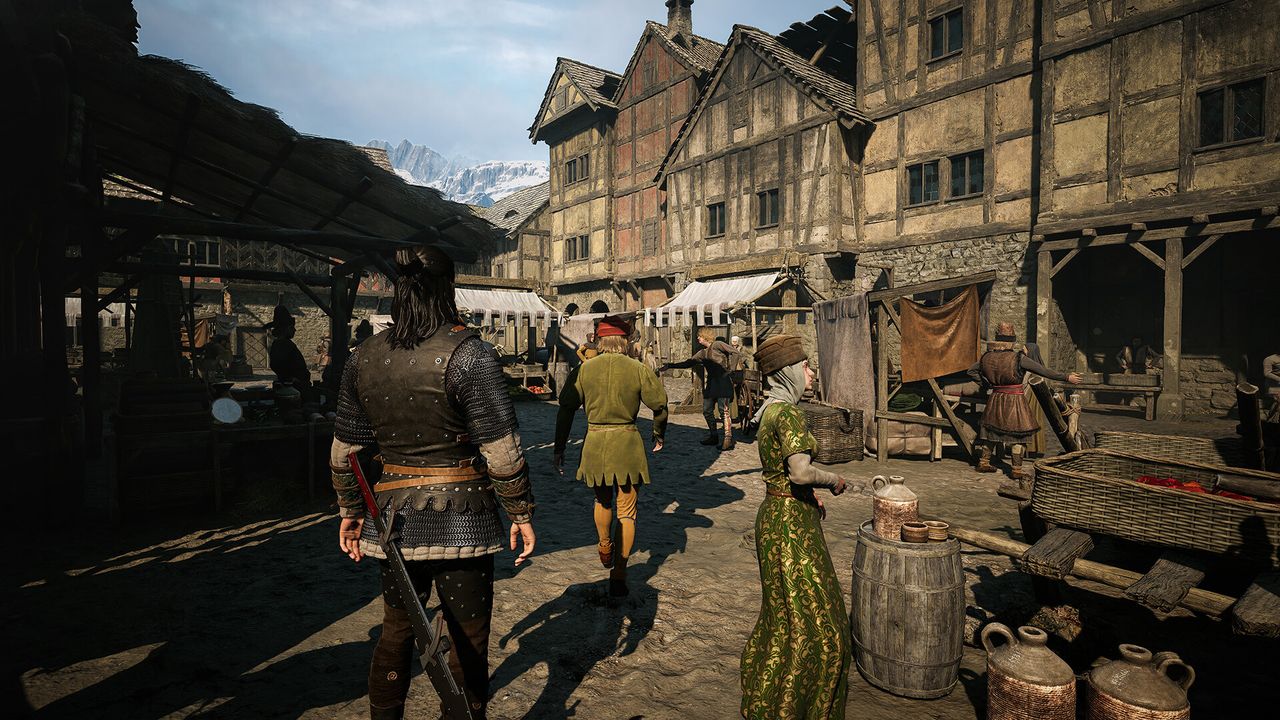
Rebel Wolves built The Blood of Dawnwalker as an open, explorable world where Coen moves freely between settlements, fortifications, and wilderness rather than progressing through segmented missions. Compared to many open-world RPGs, though, the studio deliberately kept the map smaller and denser. Senior Quest Designer Patryk Fijalkowski has said the world 'isn't that big,' and Game Director Konrad Tomaszkiewicz has explained the reasoning: massive open-world maps can leave players unable to truly know every location, causing them to 'rush through them instead of living in them.'
The creative pedigree explains the design direction: Rebel Wolves was founded by former CD Projekt Red developers, including Konrad Tomaszkiewicz (Director) and Mateusz Tomaszkiewicz (Creative Director), both of whom worked on The Witcher 3: Wild Hunt. That influence shows in the emphasis on a handcrafted, reactive world, but Rebel Wolves' stated bet is that player freedom is better measured by how much your choices reshape a smaller space over time than by sheer geographic size.
One concrete consequence of that design choice: there are no mounts of any kind in Vale Sangora. Exploration is done on foot during the day, with Coen's nighttime vampire abilities (below) providing the game's only form of fast traversal.
02Vale Sangora: The World You Will Explore
The setting is Vale Sangora, a Gothic valley in a fictionalized version of 14th-century Carpathia. The Black Death has swept through, leaving human communities devastated, and the vampire lord Brencis exploited that vulnerability by offering a false cure through vampiric blood. Brencis now rules Vale Sangora as a tyrant, collecting a blood tax from its surviving human population.
Reviews describe the terrain as varied for its size — forests, plains, swampland, and mountainous terrain connecting Gothic settlements and villages, vampire-controlled fortifications, and the city of Svartrau. Rebel Wolves has not published an exact map size, but the design team has been explicit that the goal was density and purpose over raw scale, in contrast to sprawling open worlds that go largely unused.
03The Crucial Rule: Free Exploration Doesn't Advance the Clock
This is the most important mechanical fact about the open world: roaming Vale Sangora freely does not consume any of Coen's 30 in-game days. The clock only advances when Coen completes plot-significant actions tied to the main mission and major side quests.
This isn't just a pre-launch promise — it holds up against actual play. One reviewer who finished the entire game, including exploring the full map and clearing most side content, did so while using only 20 of Coen's 30 available days, finishing with 10 days to spare. That gap is only possible if exploration itself isn't burning down the clock.
What's confirmed to cost time: main story missions, major side quests, and certain skill unlocks. What's confirmed not to cost time: free movement and exploration, looting, and combat that isn't tied to a specific quest step. Treat the open world as a place to gather information and power, and spend the clock deliberately on the objectives you choose to pursue.
04Day vs. Night: Two Different Toolkits on the Same Map
One of the more distinctive features of Vale Sangora is that Coen's capabilities — and what's available to interact with — change substantially between day and night, even though the physical map stays the same.
During the day, Coen fights as a grounded human swordsman, using directional blocking and parries against enemies (unblockable attacks are telegraphed and must be dodged instead). He also has access to blood-magic-based abilities, cast through ritual-like rune-carving that costs Coen health to use. Daytime NPCs — merchants, quest-givers, human factions — are available, while some vampiric enemies and nocturnal characters aren't.
At night, Coen gains vampire abilities: claws for combat, wall-climbing and short-range teleport strikes for traversal and repositioning, and a wolf form that lets him sprint across terrain far faster than on foot and transition into an assassination attack against unaware enemies. Vampire forces are also more active at night.
Some NPCs, quests, and story moments are confirmed to be exclusive to a specific time of day — committing entirely to one time of day for an extended stretch means missing content tied to the other, which creates natural pressure to shift your schedule rather than sticking to one mode permanently.
05Side Quests and World Activities
Side quests operate under the same time economy as the main story: they're genuinely optional, but pursuing them typically costs clock days you can't recover, so every side quest becomes a real trade-off against the main mission.
Reported playtimes reflect that trade-off directly. Reviewers finishing the game while naturally working through quests, without deliberately rushing or exhaustively completing everything, land around 20-25 hours; pushing further into optional content to resolve more of Vale Sangora's storylines in Coen's favor can stretch that past 40 hours. Rebel Wolves' own pre-launch estimate of roughly 40 hours average sits inside that range but doesn't match every reported playthrough — actual completion time depends heavily on difficulty and how much side content you chase.
06How It Compares to The Witcher 3
Given that Rebel Wolves was founded by former Witcher 3 leads, the comparison is inevitable, and the studio has invited it directly. Both games are open-world dark-fantasy RPGs with handcrafted worlds and morally complex narratives.
The structural differences are significant, though. The Witcher 3 has no hard narrative deadline, while The Blood of Dawnwalker's 30-day clock makes every major quest a genuine trade-off — exploration itself is free either way, but Dawnwalker attaches a real cost to acting on what you find. On scale, Rebel Wolves has deliberately built a smaller, denser map rather than trying to match or exceed The Witcher 3's sprawl, and cut mounts entirely in favor of on-foot exploration by day and vampire traversal abilities by night. Combat also splits into two distinct systems — human swordplay and blood magic by day, vampire abilities by night — rather than one consistent combat identity throughout.
The shared DNA is in the writing philosophy and world-building approach: both prioritize characters with real motivations and quests that resist simple moral categorization. If you valued The Witcher 3's narrative craftsmanship, that sensibility carries over — the structural frame around it is what's new.
FAQ
Is The Blood of Dawnwalker an open-world game?
Yes. The Blood of Dawnwalker is open world, set in Vale Sangora, a Gothic Carpathian valley with free traversal between settlements, fortifications, and wilderness. Rebel Wolves deliberately kept the map smaller and denser than many open-world RPGs rather than building for raw scale.
Does exploring Vale Sangora use up Coen's 30 days?
No. Free exploration never advances the 30-day clock — only completing story-significant quests and objectives does. This is confirmed by actual playthroughs: one reviewer finished the whole game, including most side content, using only 20 of the 30 available days.
How big is Vale Sangora compared to The Witcher 3?
Rebel Wolves hasn't published an exact map size, but the design team has confirmed the map is deliberately smaller and more densely built than a typical sprawling open world, prioritizing purposeful, handcrafted space over sheer scale.
Can you fast travel in The Blood of Dawnwalker?
There are no mounts in Vale Sangora. Coen's nighttime wolf form provides rapid cross-terrain movement compared to traveling on foot, but standard fast-travel mechanics haven't been detailed in reviews or guides.
Is content locked to specific times of day in Vale Sangora?
Yes. Certain NPCs, quests, and story moments are exclusive to either daytime or nighttime, and Coen's abilities differ substantially between the two — blood magic and swordplay by day, vampire claws, wall-climbing, and wolf form by night.
Can you complete all side quests in a single playthrough?
Probably not all of them, since pursuing side quests advances the 30-day clock and forces trade-offs against the main mission. Reported completion times range from roughly 20-25 hours for a natural playthrough to 40-plus hours for players chasing more of the optional content.
Sources
Where the facts on this page were checked. If one of them now says something different, we want to know — tell us and we will fix the guide.
- The Blood of Dawnwalker Wikipedia
- Open-World RPGs Give Us Bigger Worlds, But Blood of Dawnwalker Is Giving Us Something Better Game Rant
- The Blood of Dawnwalker Review Destructoid
- The Blood of Dawnwalker: Full Starter Guide for New Players AllThings.How
- The Blood of Dawnwalker Has a Wolf Transformation and Pseudo Nemesis System That Dictates Infamy GamingBolt
- Blood of Dawnwalker's Average Duration is '40 Hours', But I Finished It In 15 Insider Gaming
- The Blood of Dawnwalker review GamingBible
New & updated guides ship every week. Follow the Atom feed or get notified when new The Blood of Dawnwalker guides land.