Last updated: 2 September 2026
The Blood of Dawnwalker Beginner Tips — Day 1 Guide to the 30-Day Clock & Combat
The Blood of Dawnwalker is out now, and the launch reviews confirm what the previews promised: a dark fantasy RPG from Rebel Wolves — the Warsaw studio founded by Witcher 3 director Konrad Tomaszkiewicz — built around a 30-day countdown and a protagonist who fights as a human swordsman by day and a vampire by night. Here is everything a new player should know before diving in, including a few things reviewers flagged that the pre-launch marketing did not mention.
01What Kind of Game You Are Walking Into
Rebel Wolves was founded by Konrad Tomaszkiewicz, who directed The Witcher 3: Wild Hunt and served as head of production on Cyberpunk 2077 at CD Projekt Red. Several other senior staff — creative director Mateusz Tomaszkiewicz, design director Daniel Sadowski, narrative director Jakub Szamałek, and art director Bartłomiej Gaweł — also come from those two games. The studio grew from roughly 20 people in 2022 to about 160 by launch, all put toward one handcrafted, choice-driven single-player RPG built in Unreal Engine 5.
The game is published by Bandai Namco Entertainment and released simultaneously on PC (Steam, Xbox app, GOG), PlayStation 5, and Xbox Series X/S on September 3, 2026 — there is no last-gen PS4 or Xbox One version. The developers put the story at roughly 50 to 70 hours for a single playthrough, and by design you cannot see everything in one run: the 30-day clock forces you to prioritise.
Launch reviews are broadly positive but not uncritical. TheSixthAxis scored it 8/10, praising the writing and the day/night structure while flagging "spongy enemies" with oversized health bars that drag fights out longer than they need to, plus some quest-pacing and technical rough edges. Go in expecting a strong, ambitious debut from a new studio rather than a flawless one.
02The 30-Day Clock: How Time Actually Works
The headline mechanic is a 30-day-and-night countdown: Coen has thirty days to pull his family out of a coronation sacrifice planned by Brencis, the vampire lord ruling Vale Sangora. Miss the deadline and the outcome is locked in — the game does not pause and wait for you to catch up.
The detail every beginner needs to internalise: time is a resource you spend by choosing to act, not a clock that drains in the background. Exploring, traveling, watching, and listening to NPCs cost nothing. Only committing to plot-relevant quest stages and major story choices advances the clock — and the game tells you the exact time cost before you commit, so you are never surprised after the fact.
Each day is structured, not abstract: reviewers confirm the daylight hours are divided into 8 segments between dawn and sunset. Night appears to follow a similar rhythm, though outlets note that its exact subdivision isn't officially confirmed the same way the daytime structure is — treat "8 segments by day" as the solid number and the night side as roughly similar rather than an exact mirror. Because you see the time cost up front regardless, the practical approach is to scout an area fully first — for free — and only pull the trigger on quest-advancing choices once you know what else is around to lose.
With 50–70 hours of content packed into a 30-day budget, you will not finish every questline on one playthrough by design. Decide early which storylines and factions matter most to you rather than chasing completion, and treat missed content as part of how the game is meant to be played, not a mistake.
03Day vs Night: Two Different Combat Kits
Coen is a Dawnwalker — human by day, vampire by night — and each half has its own toolkit rather than being a reskin of the other.
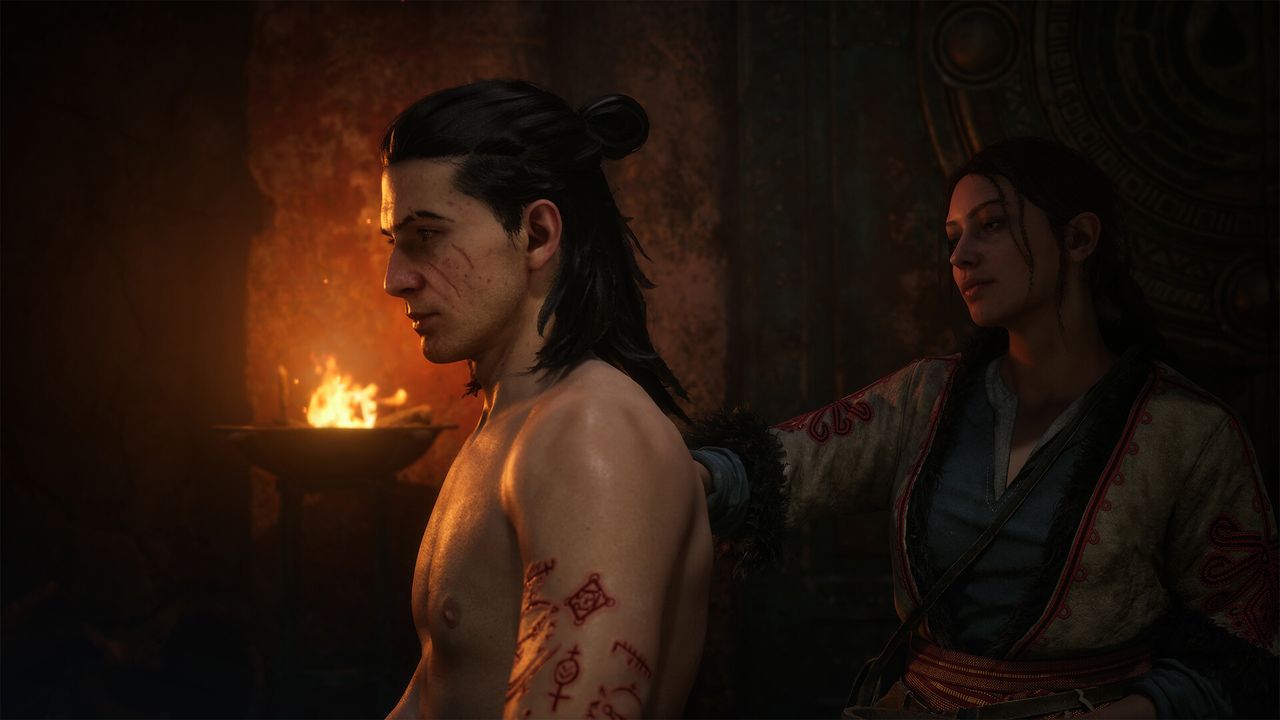
By day, Coen fights as a swordsman with directional blocking and witchcraft. Hex spells are cast by etching runes and sigils into his own skin, and — confirmed at launch — both witchcraft and vampire abilities cost health to use rather than drawing from a separate mana bar. Physical attacks, dodges, and blocks still run on their own stamina meter, but spells and vampiric powers specifically trade your health, which makes every cast a real risk/reward decision rather than a free resource to spam.
- Shadowstep — a short-range teleport used for repositioning or closing distance at night.
- Claw combat — a faster, more aggressive melee style available only after dark.
- Wall and ceiling climbing — vertical traversal that opens routes and ambush angles unavailable during the day.
- Voracious Bite — draining blood from an enemy to heal mid-fight.
- Wolf-form travel — faster overland movement at night.
Stealth matters more after dark, since guards and civilians can spot Coen and react to it. Bloodlust also builds at night and needs managing — feed on defeated enemies or drink blood vials so hunger does not work against you mid-mission. Because the two kits are genuinely different, lean into daytime for open confrontations and hex-boosted fights, and night for infiltration or reaching places the daytime moveset can't.
04Combat Fundamentals: Directional Blocking Over Button-Mashing
Combat runs on a directional blocking system with four attack directions rather than a single universal block button — you have to match the direction of an incoming hit to guard it. Basic directional blocks cost no stamina, but timing a block into a full parry is riskier and pays off more if you land it.
Dealing damage builds activation charges, which fuel hex magic and execution moves for big bursts of damage. In tougher fights it is usually worth holding charges for a staggered or exposed enemy rather than dumping them the moment they are available.
Because enemies at launch tend to have generous health pools, matching your combat style to the target matters more than raw aggression: chip away with clean parries and save your charged hits for openings instead of trading blows head-on. Reviewers specifically called out fights that drag when players skip this and just button-mash through tanky enemies.
05PC Requirements and Platform Notes
All three platforms launch with identical content, so the console choice is purely down to controller and ecosystem preference. On PC, an SSD is required at every tier — there is no hard-drive-supported configuration.
- Minimum: Intel Core i5-11400F / AMD Ryzen 7 2700X, NVIDIA GTX 1060 / AMD RX 580, 16 GB RAM, 60 GB SSD.
- Recommended: Intel Core i7-11700K / AMD Ryzen 7 5700X, NVIDIA RTX 4060 / AMD RX 7600 XT / Intel Arc B580, 16 GB RAM, 60 GB SSD.
The minimum GPU tier is dated hardware, so expect 1080p at reduced settings if you're near that floor; aim for the recommended tier for a comfortable 1080p–1440p experience.
06What Launch Reviews Say to Expect
A few things are worth calibrating your expectations around now that the game is actually out, rather than going in on pre-launch marketing alone:
- Enemies can feel spongy. Some fights run longer than they need to because of large health bars — lean on parries and charged hits rather than trying to out-trade enemies.
- Quest pacing is occasionally uneven. Reviewers noted moments where a short combat encounter ate a surprising chunk of a day-segment — always check the time cost the game shows you before committing to a quest stage if you want to budget carefully.
- Minor technical rough edges exist at launch, as is common for a new studio's first release — nothing reviewers flagged as game-breaking, but worth knowing going in.
- The Witcher 3 comparisons are earned but not a guarantee. The pedigree is real, but this is Rebel Wolves' first game as a studio. Treat it as a strong, ambitious debut rather than an automatic successor to a decade-old benchmark.
FAQ
Does exploring the open world use up your 30 days in The Blood of Dawnwalker?
No. Only plot-relevant quest stages, major story choices, and other meaningful commitments advance the clock — the game shows you the exact time cost before you commit. Roaming, looting, scouting, and fighting incidental enemies do not consume your 30 days.
How does the day and night cycle work in The Blood of Dawnwalker?
Each day is divided into 8 segments between dawn and sunset — that structure is officially confirmed. Night appears to run on a similar rhythm, though its exact subdivision isn't confirmed to the same degree. Coen plays as a human swordsman with witchcraft during the day and gains vampiric abilities — claws, Shadowstep, wall-climbing, wolf form — after dark.
Do abilities in The Blood of Dawnwalker use mana or stamina?
Not for spells and vampiric powers specifically — those draw from health rather than a separate mana bar, which makes every cast a real risk/reward decision. Basic physical attacks, dodges, and blocks still run on their own stamina meter; it's only witchcraft (day) and vampiric abilities (night) that cost health instead.
Is The Blood of Dawnwalker worth playing at launch?
Early reviews are positive — TheSixthAxis scored it 8/10, praising the writing and the day/night structure. The main criticisms are enemies with oversized health pools that can drag out fights, some uneven quest pacing, and minor technical rough edges typical of a new studio's first release.
How long is The Blood of Dawnwalker?
The developers estimate roughly 50 to 70 hours for a full playthrough. Because the story is built around a 30-day in-game clock, you are not expected to see everything in a single run — prioritise the storylines that matter most to you.
What platforms is The Blood of Dawnwalker on?
PC (Steam, Xbox app, GOG), PlayStation 5, and Xbox Series X/S, all released simultaneously on September 3, 2026. There is no PS4 or Xbox One version.
Sources
Where the facts on this page were checked. If one of them now says something different, we want to know — tell us and we will fix the guide.
- The Blood of Dawnwalker Review — day/night structure, directional combat, health-cost abilities, 8/10 TheSixthAxis
- The Blood of Dawnwalker Time System Explained: 8-segment day structure and what advances the clock TimeSaver.gg
- The Blood of Dawnwalker — developer, publisher, platforms, release date, engine, playtime Wikipedia
New & updated guides ship every week. Follow the Atom feed or get notified when new The Blood of Dawnwalker guides land.