Last updated: 19 September 2026
How to Find Diamonds in Minecraft — Best Y Level Guide
Diamonds are the key to Minecraft's best tools and armour, and since the Caves & Cliffs overhaul in 1.18 the old rules changed completely — the Y=12 sweet spot is gone. The new peak is Y -59, deep in the blue-grey deepslate layer far below the surface. Get there with an iron pickaxe, a water bucket, and eventually a Fortune III enchantment, and you can fill an inventory with diamonds in a single session.
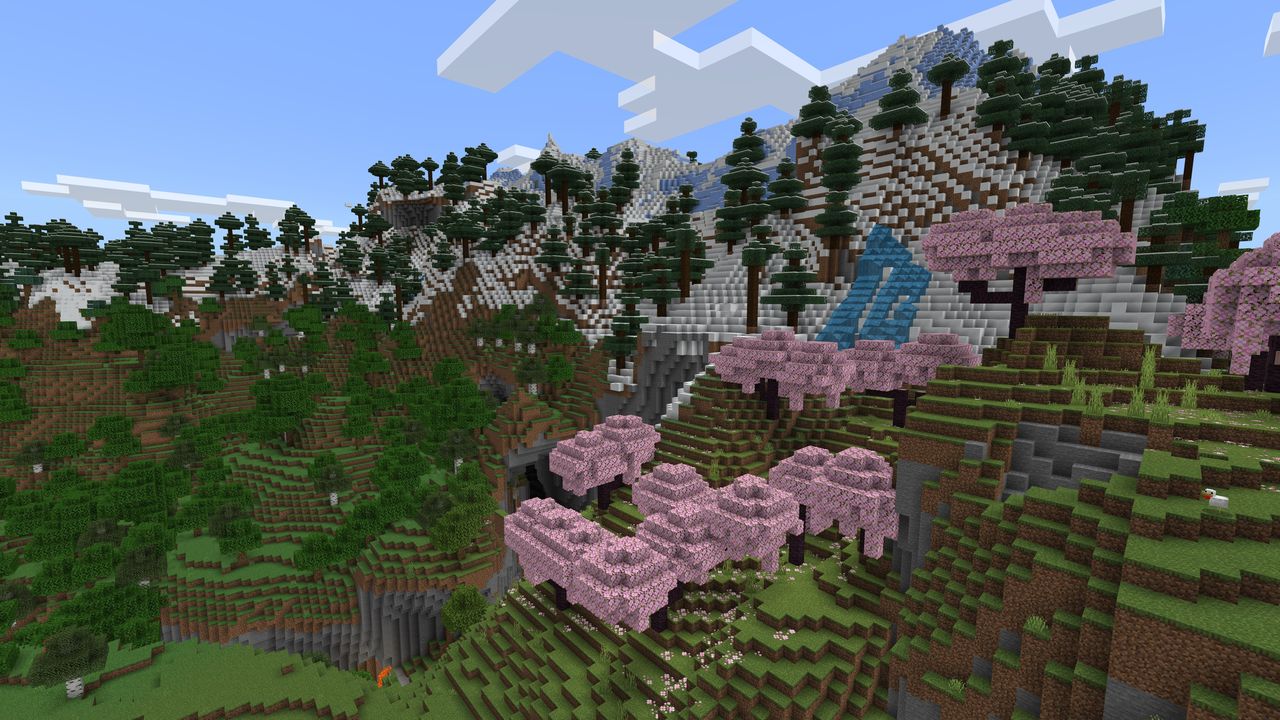
Mine at Y -59 deep in the deepslate layer — that is the peak of the triangular distribution since Caves & Cliffs. Carry a water bucket for lava, and always use Fortune III to average 2.2 diamonds per ore block instead of one.
01Why Y -59 Is the Best Level for Diamonds
Diamond ore generates anywhere between Y 16 and Y -63, but the distribution is not flat. The game uses a triangular curve that increases the deeper you go, peaking at around Y -58 to Y -59. Below that, bedrock starts intruding at Y -60, reducing available stone and cutting ore density back down — so the very bottom is not actually the best spot.
The practical target is Y -59: just above where bedrock first appears, completely inside the deepslate layer, and at the densest point on the diamond distribution. To check your depth, press F3 on Java Edition to open the debug screen — the Y coordinate is the middle value in the XYZ readout. On Bedrock Edition, enable coordinates via Settings → Game; they appear in the top-left corner.
Below Y 0 the stone turns into deepslate, a darker grey variant with twice the hardness. Deepslate diamond ore looks the same as the standard ore but with a darker, speckled surround. It drops the same diamonds and behaves identically — you just need to recognise the texture change so you do not accidentally mine past it.
02What to Pack Before You Descend
Arriving at Y -59 unprepared is a quick way to lose everything to lava. Pack the following before leaving the surface:
- Iron pickaxe or better — stone and wood pickaxes cannot mine diamond ore. Iron is the minimum; a Diamond or Netherite pickaxe mines deepslate noticeably faster, which matters on a long session.
- Water bucket — lava pools are extremely common at this depth. A single bucket lets you convert a lava surface to obsidian before you mine nearby ore, and it extinguishes you if you catch fire.
- Food — mobs spawn constantly in deepslate caves and lava damage drains hunger quickly. Bring enough to keep your hearts regenerating.
- Torches or other light sources — deepslate caves are pitch dark. Light tunnels as you go to stop mobs spawning behind you.
- A chest and crafting table — drop a small base near your mining hub to offload cobblestone and repair tools without hauling everything back to the surface.
03Strip Mining: The Most Reliable Method
Strip mining — sometimes called branch mining — is the most consistent way to farm diamonds. The idea is to carve long, straight tunnels through solid deepslate so every exposed block face gives a chance to reveal ore. The optimal layout for full ore coverage:
- Dig or travel down to Y -59. A staircase mine or a ladder shaft is far safer than digging straight down.
- Carve a main corridor two blocks high and one block wide, running in any cardinal direction for as far as you want to mine.
- Branch off side tunnels from the main corridor every three blocks along each wall — two solid columns remain between each branch. This spacing means no single-block-wide ore vein can sit undetected between two tunnels, giving 100% coverage without doubling your digging.
- Run each branch 16–32 blocks before turning back and starting the next.
- Repeat on the opposite side of the main corridor.
The main cost is time: deepslate is twice as hard as regular stone, so pickaxes wear out faster. An Efficiency IV or V pickaxe makes a dramatic difference. If you do not have one yet, supplementing strip mining with cave exploration (see the next section) lets you collect diamonds while you save XP to enchant a better tool.
04Cave Exploration: Faster But Less Predictable
The world generation introduced in 1.18 produces massive cave systems that frequently dive below Y -40. Walking through the walls and floors of a deep cave can surface diamond ore without digging a single branch tunnel — far faster than strip mining when it works, but far less predictable when caves are sparse.
Key safety rules for cave diamond hunting at this depth:
- Ore exposed to open air is often sitting adjacent to a lava pool. Keep your water bucket on your hotbar, not buried in inventory.
- Place the water bucket on the lava surface before you mine the diamond ore — diamonds that fall into lava are destroyed instantly and permanently.
- Avoid the Deep Dark biome, recognisable by sculk blocks and shriekers on the floor, unless you are there specifically for the Ancient City. A Warden can spawn and will kill most players in a few hits.
- Leave a trail of torches pointing back toward your entry point. Large cave systems are genuinely easy to get lost in.
05Fortune III — Double Your Diamond Haul
Fortune is the single most valuable enchantment for a mining pickaxe. Without it, each diamond ore block drops exactly one diamond. With Fortune III, each block has a chance to drop 2, 3, or 4 diamonds, averaging roughly 2.2 diamonds per ore block. Mine 50 ore blocks without Fortune and you collect 50 diamonds; mine the same 50 with Fortune III and you average around 110.
A popular two-pickaxe approach extracts maximum value:
- Use a Silk Touch pickaxe while mining — ore drops as a block item rather than the raw diamond, so nothing is spent prematurely.
- Store all ore blocks in a chest until you have a Fortune III pickaxe.
- Break every stored ore block at once with Fortune III for the full multiplied return.
If you have only one pickaxe, skip Silk Touch and apply Fortune III directly to ore as you find it. Never mine diamonds with an un-enchanted pickaxe if you can avoid it — you are leaving a significant haul behind. Pair Fortune III with Efficiency IV or V and Unbreaking III for a pickaxe that tears through deepslate quickly and lasts a long time; add Mending to repair it with XP and one pickaxe can last your entire run.
06Java vs Bedrock: Is There Any Difference?
For diamond generation specifically, the two editions are effectively identical. Bedrock Edition 1.18 brought its world generation into parity with Java Edition, so both editions share the same Y range (Y 16 down to Y -63), the same triangular distribution peaking around Y -58 to Y -59, and the same deepslate layer below Y 0. Mine at Y -59 on either platform and you hit peak diamond density.
The only practical difference is the coordinate display. On Java Edition, press F3 to open the debug screen and read the Y value. On Bedrock Edition, go to Settings → Game and enable Show Coordinates — they appear in the top-left of your screen. The target depth is exactly the same: -59.
FAQ
What is the best Y level to find diamonds in Minecraft?
Y -59 is the best level for diamonds in Minecraft 1.18 and later, including 1.21+. Diamond ore uses a triangular distribution that peaks at the deepest levels, making Y -59 — just above where bedrock starts appearing at Y -60 — the densest diamond layer. Y -58 gives nearly identical results.
Does Fortune III actually make a big difference for diamonds?
Yes — Fortune III averages roughly 2.2 diamonds per ore block versus 1 without it. Mining 50 ore blocks without Fortune yields around 50 diamonds; with Fortune III the same blocks average about 110 diamonds. Never mine diamonds with an un-enchanted pickaxe if you have a Fortune III option available.
Can you find diamonds without strip mining?
Yes. The massive cave systems generated since 1.18 often descend below Y -40, exposing diamond ore on their walls and floors without any digging. Cave mining can be faster when you find a productive cave, but ore exposed to open air at these depths is commonly adjacent to lava — always carry a water bucket. Strip mining gives more predictable results over time.
Is the best Y level for diamonds the same in Java and Bedrock?
Yes. Since Bedrock Edition 1.18 both editions share the same diamond generation — the same Y range (Y 16 to Y -63) and the same triangular distribution peaking around Y -58 to Y -59. There is no meaningful difference in diamond density between editions at any given depth.
Why did the best Y level for diamonds change from Y 12?
The 1.18 Caves & Cliffs Part II update overhauled world generation to add deeper cave systems and extend the world floor from Y 0 down to Y -64. To match the expanded world, diamond ore generation was redesigned with a triangular distribution favouring deeper depths, moving the optimal level from Y 12 down to Y -58/59.
Sources
Where the facts on this page were checked. If one of them now says something different, we want to know — tell us and we will fix the guide.
- Diamond Ore Minecraft Wiki
- Fortune Minecraft Wiki
- Bedrock Minecraft Wiki
New & updated guides ship every week. Follow the Atom feed or get notified when new Minecraft guides land.