Last updated: 15 September 2026
Focus Mode, Wounds & Focus Strikes Explained
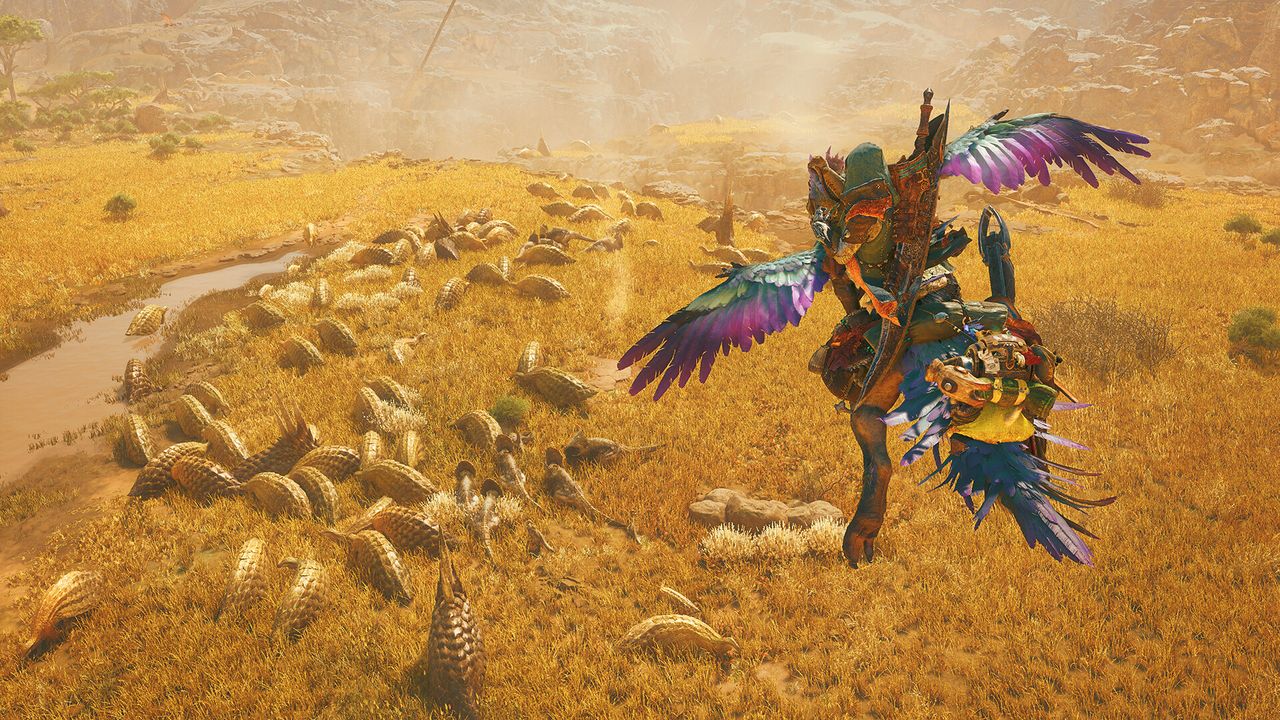
Monster Hunter Wilds introduces Focus Mode as a brand-new core mechanic that changes how every weapon interacts with monsters. Hold a single button to enter a precision aiming state, spot glowing Wounds on the monster's body, and unleash a weapon-specific Focus Strike to burst those Wounds open for massive damage, topples, and bonus material drops.
01What Is Focus Mode and How to Activate It
Focus Mode is a dedicated aiming state available to every weapon. Activate it by holding the Focus button (L2 on PlayStation, LT on Xbox, a rebindable key on PC). Releasing exits it immediately. It costs no stamina or resources and can be entered as often as needed.
When active, a crosshair appears and your hunter turns to face the camera direction, so attacks and blocks fire toward wherever you are looking rather than toward an auto-target. This gives precise, intentional placement of every hit — a dramatic upgrade for weapons that traditionally struggled to reach specific body parts.
Focus Mode also reveals information overlaid on the monster: weak points are highlighted and, most importantly, any open Wounds glow bright red so they are impossible to miss even in a chaotic fight.
02How Wounds Form on Monsters
Wounds are player-created weak spots that appear after sustained damage to the same part of a monster's body. Every large monster can develop them, on almost any hittable area — legs, head, wings, tail, even the torso.
Keep striking the same part repeatedly. Over time the area reddens and shows stress; once the threshold is crossed, the part tears open into a fully visible Wound with a bright red glow.
A few important properties:
- Wounds form faster on parts that are already weak points or breakable parts.
- Any weapon type can create Wounds — raw, elemental, and Bowgun shots all contribute.
- Multiple Wounds can be open at once on different parts of the same monster.
- Once a Wound is destroyed, black scar tissue replaces it — in most cases that exact spot cannot be re-wounded during the same hunt, though a handful of monster parts are exceptions and can re-open.
- Scars do not reduce the part's base hitzone value; they simply prevent a new Wound forming there again.
Because scar tissue is permanent per hunt, it pays to think about which Wound to pop and when — saving a wing Wound for when the monster flies is often more valuable than bursting it immediately.
03Focus Strikes: How They Work
A Focus Strike is the special attack performed while in Focus Mode, with your crosshair aimed at an open (red-glowing) Wound. Every weapon class has its own distinct Focus Strike animation, damage profile, and positioning — none are interchangeable.
The payoff is enormous: a successful Focus Strike destroys the Wound instantly, deals a large burst of damage, generates heavy stagger, and commonly causes a topple or long flinch that lets your whole party land free hits. It also triggers a bonus material drop from the broken part.
- Big slow weapons (Great Sword, Hammer, Gunlance) get the highest single-hit Wound burst — ideal to line up during a topple or roar.
- Fast weapons (Dual Blades, Long Sword, Insect Glaive) deal their Focus Strike as a quick multi-hit, slotting into short openings.
- Guarding weapons (Lance, Charge Blade, Sword and Shield) combine a brace/counter with the Wound burst.
- Ranged weapons (Bow, Light and Heavy Bowgun) concentrate their shots onto the highlighted zone for precise Wound damage.
If teammates attack a Wound at the same moment your Focus Strike lands, the combined hits amplify total damage — coordinated Focus Strikes are a high-value multiplayer strategy.
04What You Gain: Damage, Topples, and Materials
Popping a Wound via Focus Strike delivers three distinct benefits beyond the raw damage number:
- Burst damage — the Focus Strike deals a spike that can exceed the combined output of several normal hits, one of the highest-damage moments in any hunt.
- Stagger and topple — destroying a Wound generates a large stagger value; accumulate enough and the monster falls over, granting the party free hits.
- Bonus material drop — the broken part drops extra materials on the ground that stack with end-of-hunt rewards, so farming specific parts is faster when you consistently target Wounds on relevant body parts.
There is a timing element too. Popping a Wound early front-loads damage and can trigger a phase transition faster. Holding a Wound open and continuing to deal boosted normal-hit damage is sometimes better during longer engagements, especially for sustained-pressure weapons.
05Focus Mode Beyond Wounds: Aiming and Guarding
Focus Mode is not only about Wounds — its camera-aligned aiming improves accuracy for every weapon in situations where you need a hit on a specific part.
For guarding weapons, bracing in Focus Mode means the block faces the exact camera direction. Against directional attacks — charges, sweeping claws, beam breath — this removes guesswork and reduces chip damage from off-angle hits.
For ranged weapons, Focus Mode works as a dedicated aiming scope, and highlighted Wounds serve as precision targets so every shot lands in a high-hitzone area.
For mobility weapons like Insect Glaive or Long Sword, Focus Mode gives momentary directional commitment, preventing you from sliding off a part mid-animation against fast-moving monsters.
06Practical Tips for Getting the Most From the System
A few habits separate hunters who occasionally trigger Focus Strikes from those who extract maximum value every hunt:
- Prioritise breakable parts early — Wounds form faster on parts that can be broken (horns, wings, tail), so targeting these builds toward a Wound and a break at once.
- Check Focus Mode between combos — dip in briefly to scan for new Wounds rather than staying in it continuously.
- Time Focus Strikes to downtime — many have longer animations, so use topples, mounts, or roar flinches as safe windows.
- Track scars for part-farming runs — once a part is scarred, redirect damage to a fresh part to open a new Wound.
- Coordinate in multiplayer — stacking stagger from multiple sources leads to faster topples and longer free-damage windows.
The Wound system rewards observation over button-mashing. Treat Focus Mode as an active scanning tool, not just a Focus Strike delivery button, and your hunts end faster with better material hauls.
FAQ
Can you create Wounds without using Focus Mode?
Yes. Wounds form purely from sustained damage to the same monster part, regardless of whether Focus Mode is active. Focus Mode does not create Wounds — it reveals them with a red highlight and lets you execute a Focus Strike on them. Deal damage normally, then enter Focus Mode to check for and exploit any Wounds that have opened.
Do Wounds respawn after being destroyed?
Almost never. Once a Wound is destroyed — by a Focus Strike or enough direct hits — black scar tissue forms on that spot for the rest of the hunt, and in nearly every case that exact location cannot be wounded again (a small number of parts on specific monsters are exceptions). Fresh Wounds can still form on other parts of the monster that have not yet been scarred.
Is Focus Mode useful for weapons that cannot block?
Absolutely. For weapons like Great Sword, Dual Blades, and Insect Glaive, Focus Mode functions as a precision aiming layer that aligns your attacks with the camera direction and gives you the scan view to spot Wounds. The guard-direction benefit only applies to shield weapons, but the aiming and Wound-scanning benefits apply to every weapon.
Do Focus Strikes work if there is no open Wound?
You can still perform the Focus Strike animation on a part with no Wound, but you lose the Wound-burst damage bonus, the stagger bonus, and the guaranteed material drop — the attack deals its base damage only. It is almost always better to wait for a Wound to open before spending the commitment of a Focus Strike, especially for slower weapons.
Sources
Where the facts on this page were checked. If one of them now says something different, we want to know — tell us and we will fix the guide.
New & updated guides ship every week. Follow the Atom feed or get notified when new Monster Hunter Wilds guides land.