Last updated: 21 September 2026
Battlefield 6 Season 4 Naval Warfare Maps, Carriers & Combat Tips
Season 4: Naval Warfare is Battlefield 6's biggest content update since launch. It began on July 21, 2026 with the all-new Tsuru Reef (now the largest map in the game), naval vehicles, and the Dynamic Wave System, then expanded on August 18, 2026 with playable aircraft carriers and the legendary Wake Island, and closed out on September 15, 2026 with the Tidal Strike phase — Proximity Chat, a new REDSEC operation, and a knife-focused collection event. If you have not played a Battlefield title with full naval combat, this season changes the tactical depth of nearly every engagement. This guide covers what is in Season 4, how each new system works, and the adjustments your playstyle needs to make the most of it.
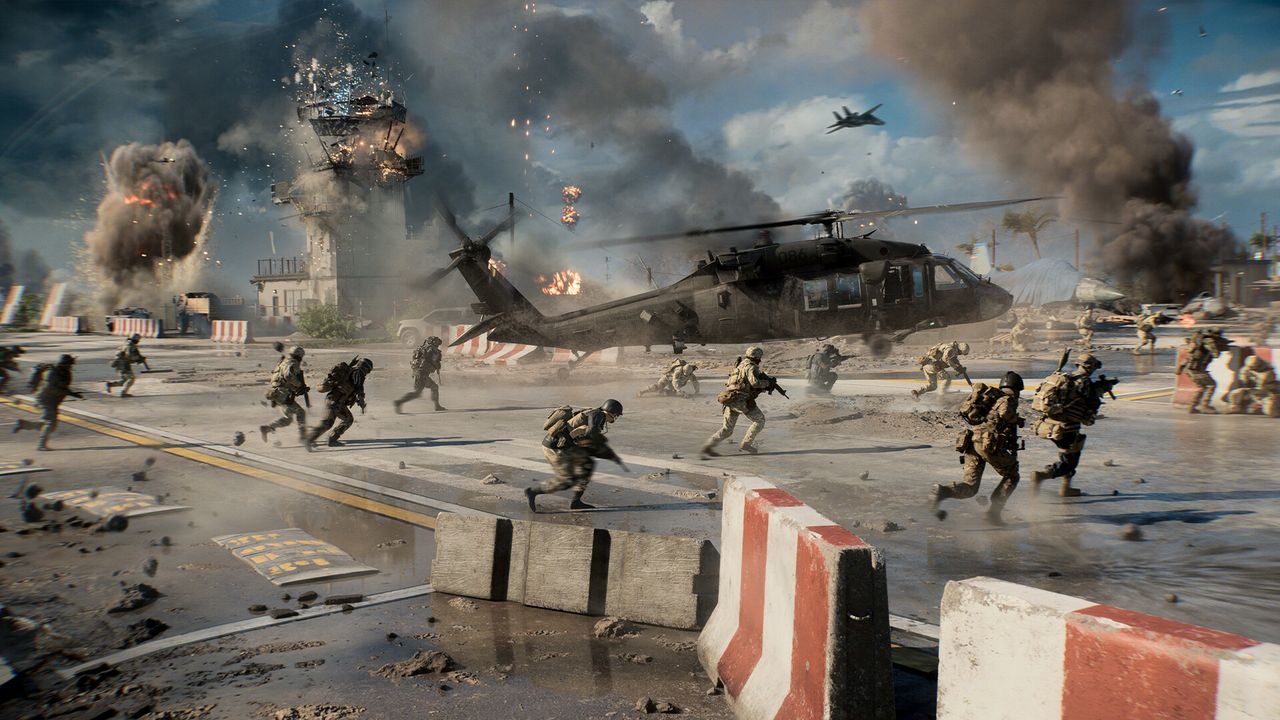
01Season 4 at a Glance
Season 4 launches in three named phases, following the cadence established in Seasons 2 and 3:
- Phase 1 — Pacific Front (Update 1.4.1.0, July 21, 2026): Tsuru Reef, the RCB-90 Patrol Boat and 7.7m NSW RHIB naval vehicles, the Dynamic Wave System, three new weapons, and the Season 4 Battle Pass.
- Phase 2 — Top Gun (Update 1.4.2.0, August 18, 2026): Wake Island returns, reimagined for Battlefield 6's modern setting and naval infrastructure; Tsuru Reef is expanded with playable aircraft carriers for the new Carrier Strike mode; and the update adds two new two-seat jets, the Interdictor sniper rifle, the Top Gun: Carrier Strike and Gauntlet: Fighter Sweep modes, plus Spectator Mode and Custom Lobbies.
- Phase 3 — Tidal Strike (Update 1.4.3.0, September 15, 2026): The season's closing phase. It is not a new-map phase like the first two — instead it adds the Deep Six Collection Event (running through October 12, 2026) with the new Diver's Knife as its ultimate reward, Proximity Chat for Battlefield Battle Royale, the Phantom Program operation in REDSEC, and a full reticle overhaul across weapon optics, launchers, and gadgets.
As of this writing (September 2026), all three phases of Season 4 are live.
02Tsuru Reef — The Largest Map in Battlefield 6
Tsuru Reef is a brand-new map set across a southern Japanese oceanfront environment. DICE describes it as the largest map in Battlefield 6's history — surpassing Railway to Golmud in raw scale. Its design is built around simultaneous land, air, and sea combat, with the three domains intersecting rather than being separated into distinct zones.
The map combines four distinct terrain types:
- Open water: The widest zone on the map, where naval vehicles contest control and air units strafe ships from above. Carriers anchor at either team's edge of the water zone.
- Reef and island terrain: Shallow coastal areas that vehicles navigate around but infantry can cross on foot. These are the choke points between the water zone and the beach.
- Beach assault zones: Wide landing areas that require landing craft or helicopter insertion to contest effectively from the sea. Classic Battlefield beach-assault design where defenders have a natural elevation advantage.
- Inland infantry zones: Tighter interior areas around key flags where vehicle influence diminishes and infantry pressure becomes dominant.
For Conquest players, Tsuru Reef's flag layout rewards squads that can operate across all three domains. A team controlling only the water cannot hold inland flags; a team ignoring the naval fight loses spawn pressure from the carrier. Coordinated squads that rotate between domains as the ticket flow shifts will consistently outperform teams playing a single style.
03Wake Island — The Legendary Map Returns
Wake Island is one of Battlefield's most iconic settings, returning here after numerous appearances across the franchise's 24-year history. It first appeared in Battlefield 1942 (2002) and has since appeared in Battlefield Vietnam, Battlefield 2, Battlefield 2142, Battlefield 3 (Back to Karkand DLC), Battlefield V, and several digital-only releases including Battlefield 1943 and Battlefield Online.
The Battlefield 6 version of Wake Island keeps the classic atoll layout — a narrow U-shaped island in the Pacific, with the runway and central structures forming the main infantry battleground — while adding the full Season 4 naval infrastructure: aircraft carriers with working flight decks, the Dynamic Wave System, and the new roster of naval vehicles.
Players who have fought over Wake Island in earlier titles will find the flag positions and terrain immediately recognisable. What is new is the vertical scale: modern carrier-based jets spawn above the map rather than from a fixed runway, and the atoll is now surrounded by an active naval combat space rather than a passive ocean backdrop.
- Veteran tip: The central runway has always been the decisive ground fight on Wake. Breakthrough historically favours the attacking team that gets a foothold on the runway first — this will be true again in Battlefield 6.
- Air tip: With both carriers at opposite ends of the map and the atoll in between, jet engagements happen at lower altitudes than on larger maps. Expect faster turning fights and less time at altitude.
- Naval tip: Wake Island's narrow approach lanes make ships vulnerable to aircraft. Coordinating with air units to suppress enemy air before committing ships to the beach is essential.
04Aircraft Carriers — How They Work
Aircraft carriers are the most significant new system in Season 4. Both Tsuru Reef and Wake Island feature one carrier per team, positioned at the team's far edge of the water zone. They function as mobile strategic bases with fully operational flight decks.
Key things every player needs to know about carriers:
- Spawning on the carrier: Carriers function as persistent team spawn points throughout the match. You can spawn directly onto the carrier's flight deck or below-deck areas at any time, similar to spawning on a squad member or flag.
- Launching jets from the deck: Rather than jets appearing in mid-air above the HQ (the mechanism used on non-naval maps), Season 4 jets spawn directly on the carrier deck. You board the jet on the runway and take off conventionally, which allows your team to see which jets are available and which are committed.
- Helicopter landing pads: Each carrier has dedicated helicopter pads separate from the jet runway, allowing simultaneous jet takeoffs and helicopter operations without one blocking the other.
- Carrier as a strategic objective: In Conquest and Escalation, carriers are indestructible environmental features — taking control of the sea around a carrier cuts off its effective launch window by denying approach lanes and forcing air units into contested airspace immediately after takeoff, but the carrier itself stays standing. The dedicated Top Gun: Carrier Strike mode flips this entirely: destroying the enemy carrier is the actual win condition there (see the modes section below).
05The Dynamic Wave System
The Dynamic Wave System is a new environmental layer, introduced in Update 1.4.1.0, that changes sea conditions during a match rather than keeping the water static. According to the official patch notes, it lets you "navigate hostile waters, use shifting waves to disrupt enemy sightlines, and turn the tide of war from sea to shore," and the same update reworked swimming, resurfacing, visibility, and parachute deployment in and around water more broadly.
What's confirmed so far: wave height and sea state change dynamically over the course of a match, and this affects boat handling, weapon-aiming stability on the water, and sightlines/visibility between vessels and toward the shore. Battlefield Studios has not published the exact mechanical rules (what specifically triggers rougher seas, or precise numbers for how much aiming or handling degrades), so treat any granular breakdown you see elsewhere as informal community observation rather than confirmed design.
The practical takeaway is straightforward regardless of the exact mechanics: calmer water makes for an easier, more predictable amphibious push and cleaner ship-to-ship engagements, while rougher seas favour teams who can adapt their aim and positioning on the fly. Experienced squads treat sea conditions as another variable to read before committing a major naval push, the same way they'd read enemy rotations on land.
06New Weapons and Naval Vehicles in Season 4
Season 4 launched with three new weapons, confirmed in the official Battlefield 6 Game Update 1.4.1.0 patch notes, plus two new attachments. All three are unlocked through the Season 4 Battle Pass tracks and do not require purchasing the premium pass to access:
- EF88 — A bullpup assault rifle built for mid- to long-range combat, with a slower fire rate, steady damage, and manageable recoil. Its controllable spray pattern suits Tsuru Reef's exposed beaches, island approaches, and open objective routes. It has since become one of the most frequently cited top-tier assault rifles in community rankings.
- BROD 3 — An aggressive, highly customizable carbine for close-to-mid-range combat, built with a collapsible stock for maximum mobility. Strong pick for squads pushing into close-range infantry fights on the reef and inland zones.
- VSSM — A suppressed, subsonic designated marksman rifle with an integrated suppressor and an optional full-auto mode. Built for players who want to stay quiet at range without giving up close-range flexibility; it has become a frequent top pick among DMRs in current tier lists.
- New attachments: the Extended Barrel (increases projectile velocity, reduces mobility and ADS speed; compatible with the M87A1, M1014, 18.5KS-K, and DB-12) and the 1P86 LPVO (manually switchable 1.50x/4.50x magnification).
Update 1.4.1.0 also added two dedicated naval vehicles: the RCB-90 Patrol Boat, a two-seat armoured patrol boat built for coastal combat, and the 7.7m NSW RHIB, a lighter transport boat with a mounted machine gun. Both are usable by any class, though an Engineer aboard keeps either one in the fight far longer thanks to the Repair Tool.
Cross-reference the official BF6 patch notes for the current unlock requirements and any post-launch balance changes, since weapon and vehicle tuning can shift after a season goes live.
07Top Gun Event — Two New Jets
Update 1.4.2.0 (August 18, 2026) delivered Season 4 Phase 2 alongside a Top Gun crossover event, adding two new two-seat fighter jets to the naval maps. Both are confirmed in the official Battlefield 6 Game Update 1.4.2.0 patch notes:
- F/A-81F Super Spectre — A two-seat jet built for aerial superiority and precision strikes. The pilot flies while a co-pilot mans the weapon systems officer (WSO) seat.
- F-74A Seacat — A two-seat jet with variable-sweep wings that adjust during flight, designed for speed, maneuverability, and aerial combat.
Both jets add a new third-person gunner view for the co-pilot/WSO seat: the camera pulls back with the aircraft centered and the horizon locked, letting the second player aim missiles and rockets at enemy aircraft independently of the pilot's flight path. This makes coordinated two-player crews meaningfully stronger than solo-flown jets — a wingman who can call out and lock targets while the pilot focuses purely on maneuvering is a real advantage in the furballs around Tsuru Reef and Wake Island's carriers.
08New Modes: Top Gun — Carrier Strike & Gauntlet — Fighter Sweep
Update 1.4.2.0 also added two new modes built around the naval and aerial systems introduced in Season 4:
- Top Gun: Carrier Strike — A reimagined, combined-arms take on Carrier Assault. Ground forces have to break through the opposition and secure a path forward, naval units support the assault from the water, and aviators fight for control of the skies above. The attacking team wins by successfully breaching and destroying the opposing aircraft carrier, so all three domains — infantry, naval, and air — have to work together rather than fight separate battles.
- Gauntlet: Fighter Sweep — A jets-only aerial combat mode exclusive to REDSEC. Squads take to the sky in the new two-seat jets to eliminate rival squadrons, evade anti-aircraft fire, and destroy stockpiles placed around the playspace to build their team's score; sending the opposing team crashing down secures the win.
Both the new jets and the two new modes are part of the base Season 4 content and free for every player — no premium pass required.
09Tidal Strike — Season 4's Closing Phase
Update 1.4.3.0 closed out Season 4 on September 15, 2026 with the Tidal Strike phase. It does not add a new map, but it rounds out the naval season with several systems worth knowing about even if you're focused purely on Tsuru Reef and Wake Island combat:
- Deep Six Collection Event (through October 12, 2026): Complete contracts and gather intel devices scattered across matches to earn premium Weapon Packages, customization rewards, and the event's ultimate reward, the Diver's Knife — a melee weapon whose in-fiction backstory ties it to Royal Navy divers.
- Proximity Chat: Live now in Battlefield Battle Royale. Nearby players' voices are positioned in 3D space and muffled by walls, vehicles, and indoor areas, with up to four speakers audible at once. You can mute, report, or block anyone through the scoreboard, and toggle the feature off entirely below the Commo Rose.
- Phantom Program: A limited-time REDSEC operation launched alongside Tidal Strike, sending squads through Fort Lyndon to hunt intel devices and easter eggs tied to the map's security-breach storyline, in Solos, Duos, and Quads.
- Reticle overhaul: Every weapon optic, launcher, and gadget reticle was reworked for cleaner visuals and better readability against busy naval backdrops — worth a look if you fine-tuned your crosshair contrast before Season 4.
None of this changes how Tsuru Reef, Wake Island, or the carrier systems play — it's additive content layered on top of the naval combat described above.
10Season 4 Strategy Tips
The naval warfare expansion changes the flow of Conquest and Breakthrough meaningfully. These adjustments will help experienced BF6 players adapt to Season 4 maps from day one:
- Secure the carrier early, not the flags. On both Season 4 maps, your carrier is both your main air spawn and a team-wide spawn point. Squads that rush inland flags without protecting their carrier's approach lanes often find their air advantage cut off mid-match, making inland flags harder to hold.
- Engineer becomes the most impactful class at sea. Naval vehicles can be repaired by Engineers just like tanks. One Engineer stationed on a ship extends its effective lifespan dramatically in sustained naval fights. Ship crews without an Engineer on board will burn through hull health quickly against coordinated attacks.
- Recon Motion Sensors go on beaches, not inland. Beach approach lanes on both maps are the primary infantry kill zones during amphibious assaults. Deploying Motion Sensors to cover the beach area gives your team advance warning of landing craft and swimming infantry — something that can completely change the outcome of a beach assault phase.
- Jets take off into contested airspace. Unlike non-naval maps where jets have a clear flight path from HQ to the main combat area, carrier-based jets are in immediate proximity to the enemy carrier. Expect enemy jets to be close much earlier in a flight. Do not fly straight — break immediately after takeoff.
- Read the water before committing. The Dynamic Wave System means sea conditions aren't constant — calmer water gives ships a more stable firing platform and an easier approach. If your team is planning a major beach landing, check current conditions rather than assuming the water will behave the same way it did five minutes ago.
FAQ
When does Battlefield 6 Season 4 start?
Battlefield 6 Season 4: Naval Warfare began on July 21, 2026 with its first phase, Pacific Front (Update 1.4.1.0). The season's second phase, Top Gun (Update 1.4.2.0), followed on August 18, 2026, and the season's closing phase, Tidal Strike (Update 1.4.3.0), launched on September 15, 2026.
What are the new maps in Battlefield 6 Season 4?
Season 4 adds two maps: Tsuru Reef, a brand-new map set in a southern Japanese oceanfront environment and currently the largest map in Battlefield 6, and Wake Island, a returning classic with numerous appearances across the Battlefield franchise dating back to 1942. Both maps feature aircraft carriers with operational flight decks and the new Dynamic Wave System.
How do aircraft carriers work in Battlefield 6 Season 4?
Each team has one aircraft carrier on the Season 4 maps. Carriers function as persistent team spawn points and as the base for carrier-based jets, which take off directly from the flight deck rather than spawning in mid-air. Helicopter landing pads are separate from the jet runway. Carriers cannot be destroyed, but controlling the sea around the enemy carrier cuts off their air launch window.
What is the Dynamic Wave System in Battlefield 6?
The Dynamic Wave System is a naval simulation that changes ocean wave height and intensity during a match. As combat escalates, waves grow larger, affecting ship handling, aiming stability on vessel-mounted weapons, and the movement of infantry in or near the water. Calm early-match conditions make amphibious assaults easier; high sea states in intense fights create unpredictable interference.
What new weapons did Battlefield 6 Season 4 add?
Season 4 launched with three new weapons: the EF88, a bullpup assault rifle for mid- to long-range combat; the BROD 3, an aggressive carbine with a collapsible stock for close-range mobility; and the VSSM, a suppressed, subsonic designated marksman rifle with an optional full-auto mode. All three unlock through the Season 4 Battle Pass tracks and are free to earn without buying the premium pass.
Is Wake Island the same as in older Battlefield games?
The layout is faithful to classic Wake Island — the U-shaped Pacific atoll with a central runway remains the core geography, and veteran players will recognise the flag positions. The Battlefield 6 version adds the full Season 4 naval infrastructure: working aircraft carriers at both ends of the map, the Dynamic Wave System, and the new naval vehicle roster.
Which class is best for naval combat in Season 4?
Engineer is the strongest class specifically for naval operations. The Repair Tool extends ship hull life dramatically, and the class's SMG affinity is well-suited for close-range deck engagements. For the beach assault and inland zones, Support with a Supply Bag remains the most universally useful choice — ammo resupply on the beaches and fast revives after landing craft assaults are both high-value contributions.
What new jets did Battlefield 6 add in the Top Gun update?
Update 1.4.2.0 (August 18, 2026) added two two-seat fighter jets: the F/A-81F Super Spectre, built for aerial superiority and precision strikes, and the F-74A Seacat, which uses variable-sweep wings for speed and maneuverability. Both give the co-pilot seat a new third-person gunner view for aiming missiles and rockets independently of the pilot.
What is Top Gun: Carrier Strike in Battlefield 6?
Top Gun: Carrier Strike is a reimagined, combined-arms version of Carrier Assault added in Update 1.4.2.0. Ground forces break through and secure a path forward, naval units support the assault, and aviators fight for control of the skies; the attacking team wins by breaching and destroying the opposing aircraft carrier.
What is Gauntlet: Fighter Sweep?
Gauntlet: Fighter Sweep is a jets-only aerial combat mode added in Update 1.4.2.0, exclusive to REDSEC. Squads fly the new two-seat jets to eliminate rival squadrons, evade anti-aircraft fire, and destroy stockpiles across the playspace to build score.
What is in the Battlefield 6 Tidal Strike update?
Tidal Strike (Update 1.4.3.0, September 15, 2026) is Season 4's closing phase. It doesn't add a new map — instead it brings the Deep Six Collection Event (through October 12, 2026, rewarding the new Diver's Knife), Proximity Chat for Battlefield Battle Royale, the Phantom Program operation in REDSEC, and a reticle overhaul across weapon optics and gadgets.
Sources
Where the facts on this page were checked. If one of them now says something different, we want to know — tell us and we will fix the guide.
- Battlefield 6 Game Update 1.4.1.0 Electronic Arts
- Battlefield 6 Game Update 1.4.2.0 Electronic Arts
- Battlefield 6 Game Update 1.4.3.0 Electronic Arts
- Season 4 Roadmap - Everything You Need to Know for Battlefield 6 and REDSEC Electronic Arts
- Battlefield 6 - Community Update - 2026 Roadmap Updates and Season 4 Electronic Arts
- Wake Island Developer Map Guide Electronic Arts
- Battlefield 6 Update 1.4.1.0 Patch Notes—Tsuru Reef, New Weapons, and Season 4 Explained Insider Gaming
New & updated guides ship every week. Follow the Atom feed or get notified when new Battlefield 6 guides land.